

Attributing conversions to PBN campaigns is one of the more nuanced measurement challenges in SEO, because PBN backlinks influence rankings indirectly rather than sending trackable referral traffic through a tagged URL. Understanding which signals to monitor, how to isolate the contribution of a link-building campaign, and where attribution models fall short will help you evaluate campaign performance more accurately and make better decisions about future placements.
Key Takeaways
- PBN backlinks do not generate directly trackable referral traffic in most cases, so conversion attribution relies on correlating ranking improvements and organic traffic growth with campaign timelines.
- Multi-touch attribution models and segmented organic traffic analysis are the most practical frameworks for connecting PBN placements to downstream conversions.
- Ranking position changes, organic click-through rate, and landing page conversion rate should be monitored together rather than in isolation.
- Attribution windows for link-building campaigns are longer than for paid channels; measurable ranking movement typically takes weeks to months depending on competition and crawl frequency.
- Consistent tagging, baseline measurement before placements go live, and a documented campaign timeline are prerequisites for any meaningful attribution analysis.
Why Conversion Attribution Is Difficult for PBN Campaigns
Most digital marketing channels generate conversion data through tagged URLs, pixel fires, or platform-level tracking. A paid search click carries a UTM parameter; a display impression can be tied to a view-through window. PBN backlinks work differently. The link sits on a third-party domain and passes authority signals to the target page, but the visitor who eventually converts arrives through a Google organic result, not through the PBN site itself. That means the PBN placement is invisible to standard last-click or session-based attribution models, which record the conversion source as organic search rather than the upstream link-building activity that may have contributed to the ranking that made the organic visit possible.
This indirect relationship creates a measurement gap. The conversion happened because the page ranked; the page may have ranked partly because of the PBN placements; but the analytics platform has no native way to connect those two events. Closing that gap requires combining ranking data, organic traffic segmentation, campaign timelines, and an appropriate attribution framework rather than relying on a single data source.
Setting Up a Measurement Baseline Before Placements Go Live
Meaningful attribution starts before the first PBN link is placed. Without a documented baseline, it is impossible to distinguish the effect of a campaign from natural ranking fluctuations, seasonal traffic patterns, or concurrent on-page changes. The baseline should capture at least four weeks of pre-campaign data for each target URL, covering organic impressions, clicks, average position, and on-page conversion rate.
Google Search Console provides impression and click data segmented by query and page, making it a practical starting point. Export position data for the primary and secondary keywords associated with each target page and record the date the export was taken. In Google Analytics 4 or a comparable analytics platform, create a segment or exploration that isolates organic traffic to the specific landing pages receiving PBN placements. Record the conversion rate, goal completions, and revenue or lead value for those pages during the baseline period. This pre-campaign snapshot becomes the reference point against which post-placement changes are measured.
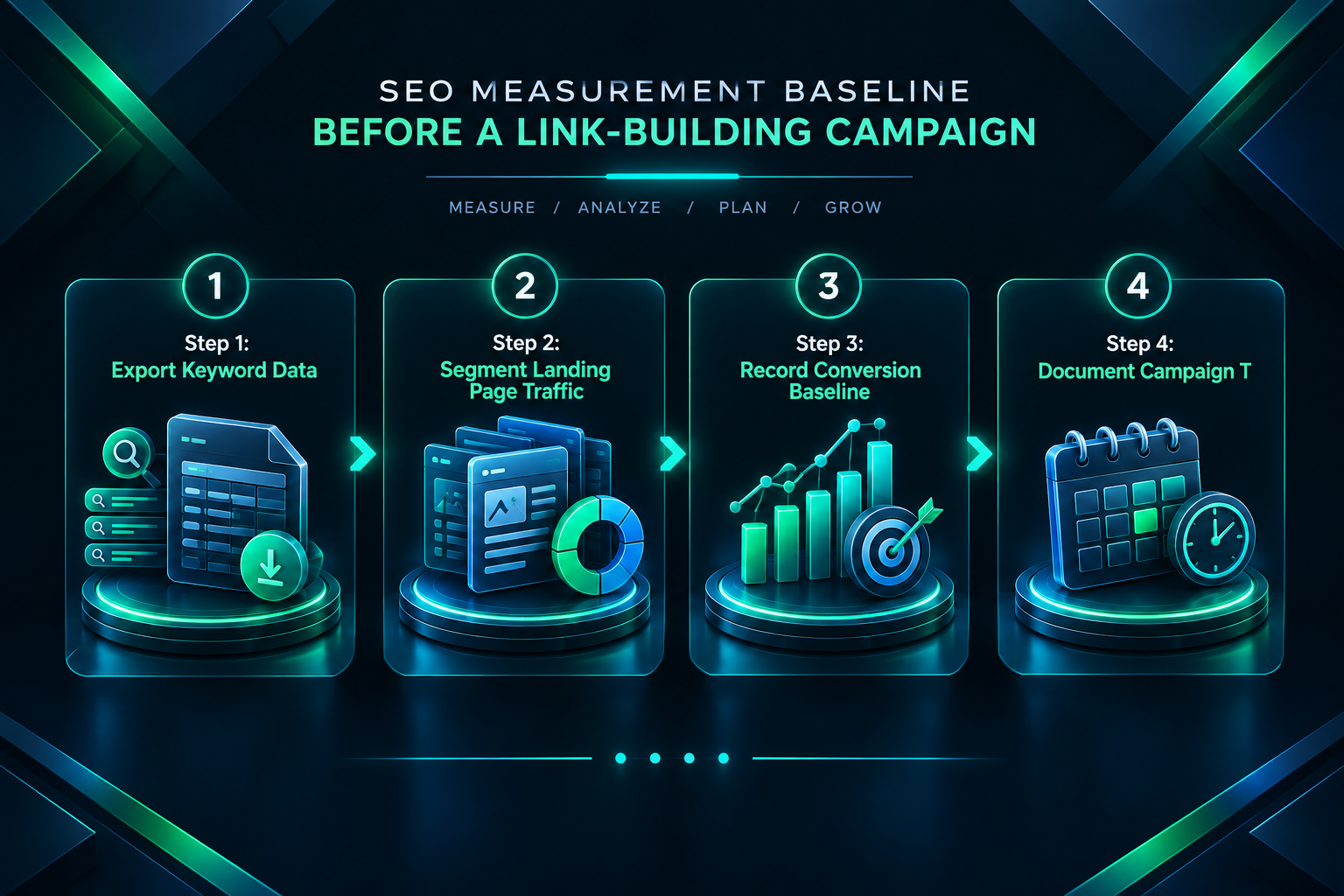
Document the campaign timeline precisely: the date each placement was ordered, the approximate date each link was published, and the date each link was confirmed as indexed. Indexing date matters because an unindexed link cannot pass authority signals, and the attribution window should begin from confirmed indexing rather than from the order date.
Ranking-Based Attribution: Connecting Link Placements to Position Changes
Because PBN backlinks are intended to improve organic rankings, ranking movement is the most direct leading indicator available. A structured ranking-based attribution approach tracks keyword positions for the target pages at regular intervals before, during, and after the campaign, then correlates position changes with the confirmed indexing dates of the placements.
Rank tracking tools such as Semrush, Ahrefs, or dedicated rank trackers record daily or weekly position data for a defined keyword set. Set up tracking for the primary target keywords and a broader cluster of semantically related terms before placements go live. After placements are indexed, monitor whether the target page moves upward in the tracked keyword set. A consistent upward trend across multiple related keywords is a stronger attribution signal than a single keyword moving one or two positions, which could reflect normal SERP volatility.
Ranking attribution has limits. Position changes reflect the combined effect of all ranking signals, including content updates, internal linking changes, competitor activity, and algorithm updates. To isolate the contribution of PBN placements, note whether any other significant on-page or off-page changes occurred during the same window. If the target page received new content, a technical fix, or a batch of other backlinks at the same time, the ranking change cannot be attributed solely to the PBN campaign. Keeping a change log that records every modification to the target page and its backlink profile during the measurement period makes this separation more reliable.
Organic Traffic Segmentation and Conversion Tracking
Once ranking improvements are observed, the next step is connecting those improvements to organic traffic and then to conversions. In Google Analytics 4, create an exploration or custom report that filters sessions by channel group (organic search), landing page (the specific target URL), and date range. Compare the post-campaign period to the baseline period using the same date range length to control for day-of-week and seasonal effects.
Metrics to track at the landing page level include organic sessions, new users from organic, goal completions or conversion events attributed to organic sessions landing on that page, and revenue or lead value where applicable. An increase in organic sessions to the target page that coincides with a confirmed ranking improvement, following confirmed link indexing, provides a reasonable basis for attributing a portion of the conversion uplift to the PBN campaign.
Segmenting by landing page rather than by channel alone is important because organic traffic to the homepage or other pages may change for unrelated reasons. Isolating the specific pages that received placements keeps the analysis focused and reduces noise from site-wide traffic fluctuations.
Multi-Touch Attribution Models for Link-Building Campaigns
Standard last-click attribution assigns 100% of conversion credit to the final touchpoint before the conversion event, which for organic conversions is typically recorded as the organic search session. This model is accurate for the session but tells you nothing about the upstream activities that influenced the ranking. Multi-touch attribution models distribute credit across multiple touchpoints in the conversion path, which is conceptually more appropriate for link-building campaigns even though PBN placements are not directly visible as touchpoints in most analytics platforms.
A practical approach for SEO teams is to treat the PBN campaign as an offline or upstream influence and build a parallel attribution layer alongside the standard analytics model. This involves assigning a campaign influence score to conversions that occurred on target pages during the post-indexing window, weighted by the magnitude of the ranking improvement and the proportion of organic traffic growth attributable to that improvement. This is not a precise causal measurement; it is a structured estimate that acknowledges the indirect nature of link-building attribution while still connecting campaign activity to business outcomes.
Data-driven attribution models available in Google Analytics 4 use machine learning to distribute credit across touchpoints based on observed conversion paths. These models are more useful for channels that generate direct sessions, such as paid search or email, than for link-building campaigns that operate upstream of the session. However, if PBN placements successfully improve rankings and organic traffic, the data-driven model will eventually reflect higher organic conversion volume on the target pages, which can be compared to the baseline period as an indirect attribution signal.
Using Backlink Monitoring Tools to Confirm Campaign Inputs
Attribution analysis is only as reliable as the campaign input data. If you cannot confirm which links are live and indexed, the attribution window is undefined and the analysis loses its anchor point. Backlink monitoring tools such as Ahrefs, Semrush, or Majestic can be used to verify that placements are discoverable by crawlers, that the linking page is indexed, and that the link attribute (followed or nofollowed) matches what was agreed with the provider.
Check each placement after the expected publication date and record the first date the tool detects the link. Cross-reference this with Google Search Console’s link report, which shows external links Google has discovered pointing to your site. Note that Search Console’s link report is not exhaustive and may lag behind third-party crawlers, but it provides a useful secondary confirmation that Google is aware of the placement. The confirmed discovery date in a third-party tool is generally a more reliable trigger for starting the attribution window than the publication date alone.
Monitoring tools also allow you to track whether placements remain live over time. A link that is removed shortly after placement will not have had sufficient time to influence rankings, and any ranking changes observed during that window should be attributed with caution. Documenting link longevity as part of the campaign record helps distinguish sustained ranking improvements from short-term fluctuations that may not persist.
Isolating PBN Campaign Effects from Other SEO Variables
One of the most common attribution errors in SEO is conflating correlation with causation. A ranking improvement that follows a PBN campaign may have been caused by the placements, by a concurrent algorithm update that favored the target page’s content, by a competitor losing rankings, or by a combination of factors. Rigorous attribution requires actively accounting for these alternative explanations rather than assuming the campaign caused the observed change.
A useful technique is to identify control pages: pages on the same site that are similar in topic and competition level but did not receive PBN placements during the campaign period. If the target pages show ranking and traffic improvements while the control pages remain stable, the campaign is a more plausible contributor to the change. If both groups improve simultaneously, a site-wide factor such as an algorithm update or a technical SEO improvement is a more likely explanation.
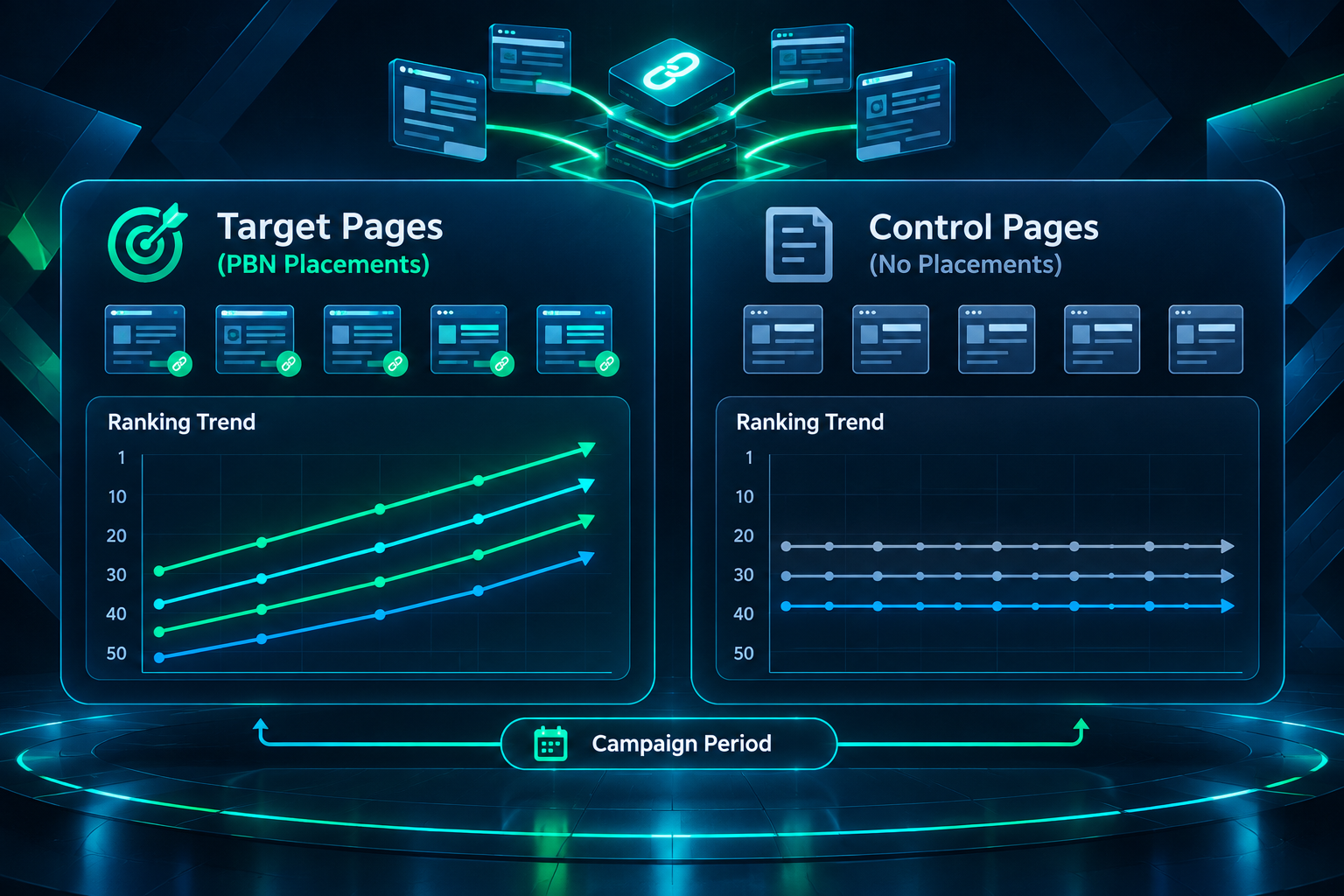
Algorithm update calendars published by SEO industry sources can help identify whether a major update was rolled out during the measurement window. If a confirmed update coincides with the observed ranking change, the attribution to the PBN campaign becomes less certain and should be noted as such in the campaign report. Honest attribution analysis acknowledges uncertainty rather than overstating the campaign’s contribution.
Attribution Timelines: How Long Before Results Become Measurable
Link-building attribution windows are substantially longer than those used for paid media campaigns. A PBN placement that is published and indexed today will not produce a measurable ranking change overnight. The time between confirmed link indexing and a detectable position improvement depends on several factors: the crawl frequency of the target page, the competitiveness of the target keywords, the authority profile of the linking domain, the number of placements in the campaign, and the existing backlink profile of the target page.
In less competitive niches with frequent crawl cycles, ranking movement may become detectable within two to four weeks of confirmed indexing. In more competitive verticals, meaningful position changes may take two to four months or longer to emerge. Attribution analysis conducted too early in the window risks concluding that a campaign had no effect when the effect has simply not yet materialized in the ranking data. Setting a minimum measurement window of eight to twelve weeks after confirmed indexing before drawing conclusions is a reasonable starting point for most campaigns, though this should be adjusted based on the specific competitive environment.
Conversion attribution follows ranking attribution with an additional lag. Even after a ranking improvement is confirmed, conversion volume on the target page will only increase if the higher position generates meaningfully more clicks and if the landing page converts those additional visitors at a rate comparable to the baseline. Both of these conditions should be verified rather than assumed.
Reporting PBN Campaign Attribution to Clients and Stakeholders
When presenting attribution results to clients or internal stakeholders, clarity about the indirect nature of link-building attribution is important for maintaining credibility. A report that claims PBN placements directly caused a specific number of conversions without acknowledging the inferential steps involved will be difficult to defend if questioned. A more defensible approach presents the attribution as a structured estimate supported by correlated evidence: ranking improvement on target keywords, organic traffic growth on target pages, and conversion uplift during the post-indexing window, with alternative explanations noted and controlled for where possible.
Useful report components for a PBN campaign attribution summary include: a campaign timeline showing placement dates and confirmed indexing dates; a ranking movement table showing position changes for target keywords before and after the campaign; an organic traffic comparison for target pages between the baseline and post-campaign periods; a conversion comparison for the same pages and periods; and a note on any concurrent changes or external factors that may have influenced the results. This structure gives stakeholders enough context to assess the plausibility of the attribution without overstating certainty.
Frequently Asked Questions
Can I use UTM parameters to track PBN link conversions directly?
UTM parameters track traffic that arrives through a specific URL, such as a link in an email or a paid ad. PBN placements are intended to improve organic rankings rather than to send direct referral traffic, so UTM tagging is not a standard attribution method for PBN campaigns. If a PBN placement does generate referral clicks, those sessions will appear in analytics as referral traffic from the linking domain, but this is typically a minor secondary effect rather than the primary mechanism of a PBN campaign.
How do I know if a ranking improvement was caused by my PBN placements or by something else?
No attribution method can establish causation with certainty in a live SEO environment. The most reliable approach is to document a pre-campaign baseline, use control pages that did not receive placements, check for concurrent algorithm updates or on-page changes, and look for consistent ranking improvements across multiple related keywords rather than a single position shift. Convergent evidence from multiple signals makes the attribution more plausible, but uncertainty should always be acknowledged in reporting.
What is a reasonable attribution window for a PBN link-building campaign?
A minimum of eight to twelve weeks after confirmed link indexing is a reasonable starting point for most campaigns before drawing conclusions about ranking impact. Conversion attribution requires an additional lag after ranking improvement is confirmed. In highly competitive niches, the window may need to extend to four to six months. Setting the window based on the specific competitive environment and crawl frequency of the target pages is more accurate than applying a fixed rule.
Should I track rankings at the page level or the domain level for attribution purposes?
Page-level tracking is more useful for campaign attribution because PBN placements are typically directed at specific target URLs. Domain-level ranking trends reflect the performance of the entire site and include pages that were not part of the campaign, making it harder to isolate the effect of specific placements. Use a rank tracker configured to monitor the target keywords for each specific landing page that received placements.
How do I handle attribution when multiple link-building methods are running simultaneously?
Running multiple link-building activities at the same time makes it difficult to isolate the contribution of any single method. Where possible, stagger campaigns so that PBN placements and other link-building activities do not overlap on the same target pages during the same measurement window. If simultaneous campaigns are unavoidable, document all activities in a shared change log and acknowledge in reporting that the observed ranking and traffic changes reflect the combined effect of all concurrent activities rather than any single campaign in isolation.
Does Google Search Console show which backlinks are influencing my rankings?
Google Search Console’s Links report shows external links that Google has discovered pointing to your site, but it does not indicate which specific links are influencing rankings or by how much. It is useful for confirming that placements have been discovered and for monitoring the overall external link profile, but it does not provide a direct attribution signal connecting individual backlinks to ranking changes or conversions.
Building a Reliable Attribution Practice for PBN Campaigns
Conversion attribution for PBN campaigns will never be as precise as attribution for a paid search campaign with full click-level tracking, and attempting to present it as such undermines the credibility of the analysis. What is achievable is a structured, evidence-based approach that connects campaign inputs to observable outputs through correlated signals: confirmed link indexing, documented ranking movement, segmented organic traffic growth, and landing page conversion changes measured against a pre-campaign baseline.
The practical value of this approach is that it gives SEO teams and agencies a defensible framework for evaluating whether a PBN campaign is contributing to business outcomes, identifying which target pages and keyword clusters are responding to placements, and making informed decisions about whether to continue, scale, or adjust the campaign. It also creates a documented record that supports transparent reporting to clients and stakeholders without overstating what the data can actually prove.
If you are planning a PBN campaign and want to ensure that the right measurement infrastructure is in place before placements go live, PBN Backlinks Service can help you assess your target pages, review your existing backlink profile, and discuss placement options that align with your ranking and conversion goals. A well-structured campaign with clear measurement inputs is the foundation of any attribution analysis worth conducting.