

Adding PBN backlinks to an aged website without first running a structured audit is one of the most common ways a link-building campaign underperforms. An aged website carries history — previous owners, earlier link profiles, archived content, and indexing patterns — and each of those factors influences how well new PBN placements will perform. A pre-campaign audit helps you understand what you are working with, identify issues that could limit link value, and make informed decisions about placement strategy before committing budget.
Key Takeaways
- An aged website audit should cover indexing status, backlink profile health, domain history, content quality, and technical SEO before any PBN placements are added.
- Existing spam signals, manual actions, or a heavily manipulated anchor text distribution can reduce the impact of new PBN links regardless of placement quality.
- Domain history and archived content reveal whether an aged site has been repurposed, penalized, or used in earlier link schemes that may still affect its standing.
- Technical issues such as crawl errors, thin pages, and poor internal linking can prevent PBN link equity from reaching target pages effectively.
- A thorough pre-campaign audit allows you to sequence placements strategically, set realistic expectations, and choose the right anchor text distribution for the site’s current profile.
Why Pre-Campaign Audits Matter for Aged Websites
Aged websites are attractive link targets precisely because they have history — established crawl patterns, existing referring domains, and sometimes residual topical authority. However, that same history can contain problems that a new domain would not carry. A site that changed ownership, was used in a previous link scheme, or accumulated low-quality backlinks over years may not respond to new PBN placements the way a clean site would. Running a structured audit before the campaign begins lets you separate the site’s genuine strengths from inherited liabilities.
The audit also informs placement decisions. Knowing the current anchor text distribution, the ratio of followed to nofollowed links, and the topical relevance of existing referring domains helps you choose anchor text for PBN placements that complements rather than disrupts the existing profile. Without this baseline, you are making placement decisions without the data needed to support them.
Step 1: Verify Indexing Status and Crawl Health
The first check for any aged website is whether Google is actively crawling and indexing its pages. A site that has been deindexed, partially crawled, or flagged for crawl anomalies will not pass link equity through its pages in the way you would expect. Use Google Search Console if you have access, or run a site: search to get a rough sense of indexed page volume. Significant discrepancies between the number of pages on the site and the number indexed are worth investigating before adding any links.
Crawl the site using a tool such as Screaming Frog to identify technical issues that could limit how link equity flows internally. Common problems in aged websites include broken internal links, redirect chains, orphaned pages, and duplicate content from years of content migration. If the target pages you intend to build PBN links toward are not well-connected within the site’s internal linking structure, the placement value may not reach them efficiently. Fixing crawl issues before the campaign begins is a practical step that improves the return on any link-building investment.
Also check the robots.txt file and any noindex directives. Aged websites sometimes carry legacy directives from previous developers that inadvertently block crawlers from key sections of the site. A PBN link pointing to a page that is blocked from indexing will not produce measurable ranking movement.
Step 2: Review the Existing Backlink Profile
The existing backlink profile of an aged website is one of the most important inputs for planning a PBN campaign. Pull the full referring domain list using a tool such as Ahrefs, Semrush, or Majestic. Look at the overall profile composition before focusing on individual links.
Key questions to answer during the backlink profile review include: What is the ratio of topically relevant referring domains to unrelated ones? Are there clusters of links from obviously low-quality sources — link directories, comment spam, or thin article sites? Has the site previously received links from networks that are now deindexed or flagged? What does the anchor text distribution look like across the full profile?
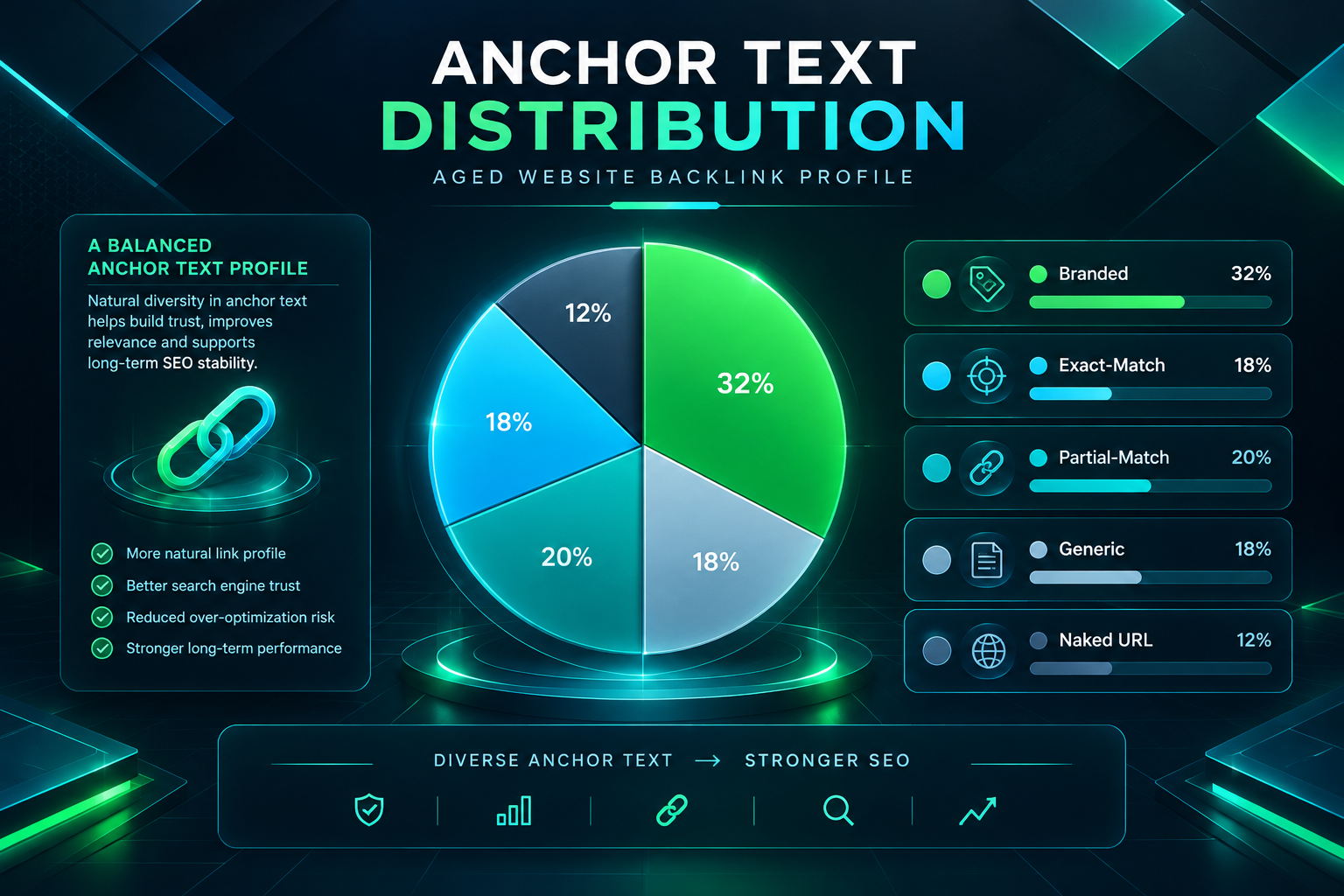
Anchor text distribution deserves particular attention. An aged website that already has a high proportion of exact-match commercial anchors pointing to its money pages is in a different position than one with a mostly branded and navigational anchor profile. PBN placements use anchor text deliberately, and the existing distribution sets the context for how new anchors will fit. If the profile already skews heavily toward exact-match terms, adding more exact-match PBN anchors may create a pattern that looks unnatural relative to the site’s link history. Conversely, a site with a very clean, mostly branded profile may have room to absorb a measured number of keyword-rich PBN anchors without disrupting the overall distribution.
Proprietary metrics such as Domain Rating from Ahrefs, Domain Authority from Moz, and Trust Flow from Majestic are useful reference points for comparing referring domain quality, but they are not Google ranking scores. Use them as relative indicators rather than absolute thresholds. A referring domain with a high DR but no topical relevance to the target site contributes differently than a lower-DR domain with strong contextual alignment.
Step 3: Investigate Domain History and Previous Ownership
Aged websites have ownership histories that are not always visible from the current site. Use the Wayback Machine at web.archive.org to review archived versions of the site across different time periods. This reveals whether the domain was previously used for a different niche, whether it was a parked page for an extended period, or whether it was repurposed from an entirely different business. A domain that spent several years as a pharmaceutical affiliate site before being rebuilt as a home improvement blog carries that history in its backlink profile and potentially in how search engines have categorized it.
Check WHOIS history where available to understand ownership transitions. Frequent ownership changes can sometimes correlate with domains that were acquired specifically for link-building purposes in earlier cycles, which may have left footprints in the link profile. This does not automatically disqualify a site from receiving PBN links, but it is context you need before making placement decisions.
Also review whether the domain has been associated with any known spam networks or link schemes in the past. Tools such as Ahrefs allow you to filter referring domains by first-seen date, which can help you identify whether large batches of links appeared suddenly — a pattern sometimes associated with earlier link-building campaigns. Understanding the site’s link acquisition history helps you plan a PBN strategy that fits the site’s current profile rather than compounding existing anomalies.
Step 4: Check for Manual Actions and Algorithmic Signals
If you have access to Google Search Console for the aged website, check the Manual Actions report directly. A manual action for unnatural links or thin content is a documented enforcement event that affects how the site is treated in search results. Adding PBN links to a site that is already under a manual action is unlikely to produce positive ranking movement and may complicate any future reconsideration process. Manual actions and algorithmic ranking adjustments are distinct concepts — a site can experience ranking declines from algorithmic signals without receiving a manual action, and vice versa.
Even without Search Console access, you can look for indirect signals. A significant and sustained drop in organic visibility that correlates with a known algorithm update period may indicate that the site was affected algorithmically. Tools such as Semrush’s organic traffic history or Ahrefs’ traffic value graph can show these patterns over time. Understanding whether a ranking decline preceded or followed a major link-building period helps you assess whether the site’s current position reflects a recoverable situation or a deeper structural issue.
It is important to distinguish between a site that has experienced ranking volatility due to competitive shifts and one that has been algorithmically suppressed for quality or link-related reasons. The former may respond well to additional PBN placements; the latter may require content or technical improvements before link-building produces measurable results. No external tool can definitively confirm an algorithmic suppression — that assessment requires careful analysis of the available signals alongside the site’s content and technical condition.
Step 5: Assess Content Quality and Topical Relevance
PBN links deliver value through the pages they point to, and those pages need to meet a basic standard of content quality and topical coherence to benefit from the placement. An aged website with thin, outdated, or poorly structured content on its target pages may not see meaningful ranking improvement from new backlinks alone. Review the pages you intend to build links toward and assess whether they adequately cover the topic they are targeting, whether the content has been updated to reflect current information, and whether the page provides a clear and useful experience for a visitor.
Topical relevance between the PBN placement site and the target website also matters. A PBN link from a domain with strong historical relevance to the target niche carries more contextual weight than a link from an unrelated domain. When auditing the aged website, map its primary topics and subtopics so that you can match PBN placements to domains with aligned content. This is particularly important for aged websites that have shifted niche focus over time — the current content may not align with the topical signals embedded in the existing backlink profile.
Check for duplicate content issues, particularly on aged websites that have been through multiple CMS migrations. Duplicate pages, syndicated content without canonical tags, and thin category or tag archives can dilute the topical signals on the site and reduce the effectiveness of link equity flowing through it.
Step 6: Evaluate Technical SEO Foundations
Technical SEO issues on the target website can limit the impact of any link-building campaign, including PBN placements. Before adding links, confirm that the site loads at an acceptable speed, that HTTPS is properly configured, and that there are no significant Core Web Vitals issues on the target pages. Aged websites are particularly prone to technical debt — outdated plugins, unoptimized images, legacy code, and hosting configurations that made sense years ago but now create performance problems.
Page speed affects both user experience and how efficiently crawlers process the site. A slow-loading target page may be crawled less frequently, which can delay the indexing of new backlinks and slow the timeline for any ranking movement. Use tools such as Google PageSpeed Insights or Screaming Frog’s performance audit features to identify the most impactful technical issues before the campaign begins.
Internal linking structure is another technical factor that directly affects how PBN link equity distributes across the site. If the target pages are poorly linked from the rest of the site, they receive less internal authority regardless of how many external backlinks point to them. Strengthening internal links to target pages before or alongside a PBN campaign is a practical way to improve the efficiency of each placement.
Step 7: Establish a Baseline for Measuring Campaign Impact
An audit is not only about identifying problems — it is also about establishing a clear baseline so that you can measure what changes after PBN placements are added. Record the current keyword rankings for the target pages, the organic traffic levels, the number of indexed pages, and the referring domain count before the campaign begins. Without this baseline, it is difficult to attribute ranking changes to specific placements or to assess whether the campaign is producing the expected results.
Set up rank tracking for the primary and secondary keywords associated with each target page. Tools such as Ahrefs, Semrush, or dedicated rank trackers allow you to monitor position changes over time and correlate them with the timing of new placements. Keep in mind that ranking changes following new backlinks can take weeks to become visible, and the timeline varies depending on crawl frequency, competition level, and the overall authority of the target site.
Document the audit findings in a structured format so that you can refer back to them as the campaign progresses. This is particularly useful when working with a link-building provider, as it allows you to share relevant context about the site’s current condition and history, which in turn helps the provider make better placement decisions.
Matching Audit Findings to PBN Placement Strategy
The audit findings should directly inform how PBN placements are structured. A site with a clean backlink profile and no history of link manipulation has more flexibility in anchor text selection and placement velocity than a site with an already aggressive anchor distribution or a history of link scheme involvement. Use the audit to define the anchor text mix for the campaign — the proportion of exact-match, partial-match, branded, and generic anchors — based on what the existing profile can absorb without creating an obvious pattern.
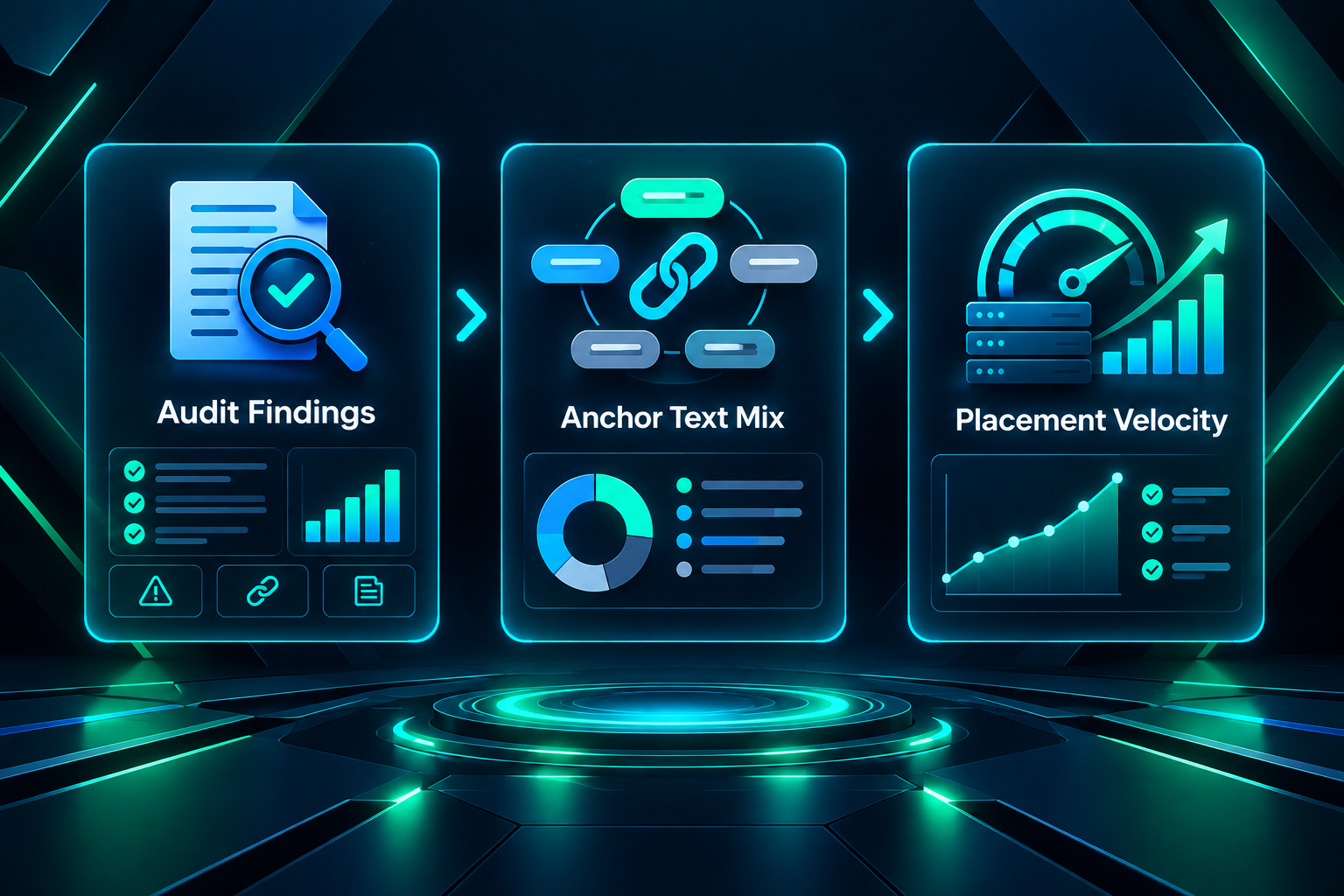
Placement velocity is another decision that the audit informs. Adding a large number of PBN links in a short period to a site that has historically grown its backlink profile slowly may create a link velocity spike that looks anomalous relative to the site’s history. A more measured approach, adding placements gradually over several weeks or months, tends to fit more naturally within the site’s established growth pattern. The right pace depends on the site’s history, competition level, and the goals of the campaign.
If the audit reveals significant technical or content issues, consider whether those should be addressed before or alongside the link-building campaign. PBN placements are most effective when the target pages are in good technical condition and offer substantive content. Addressing crawl issues, improving page speed, and strengthening internal links before adding external backlinks can improve the efficiency of each placement and produce clearer results.
Frequently Asked Questions
How long does a pre-campaign audit for an aged website typically take?
The time required depends on the size and complexity of the site. A focused audit covering indexing status, backlink profile, domain history, and key technical factors can be completed in a few hours for a smaller site. Larger sites with extensive content archives, complex redirect structures, or long ownership histories may require a more thorough review spanning one to two days. The investment is worthwhile given that it directly shapes placement decisions and campaign expectations.
Do I need Google Search Console access to audit an aged website?
Search Console access is valuable because it provides direct data on indexing coverage, manual actions, and crawl anomalies that third-party tools cannot replicate. However, a useful audit is still possible without it. Tools such as Ahrefs, Semrush, Screaming Frog, and the Wayback Machine provide substantial data on backlink profiles, technical issues, and domain history. If you are auditing a site you do not own, focus on the data available through these external tools and note where Search Console access would add clarity.
What should I do if the audit reveals a manual action on the target site?
A confirmed manual action is a significant finding that should be addressed before adding PBN links. The appropriate response depends on the type of action and its scope. Google’s Search Console documentation describes the reconsideration request process for manual actions. Adding more links to a site under a manual action is unlikely to produce positive results and may complicate any recovery effort. Consult with an experienced SEO specialist to assess the specific situation before proceeding with a link-building campaign.
How does anchor text distribution affect PBN placement decisions for aged websites?
The existing anchor text distribution sets the context for new placements. If an aged website already has a high proportion of exact-match commercial anchors, adding more exact-match PBN anchors may create a pattern that looks disproportionate relative to the site’s overall profile. The audit should map the current anchor distribution so that new placements can be chosen to complement it — typically using a mix of branded, partial-match, and generic anchors alongside any exact-match terms, with the specific ratio informed by the site’s current profile and competitive context.
Can an aged website with a poor backlink profile still benefit from PBN links?
It depends on the nature and severity of the existing issues. A site with a backlink profile that includes some low-quality links but no manual action or obvious spam pattern may still respond positively to well-placed PBN links, particularly if the target pages are in good technical condition and the content is substantive. A site with a heavily manipulated profile, a history of link scheme involvement, or an active manual action presents a more complex situation where link-building alone is unlikely to produce the desired results without addressing the underlying issues first.
How often should I re-audit a site during an ongoing PBN campaign?
A light monitoring review every four to six weeks is a reasonable approach for most campaigns. This involves checking rank tracking data, reviewing any new referring domains that have appeared or been lost, and confirming that target pages remain indexed. A more thorough audit is worth running if you observe unexpected ranking declines, significant changes in organic traffic, or if the campaign is entering a new phase with additional placements. Regular monitoring allows you to detect changes early and adjust the campaign strategy accordingly.
Preparing Your Aged Website for a Successful PBN Campaign
A structured pre-campaign audit transforms PBN link-building from a speculative exercise into a data-informed strategy. By verifying indexing health, reviewing the existing backlink profile, investigating domain history, checking for manual actions, assessing content quality, and evaluating technical foundations, you build a clear picture of what the aged website can support and where its vulnerabilities lie. That picture directly shapes placement decisions — anchor text selection, placement velocity, target page prioritization, and the sequencing of any technical improvements alongside the link-building work.
Aged websites offer genuine advantages as link targets, including established crawl patterns and existing topical signals, but those advantages are only accessible when the site’s history is understood rather than assumed. The audit process is what converts that potential into a workable campaign plan. Skipping it means making placement decisions without the context needed to make them well.
If you are planning a PBN campaign for an aged website and want to discuss placement strategy, anchor text approach, or domain selection based on your site’s specific profile, the team at PBN Backlinks Service can help you assess your requirements and structure a campaign that fits your site’s current condition and goals.