

Evaluating an expired domain before adding it to a private blog network requires more than a quick glance at its Domain Rating or Trust Flow score. Spam history, previous manual actions, thin-content penalties, and low-quality link profiles can all reduce or eliminate the ranking value a domain might otherwise pass. This guide walks through the specific checks that help you assess whether an expired domain carries genuine authority or a history that could undermine your network’s effectiveness.
Key Takeaways
- No single metric confirms a clean spam history; a reliable assessment combines archive checks, backlink profile analysis, index status verification, and manual-action research.
- Wayback Machine snapshots reveal whether a domain previously hosted thin content, adult material, pharmaceutical spam, or unrelated niches that may have attracted low-quality links.
- Backlink profile quality matters more than raw link counts; a domain with hundreds of links from link farms or foreign-language spam sites carries meaningful risk regardless of its DR or DA score.
- Google Search Console cannot be accessed for a domain you do not yet own, but index status checks and third-party spam signals can indicate whether a domain has been deindexed or flagged.
- Topical relevance between the expired domain’s historical content and your target niche is a practical quality factor that affects how naturally a link placement reads to both crawlers and human editors.
Why Spam History Matters for Expired PBN Domains
When a domain expires and becomes available for registration or auction, it carries its entire link history with it. That history includes every referring domain, every anchor text pattern, and every content decision made by its previous owners. If those previous owners used the domain as part of a link farm, redirected it through a spam network, or allowed it to host low-quality affiliate pages, those signals are already embedded in the domain’s backlink profile and in Google’s index records. Acquiring such a domain and building a PBN site on it does not automatically reset those signals.
The practical concern is not that every expired domain with imperfect history is worthless. Many domains have minor inconsistencies in their link profiles that reflect normal web activity over years of operation. The concern is specifically with domains that show concentrated spam patterns: large volumes of links from link directories, comment spam, foreign-language link networks, or previous use as a redirect target for pharmaceutical or gambling spam. These patterns are the ones most likely to have attracted algorithmic scrutiny or a manual review during the domain’s active life.
Understanding what to look for before purchasing a domain allows you to make a more informed decision about whether the domain’s existing authority is likely to be usable or whether it represents a liability that outweighs its apparent metrics.
Step 1: Check the Domain’s Indexed Status
Before investing time in a full audit, confirm whether the domain is currently indexed by Google. A domain that has been deindexed entirely is a significant warning sign, though it does not automatically confirm a manual action. Use a site: search operator in Google to check whether any pages from the domain appear in the index. If the domain returns zero results and was previously an active website with content, that absence warrants further investigation.
A deindexed domain may have been penalized under a manual action for unnatural links or thin content, or it may simply have been inactive long enough for Google to drop its pages through natural crawl prioritization. These two situations have different implications. A domain that dropped from the index due to inactivity can often recover once quality content is published and the site is recrawled. A domain that was actively penalized may carry a more persistent flag. Because you cannot access the previous owner’s Google Search Console data, you cannot confirm which scenario applies with certainty, which is why the index check is a starting point rather than a definitive answer.
Bing’s index can also be checked using the site: operator on Bing. A domain indexed on Bing but absent from Google is a pattern worth noting, as it may suggest Google-specific filtering rather than general inactivity.
Step 2: Review the Domain’s Archive History
The Wayback Machine at web.archive.org provides snapshots of a domain’s content across its history. This is one of the most informative checks available for an expired domain because it shows what the site actually published, not just what its current metrics suggest.
When reviewing archive snapshots, look for the following patterns that indicate elevated spam risk:
- Sudden niche changes: A domain that operated as a legitimate business website for several years and then switched to hosting pharmaceutical links, casino content, or unrelated affiliate pages shortly before expiring is a common spam-repurposing pattern.
- Thin or templated content: Pages with minimal original text, keyword-stuffed paragraphs, or obvious article-spinning patterns suggest the domain was used for low-quality link building rather than genuine publishing.
- Redirect history: Some domains were used purely as redirect vehicles, passing link equity to other sites without hosting meaningful content. Archive snapshots for these domains often show blank pages, redirect notices, or placeholder content.
- Adult, pharmaceutical, or gambling content: These niches attract disproportionate volumes of low-quality links and are frequently associated with spam networks. A domain with this content history may carry link profile characteristics that reflect that environment.
- Gaps in archive coverage: Extended periods with no snapshots can indicate the domain was inactive, redirected, or deliberately excluded from archiving. Gaps are not automatically disqualifying but deserve explanation.
A domain with a consistent, topically coherent archive history in a relevant niche is a meaningfully better starting point than one with fragmented or suspicious content patterns, even if both show similar third-party authority metrics.
Step 3: Audit the Backlink Profile
The backlink profile is where spam history is most directly visible. Tools such as Ahrefs, Semrush, and Majestic each provide referring domain data, anchor text distributions, and link-type breakdowns that allow you to assess the quality of the links pointing to an expired domain.
Referring Domain Quality
Examine the referring domains list and look for patterns rather than totals. A domain with 200 referring domains from recognizable publications, industry websites, and established blogs in a relevant niche is a stronger candidate than one with 800 referring domains that are predominantly link directories, comment spam sources, or foreign-language sites with no topical connection. Raw referring domain counts are a starting metric, not a quality signal on their own.
Pay particular attention to whether a significant portion of referring domains appear to be part of the same network. Identical or near-identical site structures, the same hosting ranges, or the same registration patterns across many referring domains suggest the domain’s link profile was artificially constructed rather than earned through genuine publishing activity.
Anchor Text Distribution
Anchor text distribution is one of the clearest indicators of previous spam link building. A natural backlink profile for a legitimate website typically shows a mix of branded anchors, URL anchors, generic anchors such as “click here” or “read more”, and a smaller proportion of keyword-rich anchors. A domain whose anchor text profile is dominated by exact-match commercial keywords across hundreds of referring domains is a strong indicator of previous manipulative link building, regardless of what the domain’s content history shows.
Majestic’s Trust Flow and Citation Flow metrics provide a useful ratio check. A domain with a Citation Flow significantly higher than its Trust Flow often has a large volume of links from low-quality sources. This ratio is not a definitive spam indicator on its own, but a large gap between the two metrics warrants closer inspection of the referring domain list.
Link Velocity and Profile Stability
Review the historical link acquisition pattern using Ahrefs’ referring domains graph or Semrush’s backlink trend data. A domain that accumulated most of its links in a short burst and then saw rapid link loss is a pattern associated with link schemes rather than organic growth. Stable, gradual link acquisition over years followed by a natural decline as the site became inactive is a more reassuring pattern. Sudden spikes in referring domains, particularly if they coincide with a niche change visible in the archive, are worth treating as a warning signal.
Step 4: Check for Manual Action Indicators
Google does not publish a public list of domains that have received manual actions, and you cannot access the previous owner’s Search Console account. However, several indirect signals can suggest that a domain attracted manual review during its active life.
The most reliable indirect indicator is a combination of a deindexed status, a heavily spam-pattern anchor text profile, and archive evidence of thin or manipulative content. When all three are present together, the probability that the domain attracted algorithmic or manual scrutiny is meaningfully higher than when only one signal is present.
Some SEO practitioners also check whether a domain appears in publicly discussed spam link networks or has been referenced in disavow file discussions in SEO communities. While this is not a systematic check, it can surface domains that were widely used in link schemes and are therefore more likely to be recognized by spam-detection systems.
It is important to distinguish between a manual action, which is a human-reviewed enforcement decision recorded in Search Console, and algorithmic devaluation, which is an automated reduction in the weight assigned to specific links or pages. These are different mechanisms with different implications. A domain whose links were algorithmically devalued may still pass some ranking signal depending on the specific links and pages involved. A domain that received a sitewide manual action for unnatural links is a more serious concern. Because neither can be confirmed without access to the previous owner’s Search Console data, the assessment remains probabilistic rather than definitive.
Step 5: Assess Topical Relevance and Niche Fit
Topical relevance is a practical quality factor that affects how useful an expired domain is likely to be in a PBN context. A domain with a consistent history in a niche closely related to your target website is generally a more useful acquisition than a domain with strong metrics but an unrelated content history.
Relevance matters for two reasons. First, the referring domains pointing to a topically relevant expired domain are more likely to be from genuine publishers in that niche, which tends to correlate with higher link quality. Second, a PBN site built on a topically relevant domain can host content that reads naturally in context, which is a meaningful quality consideration when evaluating placement coherence.
When assessing topical relevance, use the archive snapshots to confirm the domain’s primary subject matter across its history, not just its most recent content. A domain that spent most of its life as a gardening resource but switched to hosting finance links in its final year before expiring should be evaluated based on its gardening-era link profile, not the finance-era content.
Step 6: Verify Trademark and Ownership Considerations
Before registering or purchasing an expired domain, confirm that the domain name does not belong to an active trademark. Domains that were previously operated by a business that still exists under that brand name can create legal complications if reregistered. This is a practical due-diligence step rather than an SEO concern, but it is relevant to the overall domain evaluation process.
Also check whether the domain is currently listed in any domain auction platforms and whether the auction history provides any additional context about why the domain expired. Domains that expired due to non-renewal by a legitimate business are generally more straightforward acquisitions than domains that were dropped after a hosting suspension or registrar action.
Combining Signals: Building a Practical Assessment Framework
No single check is sufficient to confirm or rule out spam history. A reliable assessment combines multiple signals and looks for consistency across them. The following framework summarizes the key checks and what each signal contributes to the overall picture:
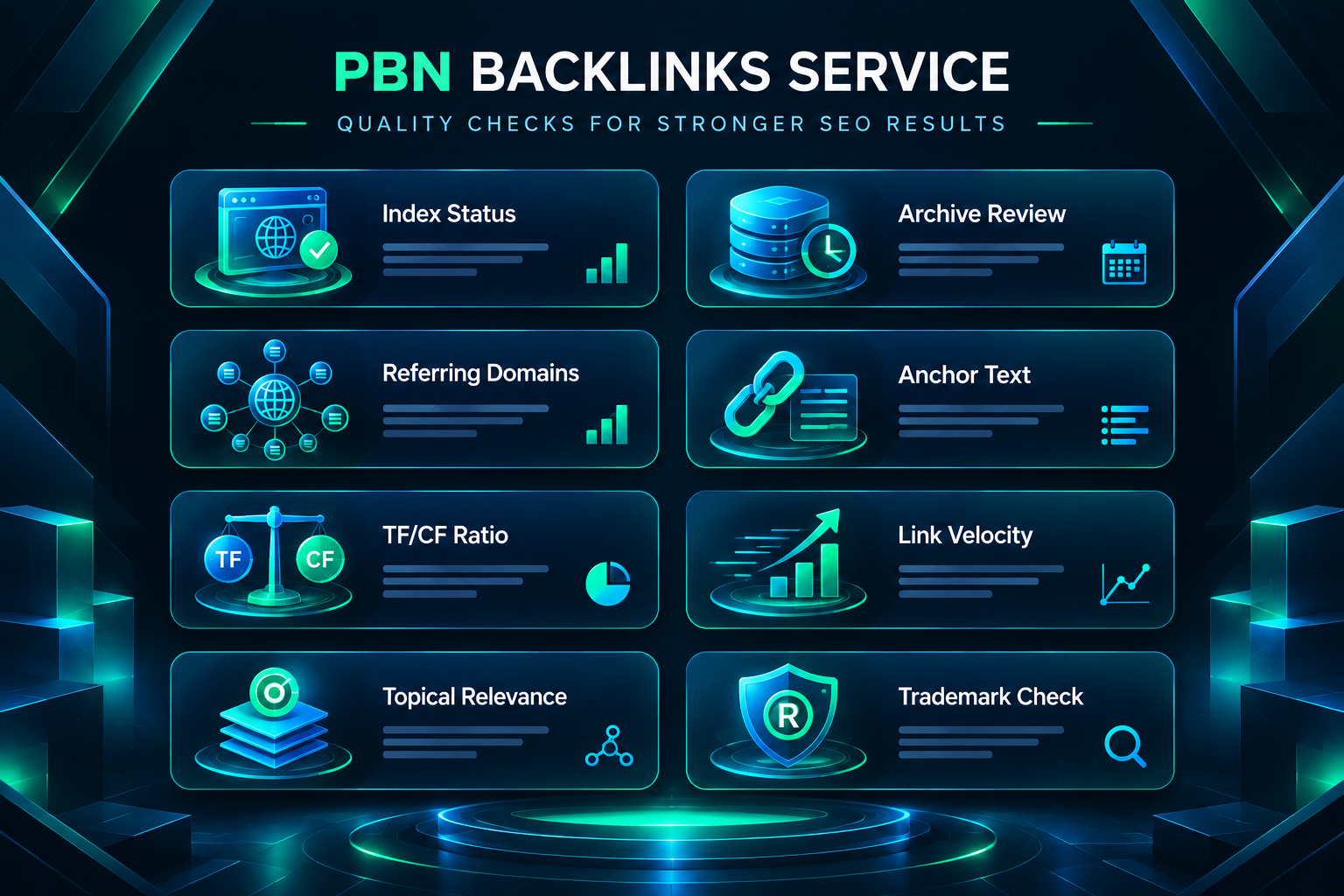
- Index status check: Confirms whether the domain is currently visible to Google and flags potential deindexation.
- Wayback Machine review: Reveals content history, niche changes, thin content patterns, and redirect use.
- Referring domain quality audit: Identifies link farm patterns, foreign-language spam, and artificial link networks.
- Anchor text distribution analysis: Highlights over-optimized or manipulative link building from the domain’s past.
- Trust Flow to Citation Flow ratio: Provides a quick quality-to-quantity ratio check for the link profile.
- Link velocity and profile stability: Distinguishes organic link growth from burst-and-drop spam patterns.
- Topical relevance assessment: Confirms whether the domain’s history aligns with your intended niche and placement context.
- Trademark and ownership check: Prevents legal complications from reregistering a brand-associated domain.
When most of these signals are positive, the domain is a stronger candidate for PBN use. When several signals raise concerns, the domain’s apparent metrics may not reflect usable authority, and the acquisition cost may not be justified by the likely link value.
Common Spam Patterns to Recognize Quickly
With practice, certain spam patterns become recognizable early in the evaluation process. Knowing what to look for allows you to move through domain lists more efficiently and focus detailed analysis on the most promising candidates.
Domains that were previously used as parasite SEO hosts often show a pattern of high-volume, short-duration link acquisition followed by complete link loss. The archive typically shows pages optimized for competitive commercial keywords with minimal original content. These domains may show strong historical metrics in tools like Ahrefs but carry a profile that reflects their spam use rather than genuine authority.
Domains previously used in private blog networks that were deindexed sometimes reappear in expired domain marketplaces. These domains may have been part of a network that was identified and penalized, and their link profiles often show the characteristics of that network: similar anchor patterns, links from other domains in the same network, and a content history that does not match the domain’s apparent niche.
Domains that were redirected through spam campaigns may show referring domains that link to the domain’s root URL with commercial anchor text, even though the domain never hosted content at those URLs. This pattern is visible in backlink tools as a concentration of links to the homepage with keyword-rich anchors and no corresponding content in the archive.
Frequently Asked Questions
Can I check if an expired domain received a Google manual action before buying it?
Not directly. Google Search Console manual action data is only accessible to verified site owners, and you cannot access the previous owner’s account. You can assess the probability of a past manual action by combining index status checks, backlink profile analysis, and archive content review. When multiple spam signals align, the risk of a previous enforcement action is meaningfully higher, but certainty is not achievable without the original Search Console data.
Is a low Trust Flow always a sign of spam history?
Not necessarily. Trust Flow, a Majestic proprietary metric, reflects the quality of links pointing to a domain relative to a set of seed sites. A low Trust Flow can result from spam links, but it can also reflect a domain that simply had few links from high-authority sources. The Trust Flow to Citation Flow ratio is more informative than Trust Flow alone. A domain with low Trust Flow and low Citation Flow may just be a small site, while a domain with low Trust Flow and high Citation Flow is more likely to have a spam-heavy link profile.
How many referring domains should an expired PBN domain have?
There is no universal minimum or target number. The quality and topical relevance of referring domains matters more than the count. A domain with 30 referring domains from established industry publications in a relevant niche may be more useful than one with 300 referring domains from link directories and comment spam sources. Evaluate the composition of the referring domain list rather than optimizing for a specific number.
Does a domain’s age affect its spam history risk?
Domain age alone is not a reliable spam history indicator. An older domain may have accumulated more legitimate links over time, but it also had more time to be used in spam campaigns or repurposed through multiple ownership changes. Age is most useful as context when combined with archive history: a domain that has been consistently active in the same niche for many years is generally a more stable acquisition than one that changed hands and niches repeatedly.
Should I disavow links on an expired domain before using it in a PBN?
Disavowal through Google Search Console applies to links pointing to your own verified properties and affects how Google treats those links when evaluating your site. It is not a mechanism for cleaning up the backlink profile of a domain you are considering purchasing. Once you register a domain and build a site on it, you can submit a disavow file for that domain’s property if you believe specific low-quality links are causing harm, but this is a reactive step rather than a pre-purchase cleaning tool. The more practical approach is to assess the backlink profile before purchase and avoid domains whose spam signals are severe enough to require remediation.
Which tools are most useful for checking expired domain spam history?
Ahrefs and Semrush both provide comprehensive backlink profile data, referring domain lists, anchor text breakdowns, and historical link graphs. Majestic adds Trust Flow and Citation Flow metrics that are useful for quick quality-to-quantity ratio checks. The Wayback Machine is essential for content history review. Using at least two backlink tools alongside the Wayback Machine gives a more complete picture than relying on any single data source, since each tool’s crawler coverage differs and some links may appear in one tool but not another.
Assessing Expired Domains Before They Join Your Network
Checking an expired domain for spam history is a multi-step process that combines content archive review, backlink profile analysis, index status verification, and metric interpretation. No single check provides a definitive answer, and some uncertainty is unavoidable given that you cannot access the previous owner’s Search Console data. What the process does provide is a structured way to distinguish domains whose authority appears to reflect genuine publishing history from those whose metrics are artifacts of spam activity.
The most important practical principle is to treat spam history assessment as a filtering process rather than a binary pass-or-fail test. Domains with minor inconsistencies in their link profiles are common and do not automatically represent poor acquisitions. Domains with concentrated spam patterns across multiple signals — deindexation, manipulative anchor text, thin archive content, and link farm referring domains — present a more meaningful risk that the domain’s apparent authority may not translate into usable ranking value.
If you are evaluating expired domains for a private blog network and want guidance on which quality signals matter most for your specific niche and target pages, PBN Backlinks Service can help you assess domain and placement quality as part of a broader link-building strategy review. A domain that passes a thorough spam history check is a meaningfully stronger foundation for a PBN placement than one selected on metrics alone.