

When you acquire an expired domain for a private blog network, the backlink profile it carried before expiry is one of the most important factors shaping its potential value. But expired domains rarely arrive with their full link profile intact. Some referring domains drop their links over time, some pages get removed, and some links that appear in a tool’s index may no longer be live. Evaluating which backlinks have been lost, why they were lost, and what the remaining profile actually looks like is a practical skill that directly affects whether a domain is worth building on or purchasing.
Key Takeaways
- Lost backlinks on an expired PBN domain are not automatically disqualifying, but the pattern of loss matters more than the raw count of missing links.
- Backlink analysis tools such as Ahrefs, Majestic, and Semrush each index links differently, so cross-referencing more than one tool gives a more complete picture of a domain’s historical profile.
- Evaluating lost links requires looking at the quality and topical relevance of what remains, not just what has disappeared.
- Anchor text distribution, referring domain diversity, and the historical context of the domain’s content all affect how useful the surviving link profile is for a PBN placement.
- A domain with a heavily eroded or manipulated-looking backlink history may carry less usable authority than its current metrics suggest.
Why Backlinks Disappear from Expired Domains
Backlinks on expired domains are lost for several distinct reasons, and understanding the cause of loss helps you interpret what the remaining profile means. The most common reason is natural link decay: websites that linked to the original domain may have updated their content, removed the linking page, or shut down entirely. This type of loss is normal across the web and does not necessarily indicate anything problematic about the expired domain itself.
A second cause is domain expiry lag. When a domain expires and goes dark, referring sites may eventually remove broken links through routine maintenance or automated link-checking. The longer a domain sat unregistered or parked, the more link decay it is likely to have experienced. Domains that were dropped for only a short period before being acquired tend to retain more of their original profile than those that sat expired for months or years.
A third cause is tool indexing differences. Backlink tools do not crawl the entire web simultaneously, and their historical indexes vary in depth and recency. A link that appears as “lost” in one tool may still be live and simply not yet recrawled by that tool’s spider. Conversely, a link that appears active in a tool’s index may have been removed from the live page. This distinction matters when you are making acquisition decisions based on tool data alone.
Finally, some links are lost because the original domain’s content was thin, spammy, or part of a previous link scheme that referring sites later cleaned up. If a large portion of the backlink profile disappeared in a short window, particularly around a known algorithm update period, that pattern deserves closer scrutiny.
Tools for Auditing Lost Backlinks
No single backlink tool provides a complete or perfectly current picture of an expired domain’s link history, but several tools are widely used in PBN domain research and each has different strengths.
Ahrefs maintains one of the largest active backlink indexes and provides a dedicated “Lost” filter in its Site Explorer that shows links marked as no longer live based on its most recent crawl. The tool also shows the date a link was first found and the date it was last seen, which helps you identify whether link loss was gradual or sudden. Ahrefs’ Domain Rating (DR) is a proprietary metric and does not directly represent Google’s assessment of a domain, but it can serve as a relative indicator of referring domain strength when used alongside other signals.
Majestic offers both a Fresh Index and a Historic Index. The Historic Index is particularly useful for expired domain research because it retains records of links that may no longer be live, giving you a longer view of what the domain once attracted. Majestic’s Trust Flow (TF) and Citation Flow (CF) metrics can help you assess the quality composition of the referring domain set, though again these are proprietary scores rather than Google signals.
Semrush provides backlink auditing with its own crawl data and can be useful for cross-referencing, particularly for identifying referring domains that appear in one tool but not another. Using two or three tools together reduces the risk of making a domain acquisition decision based on a single tool’s incomplete snapshot.
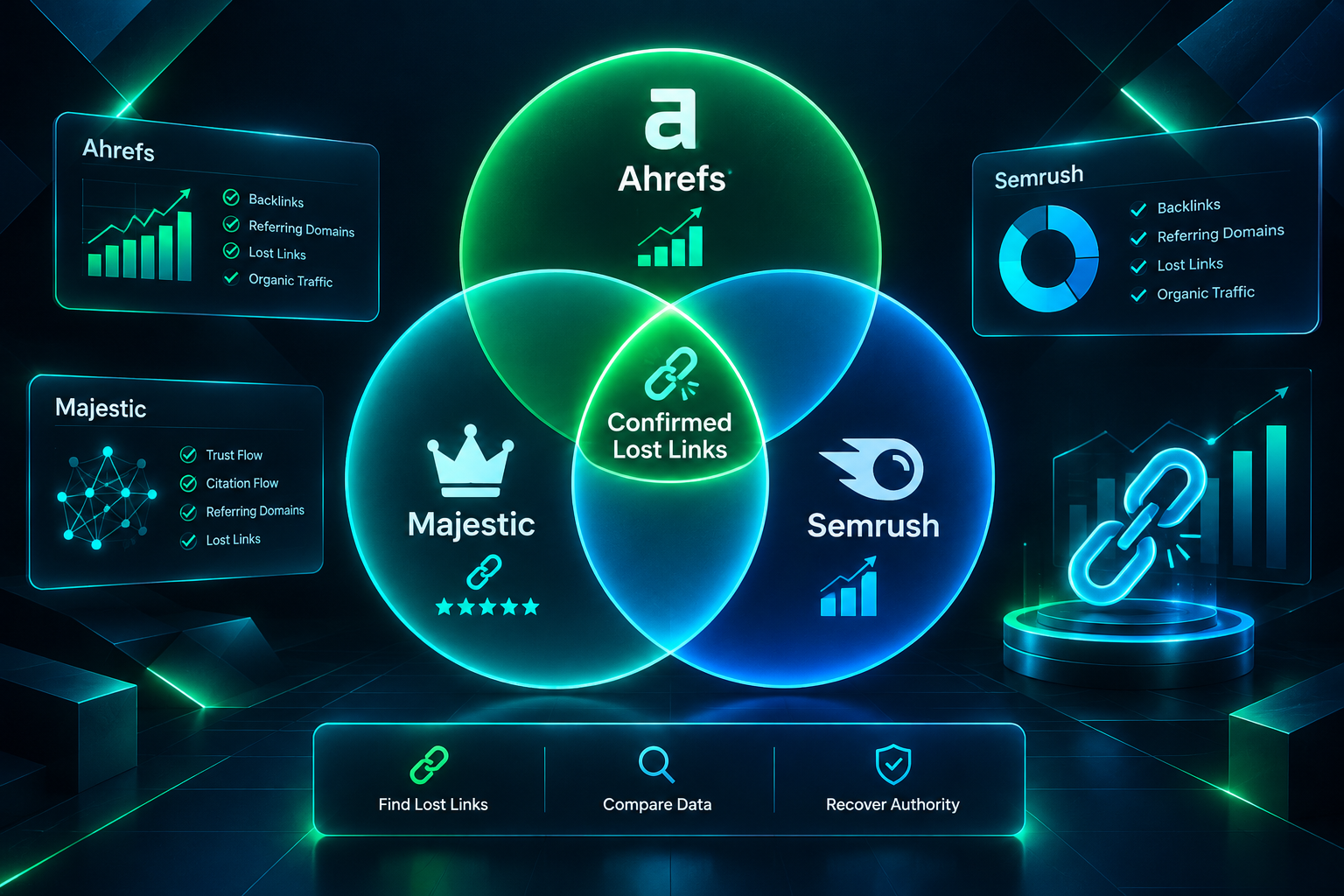
When auditing lost backlinks, export the full referring domain list from each tool, filter for lost or historic links, and compare the results. Pay attention to the domains that appear consistently across tools as lost, since those are more likely to represent genuine link removal rather than a crawl gap.
What to Look for in the Lost Link Profile
The goal of evaluating lost backlinks is not simply to count how many links are gone. It is to understand the quality and character of what was lost, what remains, and whether the surviving profile is coherent and useful for a PBN placement.
Volume and Rate of Loss
A domain that has lost a small percentage of its referring domains over several years is behaving normally. A domain that has lost the majority of its referring domains in a short period, or that shows a sharp drop in link count around a specific date, warrants more investigation. Sudden mass link loss can indicate that the domain’s previous content was removed, that a large linking network collapsed, or that referring sites cleaned up links in response to a spam-related event. None of these scenarios automatically disqualify a domain, but they change the risk profile of the acquisition.
Quality of Lost Referring Domains
Not all lost links represent lost value. If the links that disappeared came from low-quality directories, comment spam, forum profiles, or other low-relevance sources, their loss may actually improve the profile’s overall quality composition. Conversely, if the lost links came from editorially placed, topically relevant pages on established websites, the domain’s surviving profile may be weaker than its current metrics suggest. Reviewing the lost referring domains individually, or at least sampling them, helps you distinguish between these scenarios.
Anchor Text Distribution in Lost vs. Surviving Links
Anchor text distribution is worth examining separately for lost and surviving links. A domain whose lost links were heavily exact-match keyword anchors may have a cleaner-looking surviving profile, but it may also have been part of a previous link scheme. A domain whose surviving links carry a natural mix of branded, naked URL, and topical anchors is generally more useful as a PBN asset than one where the remaining anchors are concentrated in a single keyword pattern. Reviewing the anchor text breakdown in tools like Ahrefs or Majestic gives you this picture quickly.
Topical Relevance of the Surviving Profile
For a PBN domain to pass relevant authority to a target page, the domain’s historical content and its surviving backlink profile should have some topical connection to the niche you intend to use it for. A domain that previously operated as a travel blog and retains links from travel-related referring domains is a different asset from a domain that has a mixed or unrelated link profile. Checking the Wayback Machine alongside the backlink audit helps you confirm what the domain was actually about and whether the surviving links are contextually coherent.
Interpreting Metric Changes After Link Loss
Proprietary metrics such as Ahrefs DR, Majestic TF, and Moz Domain Authority (DA) are calculated from the referring domain data each tool has indexed. When a domain loses a significant number of referring domains, its metrics in these tools will typically decline. This is expected and does not by itself indicate that the domain is unusable. What matters is whether the metric decline reflects a loss of genuinely strong referring domains or a loss of low-quality links that were inflating the score artificially.
A domain with a DR of 30 backed by twenty topically relevant, editorially placed referring domains from established websites may be more useful for a PBN placement than a domain with a DR of 45 backed by hundreds of low-quality directory links, many of which are already lost. Metrics are a starting point for evaluation, not a final verdict. The composition and relevance of the surviving referring domain set matters more than the headline score.
It is also worth noting that metric tools update their indexes at different intervals. A domain you are evaluating today may show a higher or lower metric than it will show in a few weeks once the tool’s next crawl cycle completes. If you are comparing domains across tools, check when each tool last crawled the domain’s backlink data, since a stale crawl can make a domain look stronger or weaker than it currently is.
Red Flags in a Lost Backlink Profile
Certain patterns in a lost backlink audit suggest that a domain may carry more risk or less usable authority than its current metrics indicate. These are not automatic disqualifiers, but they are factors worth weighing before committing to an acquisition.
- Sudden mass link loss around a specific date: This can indicate a previous spam event, a network collapse, or a manual action that caused referring sites to remove links. Checking the Wayback Machine for the domain’s content around that date can help clarify the context.
- Surviving links concentrated in a single low-quality source type: If the remaining referring domains are mostly web directories, comment sections, or profile pages, the domain’s surviving profile may carry limited placement value regardless of its current metric score.
- Heavily exact-match anchor text in surviving links: A surviving profile dominated by exact-match commercial anchors may suggest the domain was previously used in an aggressive link scheme, which could affect how search engines assess links from it.
- No coherent topical history: A domain that has been repurposed multiple times across unrelated niches, or that shows no consistent content theme in its archived pages, may have a fragmented link profile that is difficult to use effectively for a targeted PBN placement.
- Discrepancy between tool metrics and actual referring domain quality: A high DR or TF score that is supported almost entirely by lost links, with very few quality referring domains remaining, suggests the current metric is a lagging indicator of a profile that has already substantially eroded.
Assessing What the Surviving Profile Can Actually Deliver
After completing the lost backlink audit, the practical question is whether the surviving profile is strong enough and relevant enough to make the domain a useful PBN asset. This assessment involves combining several data points rather than relying on any single metric or link count.
Start by identifying the number of unique referring domains that are still live and confirmed by at least one tool’s active index. Then sample those referring domains to assess their own quality: do they have real content, a coherent topic, and their own referring domain base? Referring domains that are themselves thin, parked, or part of obvious link networks add less value to the expired domain’s profile than referring domains that appear to be independently operated websites.
Next, consider the topical alignment between the surviving referring domains and the niche you intend to target with the PBN placement. A domain with fifteen surviving referring domains that are all topically relevant to your target niche may be more useful than a domain with fifty surviving referring domains spread across unrelated topics.
Finally, check whether the domain has any indexing history that suggests previous manual actions or spam-related issues. Google Search Console data is not available for domains you do not own, but you can look for signals in the Wayback Machine, check whether the domain’s pages are currently indexed in Google by searching for the domain, and review whether the domain appears on any known spam or deindexed domain lists that circulate in the SEO community. These checks are not definitive, but they add useful context to the backlink audit.
Using Lost Backlink Data to Compare Domain Options
When you are evaluating multiple expired domains for a PBN, lost backlink data becomes a useful comparative tool. Rather than comparing domains solely on their current DR or TF scores, you can compare the stability and quality of their surviving profiles alongside the character of what has been lost.
A useful comparison framework looks at: the percentage of original referring domains still active, the quality composition of surviving referring domains, the topical coherence of the surviving profile, the anchor text distribution of surviving links, and any red flags in the loss pattern. A domain that scores well across these dimensions is generally a stronger acquisition candidate than one with a higher headline metric but a heavily eroded or low-quality surviving profile.
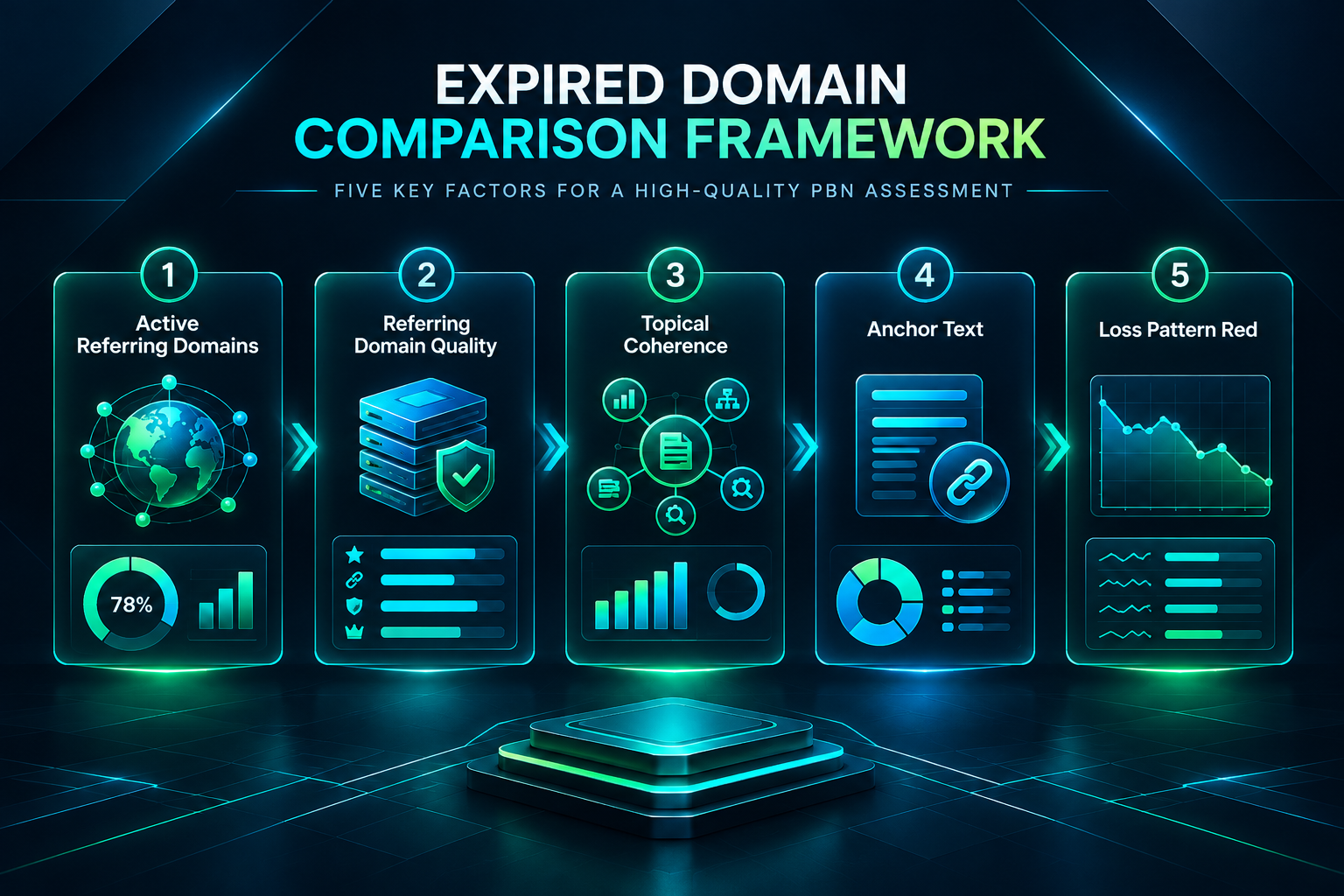
This kind of structured evaluation takes more time than simply filtering by DR or TF, but it reduces the risk of acquiring a domain whose metric score is a historical artifact rather than a reflection of its current link profile strength. For PBN placements where the goal is to pass meaningful authority to a target page, the quality of the surviving profile is what matters in practice.
Frequently Asked Questions
How many lost backlinks is too many for an expired PBN domain?
There is no fixed threshold that makes a domain unsuitable. What matters is the quality and topical relevance of the links that remain, not the absolute number that have been lost. A domain that has lost many low-quality links but retains a core of strong, relevant referring domains may still be a useful PBN asset. Evaluate the surviving profile on its own merits rather than focusing solely on the loss count.
Do backlink tools show all lost links accurately?
No. Each tool has its own crawl frequency and index depth, so a link marked as lost in one tool may still be live and simply not yet recrawled. Cross-referencing Ahrefs, Majestic, and Semrush gives a more complete picture than relying on a single tool. For expired domain research, Majestic’s Historic Index is particularly useful because it retains records of links that may no longer appear in active indexes.
Can a domain with significant link loss still be useful for a PBN?
Yes, depending on what remains. If the surviving referring domains are topically relevant, editorially placed, and from independently operated websites, the domain may still carry useful authority for a PBN placement. The key is to evaluate the surviving profile carefully rather than assuming that link loss automatically disqualifies a domain.
What does a sudden drop in referring domains around a specific date indicate?
It can indicate several things: a previous spam event, a network of linking sites that collapsed, content removal from the expired domain, or referring sites cleaning up links in response to a quality update. Checking the Wayback Machine for the domain’s content around that date and reviewing the character of the lost referring domains helps clarify the likely cause.
Should anchor text distribution in lost links affect my evaluation?
Yes. If the lost links carried heavily exact-match commercial anchors, their removal may have left a cleaner-looking surviving profile. But if the surviving links are also concentrated in exact-match anchors, that pattern is worth noting because it may reflect a previous link scheme. A natural anchor text distribution in the surviving profile is generally a positive signal for a PBN domain.
How does the Wayback Machine help with lost backlink evaluation?
The Wayback Machine shows archived versions of the expired domain’s content, which helps you confirm what the domain was actually about, whether it had real content, and whether it was repurposed across multiple unrelated niches. This context is useful for assessing whether the surviving backlink profile is topically coherent and whether the domain’s history is consistent with the niche you intend to use it for.
Making a Practical Decision About an Expired PBN Domain
Evaluating lost backlinks on an expired PBN domain is ultimately about building a realistic picture of what the domain’s link profile can actually deliver, rather than what its headline metrics suggest. A structured audit that examines the volume and pattern of link loss, the quality and topical relevance of surviving referring domains, anchor text distribution, and any red flags in the loss history gives you a much more reliable basis for an acquisition decision than a single DR or TF score.
The most useful expired PBN domains tend to be those with a stable, topically coherent surviving profile, a natural anchor text distribution, and a loss pattern that reflects normal web decay rather than a previous spam event or network collapse. Domains that meet these criteria are worth prioritizing even if their current metric scores are modest, because the surviving profile is more likely to represent genuine, usable authority.
If you are assessing expired domains for PBN placements and want to discuss domain quality criteria, backlink profile evaluation, or how a specific domain fits your campaign goals, PBN Backlinks Service can help you review your requirements and identify domains that match your target niche and link profile standards.