

When a money site shuts down, the PBN domains that supported it do not automatically lose their value. The backlink profiles, domain authority metrics, and topical relevance those assets carry can still serve a purpose — whether that means redirecting link equity to a new project, repurposing the domains within a restructured network, holding them for future campaigns, or selling them to another operator. The right course of action depends on the quality of each domain, the reason the money site closed, and what your next SEO objectives look like.
Key Takeaways
- PBN domains retain independent value after a money site closes; their backlink profiles, referring domains, and topical relevance do not disappear simply because the target site is gone.
- The most practical options are redirecting link equity to a replacement money site, repurposing domains within an existing or new network, parking and holding domains for future use, or selling them to another operator.
- Domain quality assessment — covering referring domain history, anchor text distribution, indexing status, and topical relevance — should guide every asset management decision before any action is taken.
- Letting high-quality PBN domains expire without a plan is usually the least efficient outcome; even a short holding period preserves options that would otherwise be permanently lost.
- Each domain’s situation is different, and a blanket approach rarely produces the best result across a mixed-quality network.
Why PBN Domains Retain Value After a Money Site Closes
A PBN domain’s value is rooted in its own backlink profile, not in the money site it was pointing to. When a money site closes, the referring domains pointing to each PBN asset remain intact, the domain’s indexing history does not reset, and the topical relevance accumulated through content and inbound links persists. What changes is simply the destination of the outbound link — and that is something an operator can control.
Proprietary metrics such as Domain Rating from Ahrefs, Domain Authority from Moz, and Trust Flow from Majestic reflect the strength of a domain’s inbound link profile. These scores do not collapse when a money site disappears. A PBN domain with a strong, clean referring domain profile and relevant topical history is still a usable SEO asset regardless of what happened to the site it was previously supporting. The practical question is how to deploy that asset most efficiently given your current campaign goals.
One important caveat: if the money site closed because of a manual action, algorithmic suppression, or a spam-related issue that also implicated the PBN domains themselves, those domains may carry a different risk profile than domains from a network that supported a site that simply became commercially unviable. Distinguishing between these scenarios is the first step in any asset management review.
Auditing Your PBN Domains Before Making Any Decision
Before redirecting, repurposing, selling, or parking any PBN domain, a structured audit of each asset produces a clearer picture of what you are actually working with. Rushing this step often leads to wasted redirect equity, underpriced domain sales, or repurposing decisions that do not match the domain’s actual topical profile.
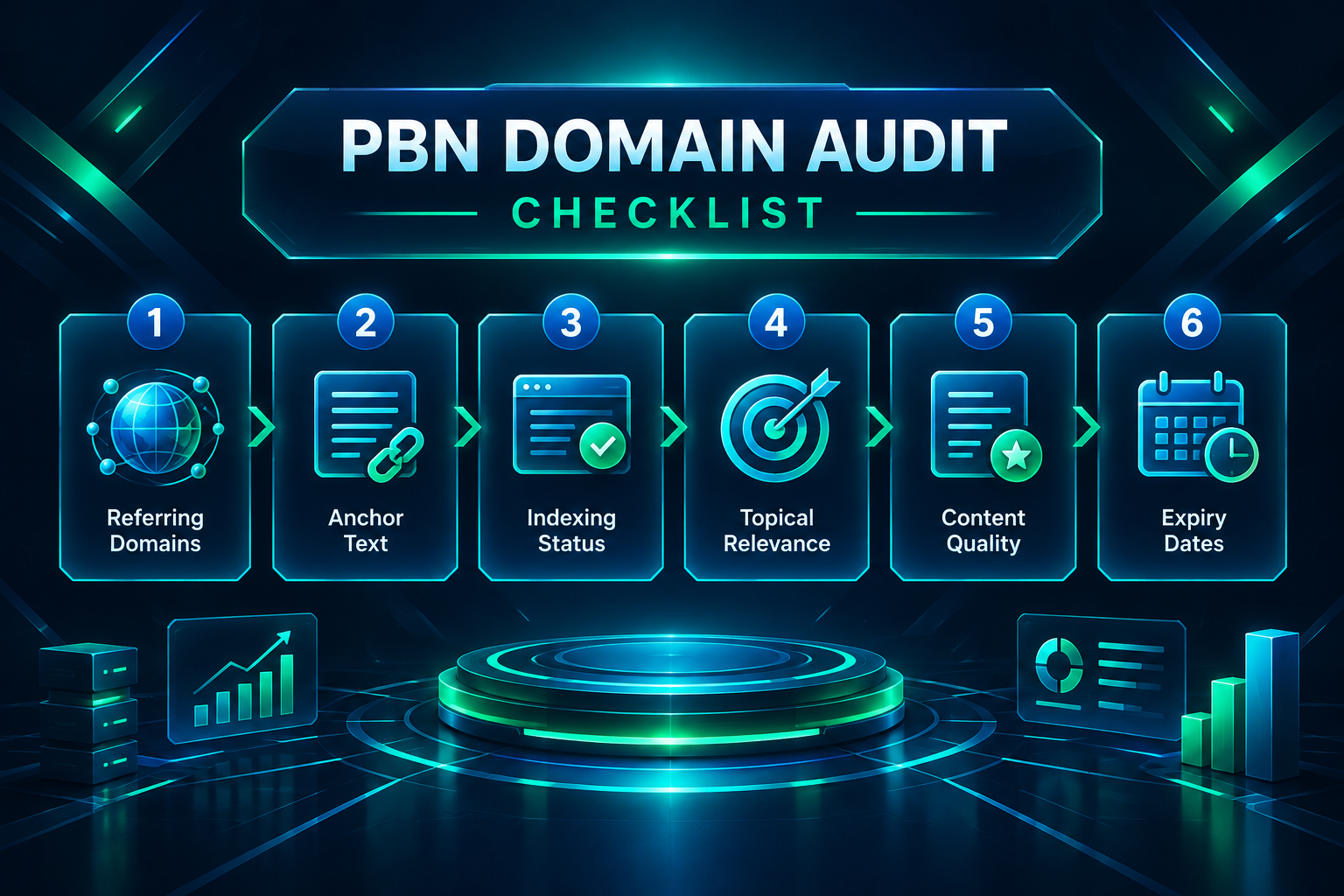
The audit should cover the following areas for each domain in the network:
- Referring domain count and quality: How many unique referring domains does the asset have, and are those domains themselves credible, indexed, and topically relevant? A high referring domain count built on low-quality or deindexed sources carries less transferable value than a smaller profile of strong, relevant links.
- Anchor text distribution: Review the anchor text mix pointing to the PBN domain. A heavily exact-match anchor profile may limit how the domain can be repurposed without drawing attention to an unnatural pattern.
- Indexing status: Confirm that the domain itself is indexed in Google. A deindexed PBN domain has significantly reduced utility for passing link equity, regardless of its third-party metrics.
- Topical relevance: What niche or subject area does the domain’s content and inbound link profile reflect? Topical alignment between a PBN domain and its next target site affects how naturally the outbound link reads to both crawlers and human reviewers.
- Content quality and volume: Assess whether the existing content on the PBN domain is substantive enough to maintain its current indexing status and support a new outbound link, or whether it needs updating before the domain is redeployed.
- Registration expiry dates: Identify which domains are approaching renewal to avoid accidental expiry during a decision-making period.
Running each domain through a backlink analysis tool such as Ahrefs or Majestic alongside a manual review of its indexed pages gives a working picture of which assets are worth prioritizing and which may not justify renewal costs.
Option 1: Redirect PBN Domains to a New or Replacement Money Site
If the money site that closed is being replaced by a new domain or a restructured project in the same niche, a 301 redirect from each PBN domain to the new target is often the most direct way to preserve the link equity those assets were generating. A 301 redirect signals to search engines that the destination has permanently changed, and the link equity associated with the PBN domain’s outbound link is directed toward the new money site rather than resolving to a dead page.
The effectiveness of this approach depends on topical alignment between the PBN domain and the new money site. A PBN domain built around home improvement content redirecting to a replacement home improvement site is a more coherent signal than the same domain redirecting to an unrelated niche. Where topical relevance is strong and the PBN domain’s own backlink profile is clean, redirecting to a replacement site is generally the most efficient use of an existing asset.
If the new money site is in a different niche from the original, a redirect may still transfer some domain-level equity, but the topical mismatch reduces how useful that equity is likely to be for the specific pages and keywords the new site is targeting. In that scenario, repurposing the domain within a network that serves the original niche, or selling it to an operator in that niche, may produce better outcomes than a cross-niche redirect.
Option 2: Repurpose PBN Domains Within an Existing or New Network
PBN domains that were supporting a closed money site can be redeployed to support a different money site within the same network, or integrated into a new network being built for a separate project. This option is particularly practical when the operator runs multiple money sites across related niches, because the PBN domain’s topical profile may align naturally with another active project.
Repurposing a PBN domain for a new target money site typically involves updating the outbound link on the domain to point to the new target, reviewing and refreshing the existing content to ensure it remains relevant and indexed, and confirming that the anchor text used in the new outbound link fits the anchor strategy for the new campaign. If the domain’s content was tightly written around the previous money site’s brand or specific product pages, some content revision may be needed before the domain reads naturally in its new context.
When repurposing domains across different niches, topical relevance becomes a more significant consideration. A domain with a strong finance-related backlink profile and finance-focused content is a more natural fit for a finance money site than for a health or travel project. Forcing a topical mismatch across a large portion of a network can create a footprint that is less coherent from a quality standpoint, even if the individual domain metrics remain strong.
Option 3: Hold and Park Domains for Future Campaigns
Not every PBN domain needs to be immediately redirected or repurposed. If no suitable replacement money site exists yet, or if the operator is between projects, parking high-quality domains and maintaining their registration is a legitimate holding strategy. Domain age and an established backlink profile are characteristics that take time to build; letting a strong domain expire because there is no immediate use for it means permanently losing an asset that may have taken years to develop.
During a holding period, the domain should remain registered and its existing content should stay live and indexed. A domain that drops from the index during a parking period may lose some of the indexing history that contributes to its value. Minimal maintenance — keeping the content accessible, renewing the registration, and monitoring for any unexpected deindexation — is usually sufficient to preserve the domain’s status until a new campaign is ready.
The cost of holding a domain is primarily the annual registration fee and any hosting costs associated with keeping the content live. For domains with strong referring domain profiles and clean histories, this holding cost is typically modest relative to the cost of acquiring a comparable domain through an auction or broker at a later date.
Option 4: Sell PBN Domains to Another Operator
If the operator has no current or planned projects that match a domain’s topical profile, selling the domain to another PBN operator or SEO agency is a practical way to recover value from an asset that would otherwise sit idle or be allowed to expire. Aged domains with established backlink profiles and clean histories are consistently sought after by operators building or expanding private blog networks, and a well-documented domain with verifiable metrics can command a meaningful price in the secondary market.

When preparing a PBN domain for sale, providing transparent documentation of the domain’s backlink profile, referring domain count, topical history, indexing status, and any known issues gives buyers the information they need to assess fit. Buyers evaluating domains for PBN use will typically run their own checks through tools such as Ahrefs, Majestic, or Semrush, so accurate representation of the domain’s profile is both practical and important for a smooth transaction.
Domain marketplaces, SEO-focused forums, and specialist brokers are common channels for selling PBN domains. Pricing typically reflects the domain’s referring domain count, the quality of those referring domains, topical relevance, and the domain’s age and indexing history. Domains with thin content, heavily manipulated anchor profiles, or deindexation issues will generally attract lower prices or require remediation before sale.
Option 5: Allow Low-Quality Domains to Expire Selectively
Not every domain in a PBN is worth the cost of renewal, repurposing, or sale preparation. Domains with weak or declining referring domain profiles, significant deindexation issues, heavily spammy anchor text distributions, or content that is too thin to maintain indexing may not justify the ongoing cost of holding them. Selectively allowing these domains to expire — rather than investing time and renewal fees in assets with limited remaining utility — is a reasonable part of portfolio management.
The decision to let a domain expire should be based on the audit findings rather than a blanket policy. A domain that scores poorly on referring domain quality and indexing status but has a strong topical history and a clean anchor profile may still be worth holding for a future campaign, even if its current metrics are modest. Conversely, a domain with inflated third-party metrics built on low-quality or irrelevant referring domains may not be as valuable as its scores suggest.
Before allowing a domain to expire, confirm that it is not being used as part of any active redirect chain or internal linking structure that would break if the domain disappeared. Expired domains that were part of a tiered link-building setup can create broken link chains that affect other assets in the network if they are not properly unwound first.
Managing Tiered Link Structures When a Money Site Closes
Many PBN campaigns use a tiered structure where Tier 1 PBN domains link directly to the money site, and Tier 2 links point to those Tier 1 domains to strengthen their own authority. When the money site closes, the Tier 1 domains remain in place, but the outbound links from those domains are now pointing to a dead or redirected destination. The Tier 2 links pointing to the Tier 1 domains are unaffected by the money site’s closure and continue to support the Tier 1 domain’s own backlink profile.
If the Tier 1 domains are being redirected to a new money site, the Tier 2 structure continues to function as intended, now supporting the Tier 1 domains that are passing equity to the new target. If the Tier 1 domains are being repurposed for a different money site, the same logic applies. The Tier 2 investment is not wasted simply because the original money site is gone — it continues to support the Tier 1 assets, which can be redirected or repurposed as described above.
Where Tier 1 domains are being allowed to expire, the Tier 2 links pointing to them will eventually resolve to dead pages or new registrant content, which reduces their utility. In this scenario, reviewing whether those Tier 2 placements can be updated to point to surviving Tier 1 assets or to the new money site directly may preserve some of the value from that investment.
Monitoring PBN Domain Health During and After Transition
Transitioning PBN assets after a money site closes is not a one-time action. Monitoring each domain’s indexing status, referring domain count, and outbound link functionality during and after the transition period helps identify issues before they compound. A domain that drops from the index during a redirect or repurposing process, for example, may need a content review or a technical check before it is contributing link equity as intended.
Useful monitoring tasks during a PBN asset transition include:
- Confirming that 301 redirects are resolving correctly and that the destination pages are indexed and accessible.
- Checking that updated outbound links on repurposed domains are crawlable and pointing to the correct target pages.
- Monitoring referring domain counts on key PBN assets for unexpected drops, which may indicate that linking domains have themselves been deindexed or have removed their links.
- Reviewing indexed page counts on parked domains periodically to confirm that content remains accessible during the holding period.
- Tracking the new money site’s backlink profile in a tool such as Ahrefs or Semrush to confirm that redirected or repurposed PBN links are being attributed to the new target as expected.
The frequency of monitoring depends on the size of the network and the urgency of the new campaign. For a large network undergoing a full transition, a structured review at the point of each change and again thirty to sixty days later gives a reasonable picture of how the transition is performing.
Frequently Asked Questions
Do PBN domains lose their value immediately when a money site closes?
No. A PBN domain’s value is tied to its own backlink profile, topical history, and indexing status — not to the money site it was pointing to. The referring domains linking to the PBN asset remain in place after the money site closes, and the domain’s metrics do not reset. What changes is the destination of the outbound link, which the operator can update or redirect.
Is it better to redirect PBN domains or repurpose them for a new network?
The better option depends on whether a suitable replacement money site exists and how closely the domain’s topical profile matches the new target. Redirecting is faster and more direct when a replacement site in the same niche is ready. Repurposing within a network gives more flexibility when the new target is in a related but different niche or when the operator wants to maintain the domain as an active PBN node rather than a redirect.
What happens to Tier 2 links when a Tier 1 PBN domain is redirected?
Tier 2 links pointing to a Tier 1 domain continue to support that domain’s backlink profile regardless of where the Tier 1 domain’s outbound link is pointing. Redirecting the Tier 1 domain to a new money site does not break the Tier 2 structure; those links continue to strengthen the Tier 1 asset, which in turn passes equity to the new target through the redirect.
How long should I hold a parked PBN domain before deciding what to do with it?
There is no fixed timeline. The holding period should last as long as it takes to identify a suitable new campaign or buyer, provided the renewal and hosting costs are manageable. For high-quality domains with strong referring domain profiles, holding for several months or longer is often worthwhile. For domains with weaker profiles, the cost-benefit calculation may favor a quicker decision to sell or allow expiry.
Can I sell PBN domains that were supporting a money site that closed due to a penalty?
It depends on whether the penalty affected the PBN domains themselves or only the money site. If the PBN domains are indexed, have clean backlink profiles, and were not themselves subject to manual actions, they may still be saleable. Buyers will conduct their own due diligence, so transparent disclosure of the domain’s history is important. Domains that were deindexed or that carry obvious spam signals will be harder to sell at a meaningful price.
Should I update the content on PBN domains when repurposing them for a new money site?
In most cases, yes. Content that was written specifically around the previous money site’s brand, products, or exact keyword targets may read awkwardly when the outbound link points to a different site. Updating the content to reflect the new target’s niche and to incorporate a naturally placed outbound link improves the coherence of the placement and helps maintain the domain’s indexing status.
Deciding What to Do With Your PBN Assets After a Money Site Closes
The closure of a money site is a natural point to reassess the PBN assets that were supporting it, but it is not a reason to treat those assets as worthless. A structured audit of each domain’s referring domain profile, indexing status, topical relevance, and anchor text distribution gives a clear basis for deciding whether to redirect, repurpose, hold, sell, or selectively expire each asset. High-quality domains with clean histories and strong backlink profiles represent real SEO value that can be preserved and redeployed rather than abandoned.
The most efficient outcome for most operators is a tiered approach: redirect or repurpose the strongest domains toward active or planned campaigns, hold mid-tier assets that have clear future utility, sell topically specific domains to operators in matching niches, and allow genuinely weak or problematic domains to expire after confirming they are not part of any active redirect or linking structure. This approach treats the PBN portfolio as a managed asset base rather than a collection of single-use tools tied to one money site.
If you are working through a PBN transition and want to assess which domains in your network are worth prioritizing, or if you are looking to expand a network with quality aged domains for a new campaign, PBN Backlinks Service can help you evaluate your options and identify placements or domain assets that fit your next project’s goals.