

Handling privacy requests on PBN sites is a practical operational task that every private blog network owner needs to address, regardless of how the network is used for link building. Data protection laws such as the GDPR and CCPA apply to websites based on where visitors are located, not on the site’s purpose, which means PBN properties that receive traffic from the EU, UK, or California may be subject to formal data subject rights requests. Understanding what those requests involve, how to respond, and how to structure your sites to minimize compliance burden is straightforward once you know what the regulations actually require.
Key Takeaways
- Privacy laws such as GDPR and CCPA can apply to PBN sites if those sites collect personal data from visitors in covered jurisdictions, regardless of the site’s link-building purpose.
- A privacy request, also called a data subject request or DSR, may ask you to confirm what data you hold, provide a copy of it, correct it, or delete it entirely.
- Minimizing data collection on PBN properties reduces the volume and complexity of privacy requests you are likely to receive.
- Each PBN site should have a reachable privacy contact method and a basic privacy policy that accurately describes what data is collected and why.
- Response timelines under GDPR are generally one calendar month from receipt of a valid request, with a possible extension of two additional months for complex cases.
Why Privacy Requests Are Relevant to PBN Sites
A private blog network is a collection of websites used to host content and place backlinks pointing to target pages. From a data protection perspective, each site in the network is an independent data controller if it collects any personal information from visitors. Common data collection points on PBN properties include contact forms, comment sections, analytics scripts, advertising tags, newsletter sign-up fields, and server-side access logs. If any of these are present and a visitor from a covered jurisdiction submits a privacy request, the site owner has a legal obligation to respond.
The GDPR, which applies to processing personal data of individuals in the European Economic Area and the UK, gives data subjects the right to access their data, correct inaccurate data, request erasure, restrict processing, and in some cases object to processing or request portability. The CCPA and its amendment the CPRA give California residents the right to know what personal information is collected, the right to delete it, the right to opt out of its sale or sharing, and the right not to be discriminated against for exercising those rights. Other jurisdictions have introduced comparable frameworks, and the general pattern of rights is similar across most modern privacy laws.
PBN site owners sometimes assume that because their sites are not consumer-facing businesses, privacy law does not apply. That assumption is not reliable. If a site has a contact form, uses Google Analytics, runs display advertising through a network that sets cookies, or logs IP addresses in server access logs, it is collecting personal data. The site’s commercial purpose does not exempt it from the obligations that attach to that collection.
What a Privacy Request Actually Involves
A privacy request, formally called a data subject request or DSR, is a communication from an individual asking you to exercise one or more of their statutory rights over their personal data. The most common types are access requests, erasure requests, and objection requests. An access request asks you to confirm whether you hold personal data about the individual and, if so, to provide a copy of it along with information about how it is used. An erasure request, sometimes called a right to be forgotten request, asks you to delete all personal data you hold about that individual. An objection request asks you to stop processing personal data for a specific purpose, most commonly direct marketing or profiling.
On a typical PBN site, the personal data you are likely to hold about a visitor is limited. It may include an email address submitted through a contact form, a name and comment submitted through a WordPress comment section, an IP address stored in server logs or analytics data, and cookie identifiers set by third-party scripts. If you use a self-hosted analytics platform with data retention controls, the data set is more manageable. If you rely on third-party analytics or advertising platforms, some of the data may be held by those platforms rather than by you directly, and you will need to distinguish between what you control and what the third-party processor controls.
When you receive a privacy request, the first step is to verify the identity of the person making it. You do not need to fulfill a request from someone who cannot demonstrate they are the data subject. The verification process should be proportionate to the sensitivity of the data involved. For a PBN site that holds only a contact form submission and an IP address, a simple email confirmation is usually sufficient. You should not ask for more identifying information than is necessary to confirm identity.
Setting Up a Privacy Contact Method on Each PBN Site
Each PBN site needs a reachable privacy contact method so that individuals can submit requests. Under GDPR, data controllers must provide contact details for the controller and, where applicable, a data protection officer. For most small PBN operations, a dedicated email address is the most practical solution. The address should be listed in the site’s privacy policy and, where the site has a contact page, on that page as well.
Using a single privacy inbox that covers multiple PBN properties is operationally efficient, but the privacy policy on each site should accurately describe the contact method for that site. If you use a shared inbox, make sure incoming requests are tagged or filtered by site so you can identify which property the request relates to and what data that property holds. A simple spreadsheet or task management tool is usually sufficient for tracking requests, their receipt dates, and their resolution status.
Some PBN operators use privacy-focused contact form plugins that route submissions to a designated email address without storing form data in the WordPress database. This approach reduces the amount of personal data the site itself holds, which simplifies both the response to access requests and the response to erasure requests. If the form data is not stored on the server, an erasure request for contact form submissions may be satisfied simply by confirming that no stored data exists, provided you have also deleted the email correspondence from your inbox.
Writing a Privacy Policy for PBN Properties
Every PBN site that collects personal data needs a privacy policy that accurately describes what data is collected, the legal basis for collecting it, how long it is retained, who it is shared with, and how individuals can exercise their rights. The policy does not need to be lengthy, but it does need to be accurate. A generic template that does not reflect the site’s actual data practices creates a compliance gap rather than closing one.
For a typical PBN property, the privacy policy should address the following areas. First, it should identify the data controller, which is the person or entity responsible for the site. You do not need to use your personal name if you operate through a business entity, but the contact details must be reachable. Second, it should describe the categories of personal data collected, such as contact form submissions, comments, IP addresses, and cookie data. Third, it should state the legal basis for each type of processing. Under GDPR, common bases for a PBN site include legitimate interests for server log retention and consent for analytics cookies. Fourth, it should describe data retention periods. Fifth, it should list any third-party processors, such as your hosting provider, analytics platform, or advertising network, and explain that those parties process data under their own terms. Sixth, it should explain how individuals can submit a privacy request and what response timeline to expect.
If your PBN sites use WordPress, several privacy policy generator plugins can produce a starting template, but you should review and edit the output to match your actual setup. A policy that mentions data processing activities your site does not perform, or omits ones it does, is less useful than a shorter but accurate document.
Responding to an Access Request on a PBN Site
When you receive a valid access request, you need to identify all personal data you hold about the individual across the relevant site. This typically means checking the WordPress database for comments and contact form entries, checking your email inbox for correspondence from that individual, checking your analytics platform for any user-level data associated with an identifier the individual provides, and checking server access logs if you retain them. If you use a third-party advertising or affiliate network that sets cookies on the site, you should note in your response that some data may be held by those third parties and direct the individual to their respective privacy contacts.
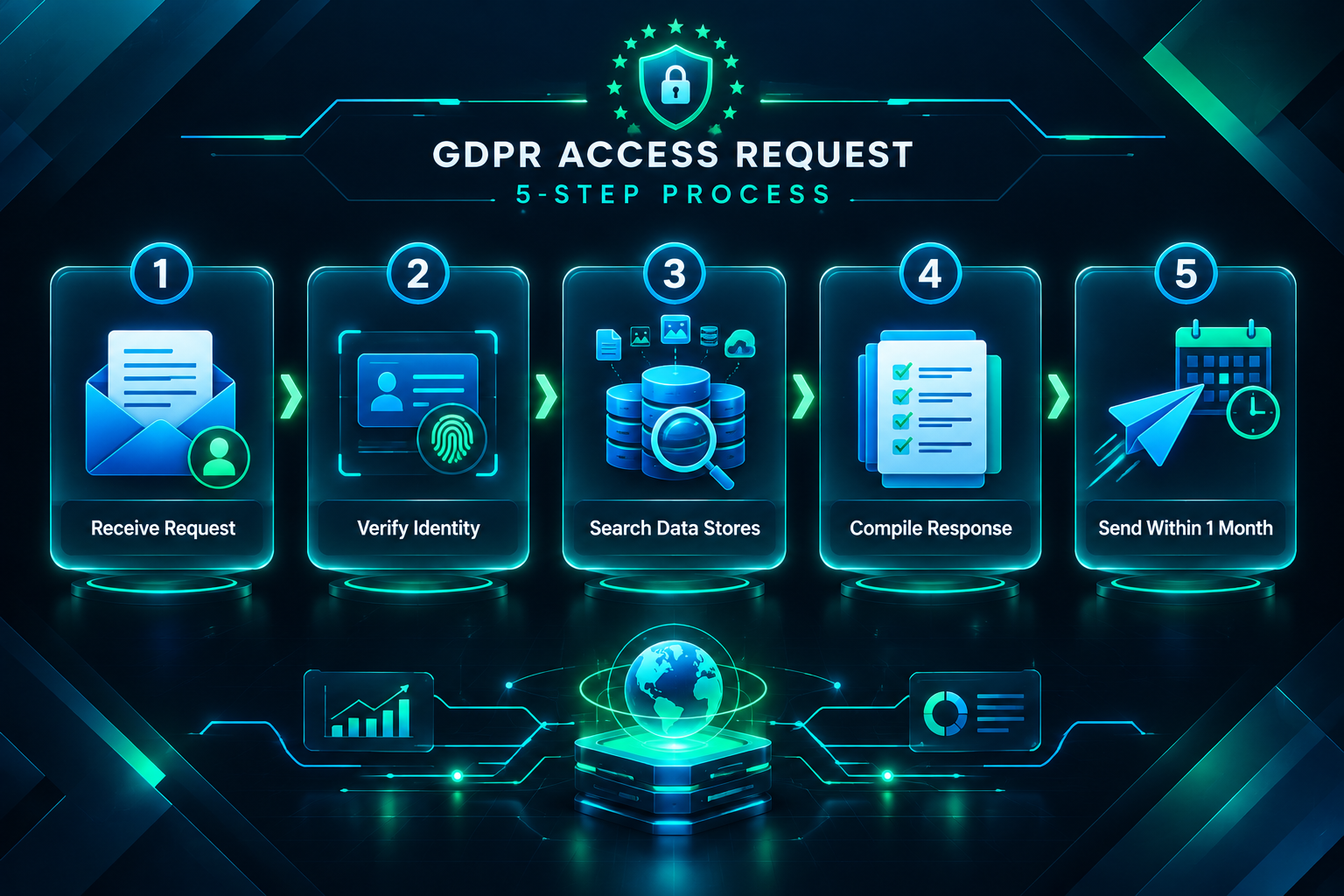
The response to an access request should confirm whether you hold personal data, describe what categories of data you hold, explain the purposes for which it is processed, identify any recipients or categories of recipients, state the retention period, and explain the individual’s remaining rights including the right to lodge a complaint with a supervisory authority. Under GDPR, the response must be provided within one calendar month of receiving a valid request. If the request is complex or you have received multiple requests from the same individual, you may extend the response period by a further two months, but you must inform the individual of the extension and the reasons for it within the first month.
For most PBN sites, the data held about any individual visitor is minimal, and access requests can be resolved quickly. The main operational challenge is having a clear enough record of what data each site collects so that you can conduct the search efficiently when a request arrives.
Handling Erasure Requests and Other Rights
An erasure request asks you to delete all personal data you hold about the individual. Under GDPR, the right to erasure applies in specific circumstances, including where the data is no longer necessary for the purpose it was collected, where the individual withdraws consent and there is no other legal basis, or where the individual objects to processing and there are no overriding legitimate grounds. For a PBN site, the most common scenario is a visitor who submitted a contact form or left a comment and now wants that data removed.
To fulfill an erasure request, you should delete the relevant records from the WordPress database, delete any email correspondence containing the individual’s personal data from your inbox, and where possible remove the data from your analytics platform. If your analytics platform does not support individual-level deletion, you should note this limitation in your response and explain what steps you have taken. Some analytics platforms provide a data deletion request feature that allows you to submit a request for specific user data to be removed from their systems.
Restriction requests ask you to pause processing of an individual’s data rather than delete it, typically while a dispute about accuracy or the legal basis for processing is resolved. Portability requests ask you to provide the individual’s data in a structured, commonly used, machine-readable format. Both of these rights are less commonly exercised on PBN sites than access and erasure rights, but your privacy policy should acknowledge them and your response process should be able to accommodate them.
Data Minimization as a Practical Compliance Strategy
The most effective way to reduce the operational burden of privacy requests on PBN sites is to minimize the personal data those sites collect in the first place. Data minimization is a core principle of GDPR and a practical approach that reduces both compliance complexity and the potential impact of a data breach. For PBN properties, data minimization typically involves several straightforward decisions about site configuration.
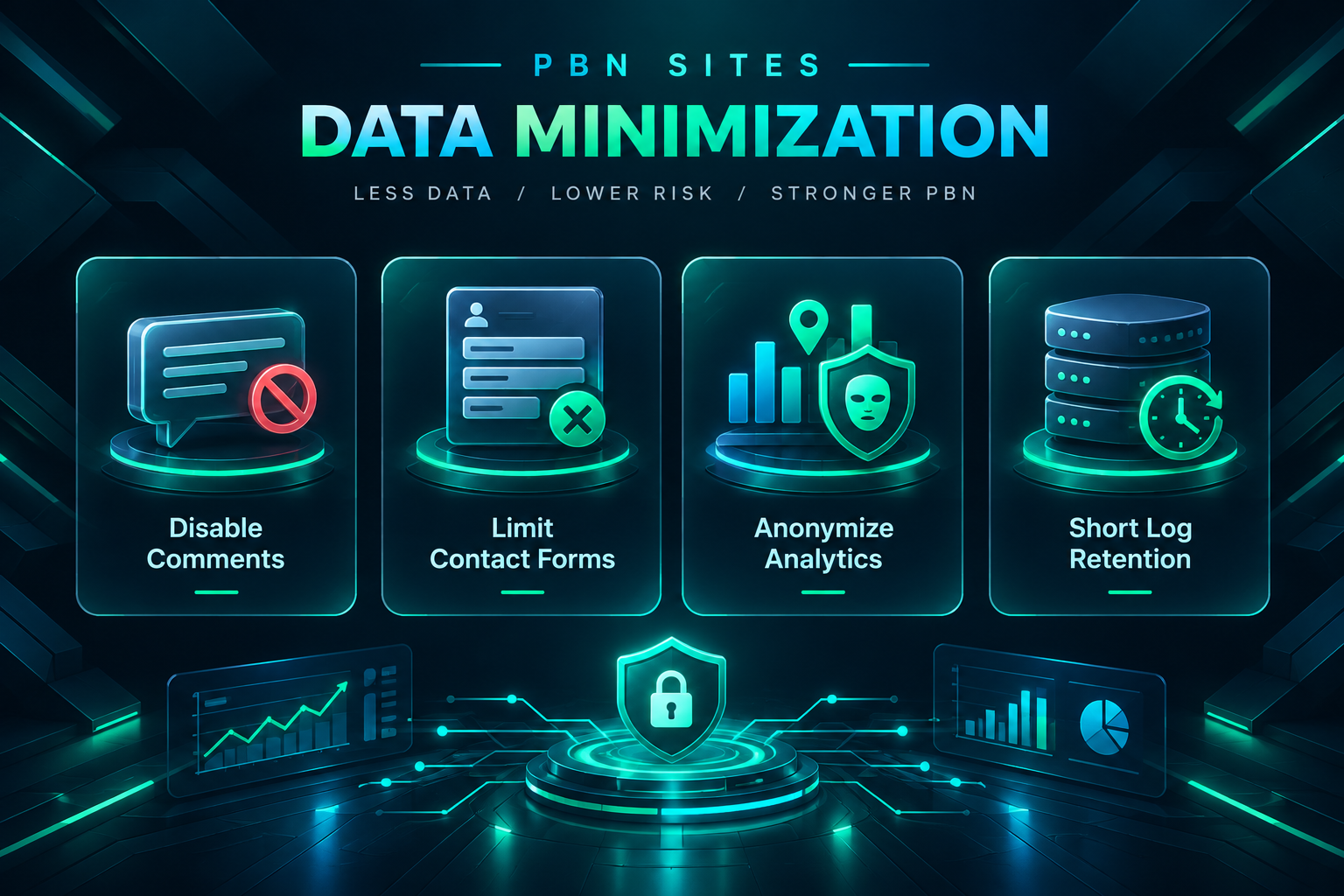
Disabling WordPress comments removes one of the most common sources of stored personal data on a PBN site. If comments are not needed for the site’s content strategy, turning them off eliminates the associated data collection entirely. Similarly, if a contact form is not operationally necessary, removing it reduces the data the site collects. Where a contact form is needed, configuring it to avoid storing submissions in the database and to route them directly to email reduces the data footprint on the server.
Choosing a privacy-respecting analytics solution, or configuring an existing analytics platform to anonymize IP addresses and limit data retention, reduces the identifiability of visitor data. Several analytics platforms offer cookie-free tracking modes that do not require a consent banner and do not collect personal data in a form that triggers individual-level rights requests. If your PBN sites run advertising that sets third-party cookies, implementing a consent management platform ensures that cookie-based tracking is only activated after the visitor has given valid consent, which limits the legal basis challenges that can arise from cookie-related data processing.
Server access logs are often overlooked as a source of personal data. Most hosting environments retain access logs that include IP addresses, which are personal data under GDPR in most interpretations. Configuring your hosting environment to apply a short log retention period, or to anonymize IP addresses in logs, reduces the personal data held at the infrastructure level. Your hosting provider’s data processing agreement should confirm that they process server data on your behalf as a data processor, which means their processing is covered by your privacy policy’s reference to hosting providers as processors.
Managing Privacy Compliance Across Multiple PBN Sites
Operating a private blog network means managing privacy compliance across multiple properties simultaneously. The practical challenge is maintaining consistent standards without creating an unmanageable administrative overhead. A structured approach to network-wide compliance is more sustainable than handling each site in isolation.
Standardizing the technical setup across PBN properties makes compliance easier to maintain. If all sites in the network use the same WordPress configuration, the same analytics setup, the same contact form plugin, and the same cookie consent solution, you can apply a single compliance review to the template and then replicate it across the network. When a new privacy regulation comes into force or an existing one is updated, you update the template and push the changes across all properties rather than reviewing each site individually.
Maintaining a simple data inventory for the network helps you respond to privacy requests efficiently. The inventory should record, for each site, what categories of personal data are collected, where that data is stored, how long it is retained, and which third-party processors have access to it. This does not need to be a complex document. A spreadsheet with one row per site and columns for each data category is sufficient for most PBN operations. When a privacy request arrives, you can use the inventory to identify quickly which data stores need to be searched and which third parties need to be notified.
If your PBN network is large enough that privacy requests arrive with some regularity, consider using a simple request tracking system to record each request, its receipt date, the verification status, the actions taken, and the date of the response. This record demonstrates accountability if a supervisory authority ever asks how you handle data subject rights, and it helps you identify patterns in the requests you receive that might indicate a configuration issue on a particular site.
Frequently Asked Questions
Do GDPR and CCPA apply to PBN sites that are not consumer-facing businesses?
Yes, if a PBN site collects personal data from visitors located in covered jurisdictions, the relevant data protection law applies regardless of the site’s commercial purpose. The determining factor is whether personal data is collected and processed, not whether the site is a consumer business.
What is the response deadline for a GDPR data subject request?
Under GDPR, the standard response deadline is one calendar month from the date you receive a valid request. For complex or multiple requests, you may extend this by a further two months, but you must notify the individual of the extension within the first month and explain the reason for it.
Can I use a single privacy email address for all sites in my PBN?
Yes, a shared privacy inbox is operationally practical for a network of sites. Each site’s privacy policy should list the contact method accurately, and you should use a filtering or tagging system to track which site each incoming request relates to.
What personal data do PBN sites typically hold about visitors?
Common data points include contact form submissions containing names and email addresses, WordPress comment entries, IP addresses in server access logs and analytics data, and cookie identifiers set by analytics or advertising scripts. The exact data held depends on the plugins, scripts, and hosting configuration of each site.
Does disabling comments on a PBN site reduce privacy compliance obligations?
Disabling comments removes one category of personal data collection, which simplifies compliance. It does not eliminate all obligations if the site still collects data through other means such as contact forms, analytics, or advertising scripts.
What should I do if a third-party analytics platform holds data I cannot delete directly?
Acknowledge the limitation in your response to the erasure request, explain what steps you have taken on your own systems, and direct the individual to the third-party platform’s privacy contact or data deletion request process. Most major analytics platforms provide a mechanism for submitting individual data deletion requests.
Is a privacy policy required on every PBN site individually?
Yes, each site that collects personal data should have its own privacy policy that accurately describes the data practices of that specific site. A network-wide template can be adapted for each property, but the policy must reflect the actual data collection and processing on the individual site.
Building a Manageable Privacy Framework for Your PBN Network
Privacy request handling on PBN sites is a practical operational matter rather than an insurmountable compliance challenge. The key is to approach it systematically: minimize data collection where it is not operationally necessary, standardize the technical setup across the network, maintain a basic data inventory, and ensure each site has an accurate privacy policy and a reachable contact method. With those foundations in place, responding to the occasional access or erasure request becomes a straightforward process rather than an emergency.
For PBN operators who are building or expanding their networks, incorporating privacy compliance into the site setup process from the start is more efficient than retrofitting it later. Choosing hosting providers with clear data processing agreements, configuring analytics to minimize personal data collection, and deploying a consistent cookie consent solution across all properties reduces both the compliance burden and the data held on each site. The result is a network that is easier to manage, less exposed to regulatory risk, and better positioned to handle any privacy requests that do arrive.
If you are evaluating PBN backlink placements or building out a private blog network and want to understand how site quality and operational standards affect your link-building strategy, PBN Backlinks Service can help you assess your requirements and identify placements that align with your campaign goals.