

Selling a website raises an immediate practical question for anyone who has built PBN backlinks into their SEO strategy: what happens to those links once ownership changes hands? The answer depends on how the PBN placements were structured, what was agreed in the sale, and whether the seller retains control of the network or the domains pointing to the sold site. With the right preparation, it is possible to retain meaningful link equity, redirect it to a new project, or negotiate terms that protect both parties during the transition.
Key Takeaways
- PBN links point to a URL, not to an owner — the links themselves remain live after a sale unless the buyer removes them or the PBN domain goes offline.
- Sellers who control their own PBN can redirect link equity to a new domain, update anchor text, or retain placements for future projects after the sale completes.
- Buyers and sellers should agree in advance on whether PBN placements are included in the sale, disclosed, or excluded — ambiguity creates disputes and SEO risk for both parties.
- 301 redirects from the sold domain to a new project can pass a portion of accumulated link equity, though the extent of that transfer varies and is not guaranteed.
- Sellers using a third-party PBN service should review placement terms before listing a site, since some providers tie placements to the original client account rather than the target URL.
Why PBN Link Continuity Matters When Selling a Site
A website’s backlink profile is often a significant part of its valuation. Buyers pay a premium for sites with strong organic rankings, and those rankings may depend partly on PBN placements that the seller built over months or years. When the site changes hands, the link profile transfers with it by default — the PBN domains continue pointing to the same URLs regardless of who owns the site. This means the buyer inherits the benefit of those placements, and the seller loses access to the link equity they invested in building.
For sellers, the concern is straightforward: if you spent time and money acquiring PBN placements for a site you are now selling, you want to understand whether that investment can be recovered, redirected, or at least not wasted. For buyers, the concern runs in the opposite direction — they want to know whether the rankings they are paying for are supported by placements that could disappear after the sale, or that might create complications if the seller retains control of the linking domains.
Both concerns are legitimate, and addressing them before the sale completes is far easier than trying to resolve them afterward.
Who Controls the PBN Links?
The most important factor in determining your options is who controls the PBN domains that are linking to the sold site. There are three common scenarios, and each leads to a different set of practical choices.
Scenario 1: The Seller Owns and Operates the PBN
If you built and manage your own private blog network, you retain full control of the linking domains after the sale. The PBN domains are separate assets that you never transferred to the buyer. This gives you the most flexibility: you can leave the placements in place as part of the sale agreement, update the anchor text and target URLs to point to a new project, remove the placements entirely, or negotiate their continued presence as a condition of the sale price.
Sellers in this position should decide before listing the site whether the PBN placements are included in the sale or excluded. Including them — meaning you commit to keeping the links live for a defined period — can increase the site’s perceived stability and support the asking price. Excluding them — meaning you reserve the right to remove or redirect the links after closing — should be disclosed clearly to avoid disputes, since a buyer who later discovers that key ranking links have disappeared may have grounds for a complaint depending on how the sale was structured.
Scenario 2: The Seller Used a Third-Party PBN Service
If the PBN placements were purchased through a provider such as PBN Backlinks Service, the seller does not own the linking domains. The placements exist on the provider’s network, and the terms of those placements govern what happens next. Some providers tie placements to a specific target URL, meaning the links remain live as long as the URL is accessible, regardless of who owns the site. Others tie placements to a client account, meaning the buyer would need to establish their own relationship with the provider to maintain the links.
Before selling a site that has third-party PBN placements, review the provider’s terms carefully. Key questions include: Are placements transferable to a new site owner? Can the target URL be changed to a different domain? Is there a renewal or maintenance fee that the buyer would need to take over? Clarifying these points with the provider before the sale prevents misunderstandings and helps both parties understand exactly what the backlink profile includes.
Scenario 3: The PBN Links Were Part of a Broader Link-Building Campaign
Some sellers have a mixed backlink profile that includes PBN placements alongside editorial links, niche edits, and other link types. In this case, the PBN component may be a smaller part of the overall profile, and the continuity question is less urgent. However, if the PBN placements are concentrated on high-value pages or are responsible for a disproportionate share of the site’s ranking positions, their fate after the sale still deserves specific attention in the sale agreement.
Options for Retaining or Redirecting PBN Link Equity
Once you understand who controls the linking domains, you can evaluate the practical options available to you as a seller.
Option 1: Leave the Links in Place and Disclose Them
The simplest approach is to leave the PBN placements pointing to the sold site and disclose their existence to the buyer as part of due diligence. This is the most straightforward outcome for the buyer, who inherits a stable backlink profile. For the seller, it means accepting that the link equity built into the sold site transfers with it. If you own the PBN, you may negotiate a link maintenance agreement — a defined period during which you commit to keeping the placements live — as part of the sale terms. This can be structured as a time-limited commitment, such as six or twelve months, after which you are free to redirect or remove the links.
Option 2: Update Target URLs to a New Domain Before or After the Sale
If you own the PBN or have a provider relationship that allows target URL changes, you can redirect the placements to a new domain you are building or already operate. This is the most direct way to retain the link equity you invested in. The process involves updating the outbound links on each PBN domain to point to the new target URL rather than the sold site. The timing matters: updating the links before the sale completes means the buyer’s site loses those placements immediately, which could affect rankings and therefore the sale price. Updating them after a defined transition period is a more negotiable approach.
When redirecting PBN placements to a new domain, topical relevance between the PBN content and the new target site is worth considering. A PBN domain that was built around a specific niche to support the sold site may pass less contextual relevance to a new site in a different niche, though the domain’s overall authority and link profile characteristics still contribute to the placement’s value.
Option 3: Use a 301 Redirect from the Sold Domain
In some sale structures, the seller retains ownership of the original domain and redirects it to a new project, while the buyer receives the site’s content, brand, and business assets on a new domain. This arrangement is less common but does occur, particularly with content sites where the brand name is less important than the content itself. A 301 redirect from the original domain passes a portion of the accumulated link equity — including the value contributed by PBN placements — to the new destination. The extent of that equity transfer is not publicly documented by search engines, and results vary depending on the redirect’s implementation, the age of the links, and other factors. This approach requires careful negotiation and clear legal documentation to avoid disputes about domain ownership and redirect duration.
Option 4: Negotiate a Link Maintenance Agreement
If you own the PBN and the buyer wants assurance that the links will remain live, a link maintenance agreement can formalize the arrangement. This is a contractual commitment — separate from the main sale agreement or included within it — that specifies how long the PBN placements will remain active, what happens if a PBN domain goes offline, and whether the seller has any obligation to replace lost placements. Link maintenance agreements are more common in larger site sales where the backlink profile is a material part of the valuation. They give the buyer confidence in the ranking stability of the acquired site and give the seller a defined exit point after which they can redirect or repurpose the PBN domains.
Disclosing PBN Links During a Website Sale
Disclosure is a practical and legal consideration, not just an ethical one. Buyers conducting due diligence on a site acquisition will typically run a backlink audit using tools such as Ahrefs, Semrush, or Majestic. A sophisticated buyer will identify patterns in the backlink profile that suggest PBN placements — domain age clusters, hosting patterns, content similarity, or link velocity anomalies. If the seller has not disclosed the PBN component and the buyer discovers it post-sale, the transaction may be disputed.
More practically, a buyer who understands the backlink profile can make an informed decision about whether to maintain, supplement, or diversify the link strategy after acquisition. A buyer who is unaware that rankings depend partly on PBN placements that the seller controls may be surprised when those placements disappear or change after the sale closes. Clear disclosure protects both parties and supports a cleaner transition.
Disclosure does not require revealing the specific domains in the PBN — sellers reasonably protect that information as a proprietary asset. It does mean being clear that a portion of the backlink profile consists of placements on privately controlled domains, and explaining the terms under which those placements will continue or be removed.
What Happens to PBN Links If You Do Nothing
If a seller takes no action and simply transfers the site without addressing the PBN placements, the default outcome is that the links remain live and continue pointing to the sold site. For the buyer, this is generally positive in the short term — the backlink profile is intact and rankings are stable. For the seller, it means the link equity built into the sold site is gone, and the PBN domains are still pointing to an asset they no longer own.
Over time, the seller may choose to redirect or remove those placements for their own SEO purposes — for example, to support a new project in the same niche. When that happens, the buyer’s site loses those links, which may affect rankings depending on how significant the PBN component was. If the sale agreement did not address this possibility, the buyer has limited recourse. This is why addressing PBN link continuity in the sale terms is in the buyer’s interest, not just the seller’s.
Protecting Your PBN Investment When Building Sites to Sell
Sellers who regularly build and flip websites can structure their PBN strategy from the outset to make link continuity easier to manage at the point of sale. A few practical approaches are worth considering.
- Keep the PBN separate from the site being sold. The PBN domains are your infrastructure. Treat them as a separate asset class that you retain across multiple projects, rather than building a dedicated network for each site you plan to sell.
- Use target URL flexibility. When placing links, use canonical target URLs that can be updated or redirected without breaking the placement. Some PBN setups allow target URL changes without requiring new content on the PBN domain.
- Document your placements. Maintain a record of which PBN domains are linking to which target URLs, with placement dates and anchor text. This documentation is useful during due diligence and makes it easier to update or redirect placements efficiently after a sale.
- Build link diversity into sites you plan to sell. A site whose rankings depend heavily on a single link type — including PBN placements — is more vulnerable to disruption during a sale transition. A more diverse backlink profile, where PBN placements are one component among several, is more stable for the buyer and easier to negotiate around during the sale.
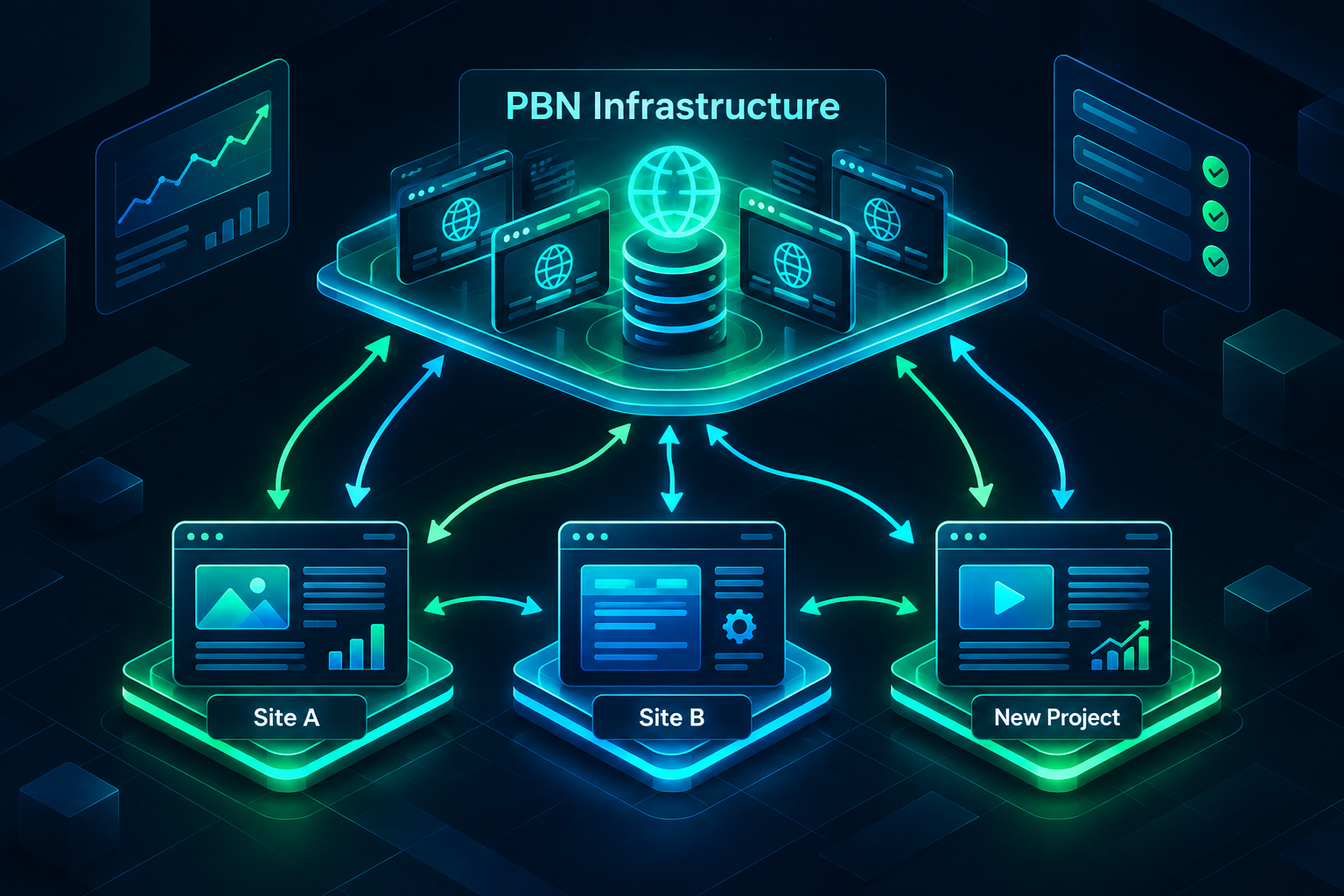
PBN Link Continuity and Site Valuation
The presence of PBN links in a site’s backlink profile can affect its valuation in different ways depending on the buyer’s perspective and sophistication. Some buyers, particularly those experienced in SEO-driven site acquisitions, are comfortable with PBN-supported rankings and will factor the link maintenance terms into their offer. Others may apply a discount if they believe the rankings are dependent on placements that could be removed after the sale.
Sellers can address this by structuring the sale to include a defined link maintenance period, by offering to transfer the PBN domains as part of the sale (if the network was built specifically for that site), or by demonstrating that the site’s rankings are supported by a diverse backlink profile where PBN placements are not the sole driver. The more transparent and structured the link continuity arrangement, the less uncertainty the buyer faces, and the stronger the case for a higher valuation.
If you are using a third-party PBN service, discussing transferability options with the provider before listing the site is a practical step. Some providers can accommodate account transfers or URL updates that make the transition smoother for both parties.
Frequently Asked Questions
Do PBN links automatically transfer to the buyer when a website is sold?
The links themselves remain live and pointing to the sold site’s URLs by default, so the buyer inherits the backlink profile as it exists at the time of sale. However, if the seller owns the PBN domains, they retain the ability to remove or redirect those links after the sale unless the sale agreement specifies otherwise. Buyers should clarify this during due diligence.
Can I redirect my PBN links to a new site after selling my old one?
If you own and operate the PBN, yes — you can update the target URLs on your PBN domains to point to a new project after the sale. If you used a third-party provider, this depends on the provider’s terms. Some providers allow target URL changes; others tie placements to the original client account. Check with your provider before the sale completes.
Should I disclose PBN links to a potential buyer?
Disclosing the nature of the backlink profile — including that it contains privately placed links — is a practical step that protects both parties. You do not need to reveal the specific PBN domains, but being clear about the link types and the terms under which they will continue or be removed helps avoid post-sale disputes and supports a cleaner transition.
What is a link maintenance agreement in a website sale?
A link maintenance agreement is a contractual commitment by the seller to keep specified backlink placements live for a defined period after the sale closes. It gives the buyer confidence in ranking stability and gives the seller a clear exit point after which they can redirect or repurpose the linking domains. These agreements are more common in larger site acquisitions where the backlink profile is a material part of the valuation.
What happens to my PBN links if the sold site later gets a new domain?
If the buyer migrates the sold site to a new domain and implements 301 redirects from the original URLs, the PBN links will continue pointing to the original URLs and pass link equity through the redirects to the new domain. If the buyer does not implement redirects, the PBN links will point to URLs that no longer resolve, and the placement value will be lost. This is a migration consideration the buyer should plan for, ideally with the seller’s awareness.
Can I sell my PBN domains as part of a website sale?
Yes, PBN domains can be included in a site sale as a separate asset transfer. This is more common when the PBN was built specifically to support the site being sold and has limited use for other projects. Including the PBN domains in the sale gives the buyer full control over the link profile and removes the uncertainty of the seller retaining control of the linking domains. The valuation of the PBN domains should be negotiated separately from the site itself.
Planning PBN Link Continuity Before You List a Site
The most effective way to handle PBN link continuity in a website sale is to plan for it before the site goes to market. Sellers who own their PBN have meaningful flexibility: they can include the placements in the sale with a defined maintenance period, redirect the links to a new project after closing, or transfer the PBN domains as a separate asset. Sellers using a third-party provider should review placement terms and discuss transferability options with the provider early in the process.
Buyers benefit from understanding exactly what they are acquiring. A backlink profile that includes PBN placements controlled by the seller is a different asset from one where those placements are either included in the sale or replaced by links the buyer will control going forward. Addressing this clearly in the sale agreement — with specific terms about link duration, removal rights, and what happens if a PBN domain goes offline — reduces risk for both parties and supports a more accurate valuation.
If you are building sites with the intention of selling them and want to structure your PBN placements for maximum flexibility at exit, or if you are acquiring a site and want to assess the stability of its backlink profile, reviewing your link-building approach with an experienced provider is a practical starting point. PBN Backlinks Service can help you evaluate placement options, target URL flexibility, and backlink profile structure as part of a broader SEO strategy that accounts for your long-term goals — whether that means building to hold or building to sell.