

Managing hosting invoices across a private blog network requires more discipline than most operators anticipate. When a PBN spans dozens or even hundreds of domains, each with its own hosting account, renewal cycle, and billing contact, the administrative overhead can quietly become a significant operational risk. Missed renewals lead to site downtime, lost link equity, and gaps in your backlink profile at exactly the wrong moment. A structured approach to recording, categorizing, and auditing PBN hosting expenses keeps the network running reliably and gives you accurate cost data for evaluating the return on your link-building investment.
Key Takeaways
- PBN hosting expenses span multiple providers, billing cycles, and account types, making centralized record-keeping essential for avoiding costly lapses.
- Separating hosting costs by domain, provider, and renewal date allows accurate per-link cost analysis and simplifies budget planning.
- Automated renewal alerts and a master invoice log reduce the risk of unplanned downtime that disrupts link delivery to target pages.
- Consistent expense categorization supports tax reporting, agency client billing, and long-term network cost audits.
- Periodic invoice reconciliation helps identify redundant hosting accounts, underperforming domains, and opportunities to consolidate spending without compromising network footprint diversity.
Why PBN Hosting Invoice Management Deserves Dedicated Attention
A private blog network is not a single asset. It is a collection of independent websites, each requiring its own hosting plan, domain registration, and often a separate payment method to maintain operational separation between properties. This distributed structure is intentional from a footprint-management perspective, but it creates a billing environment that is far more complex than managing a single website. An operator running fifty PBN sites across ten different hosting providers may be dealing with fifty distinct invoices per year, each on a different renewal date, billed to different cards or accounts, and arriving in different email inboxes.
The practical consequence of poor invoice management is not just administrative inconvenience. When a hosting account lapses because an invoice was missed, the associated PBN site goes offline. A site that is offline cannot pass link equity to the target page it supports. If the lapse extends long enough, the hosting provider may suspend or delete the account entirely, taking the site’s content and backlink configuration with it. Rebuilding that site from scratch means sourcing a replacement domain, recreating content, and waiting for the new placement to be crawled and indexed again. The cost of that disruption almost always exceeds the cost of the missed invoice.
Beyond continuity, accurate hosting expense records matter for financial planning. PBN operators who treat hosting as a vague monthly overhead rather than a tracked line item often underestimate the true cost per link placement. That underestimation affects decisions about network size, domain acquisition budgets, and whether the overall link-building strategy is delivering value relative to its cost.
Building a Master Invoice Log for Your PBN
The foundation of effective PBN hosting invoice management is a single master log that consolidates billing information from every provider and every domain in the network. This log does not need to be sophisticated. A well-structured spreadsheet is sufficient for most operators, though dedicated expense-tracking software or a simple database can scale better for larger networks.
Each row in the master log should represent one hosting account or one domain registration, and should capture at minimum: the domain name, the hosting provider, the account username or reference number, the billing email address, the payment method on file, the plan type, the monthly or annual cost, the next renewal date, and the date the last invoice was received and confirmed paid. Adding a column for the target URL that the PBN site currently supports allows you to cross-reference hosting costs against specific link placements, which is useful when evaluating whether a particular domain is worth renewing.
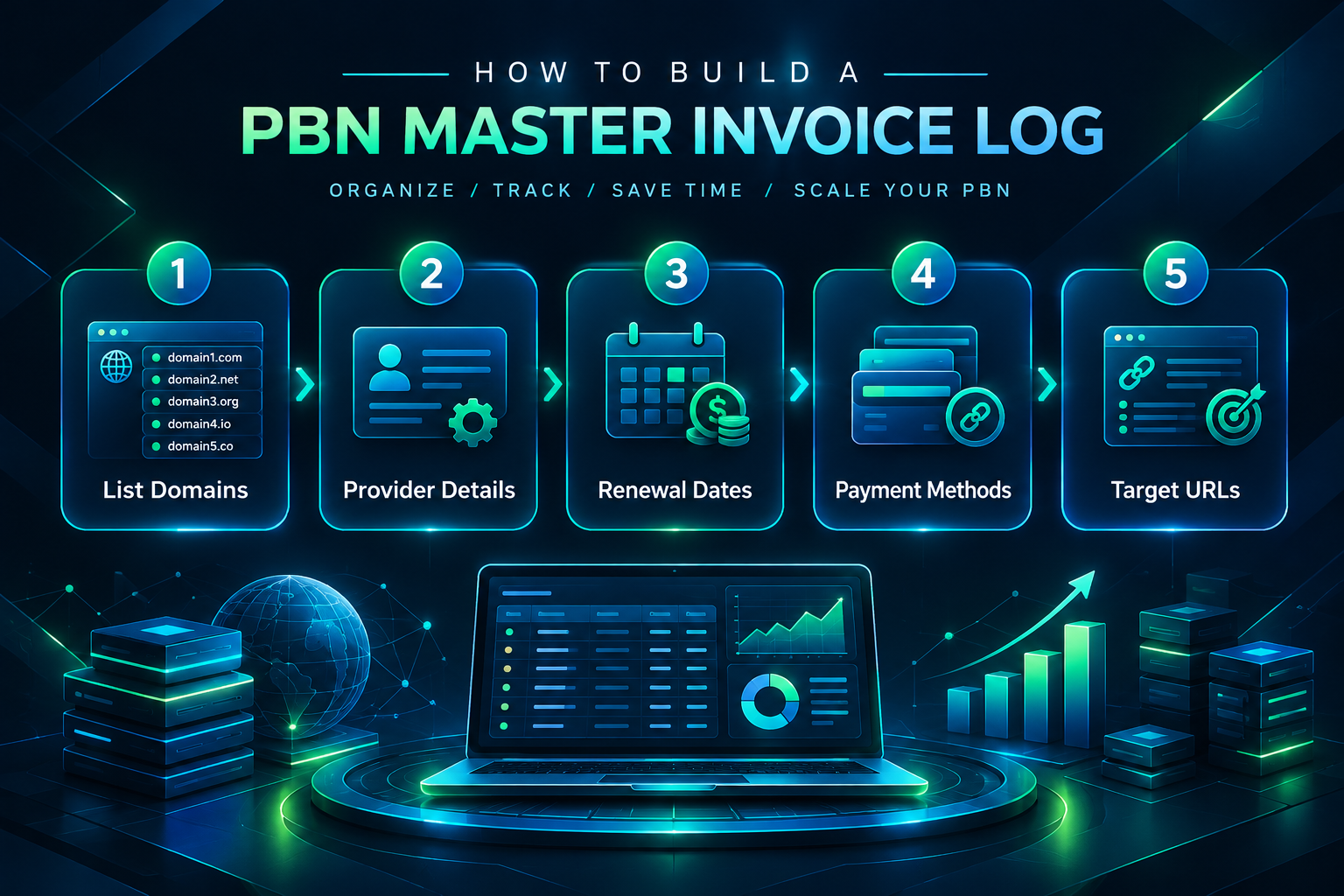
Operators who use multiple payment cards or accounts to distribute billing across different identities should record which card is associated with each hosting account. This prevents the common situation where a card is cancelled or expires and several hosting accounts lapse simultaneously because the operator did not know which accounts were tied to that card. A simple notation in the payment method column, such as a card nickname or last four digits, is enough to flag accounts that need updating when a payment method changes.
Organizing Invoices by Provider, Cycle, and Domain
Raw invoice files, whether PDF attachments or HTML emails, accumulate quickly across a large PBN. Without a consistent filing system, locating a specific invoice for a tax audit, a billing dispute, or a cost review becomes time-consuming. A folder structure organized first by hosting provider, then by year, and then by domain or account name gives you a predictable location for every document. Cloud storage services work well for this because they are accessible from multiple devices and can be shared with an accountant or virtual assistant without exposing hosting account credentials.
For operators who receive invoices by email, creating a dedicated email address for PBN hosting billing is a practical step. Routing all hosting invoices to a single inbox, separate from personal or business email, means that billing notifications are never buried under unrelated correspondence. Many hosting providers send renewal reminders seven to thirty days before the billing date, and having those reminders arrive in a monitored inbox makes it easier to act on them promptly.
Annual billing plans are common in PBN hosting because they typically cost less per month than monthly plans. However, annual billing means that renewal dates are spread across the calendar year rather than arriving predictably each month. Recording every renewal date in the master log and setting calendar reminders thirty days in advance gives enough lead time to update payment methods, evaluate whether the domain is worth renewing, or migrate the site to a different provider before the account lapses.
Categorizing PBN Hosting Costs for Accurate Expense Tracking
PBN operating costs fall into several distinct categories, and mixing them together in a single expense line makes it difficult to analyze where money is going or to identify savings opportunities. Separating costs into at least four categories produces more useful financial records: domain registration and renewal fees, web hosting fees, content and site maintenance costs, and any software or tool subscriptions used to manage the network.
Within the hosting category, it is worth distinguishing between shared hosting accounts, virtual private server plans, and any managed WordPress hosting used for individual PBN properties. The cost per site varies significantly across these plan types, and tracking them separately reveals whether the network’s hosting mix is cost-efficient relative to the link equity each site is expected to deliver. A domain sitting on a premium managed hosting plan that costs several times more than a comparable shared account may be justified if that domain carries strong referring domain metrics and supports a high-priority target page. The same cost is harder to justify for a lower-metric domain supporting a secondary placement.
For agencies or SEO professionals who manage PBN link placements on behalf of clients, categorizing hosting costs by client or campaign makes client billing and profitability analysis straightforward. If a portion of the network is dedicated to a specific client’s target pages, the hosting costs associated with those domains can be allocated to that client’s account. This requires the master log to include a client or campaign field alongside the domain and provider information.
Automating Renewal Alerts and Payment Confirmations
Manual tracking of renewal dates works for small networks but becomes unreliable as the number of domains grows. Automating renewal alerts reduces the cognitive load on the operator and creates a consistent process that does not depend on remembering to check a spreadsheet. Most hosting providers offer email notifications before renewal, but the timing and reliability of those notifications vary. Relying solely on provider notifications is a single point of failure.
A more robust approach combines provider notifications with independent calendar reminders set at the time each account is added to the master log. Setting two reminders per domain, one thirty days before renewal and one seven days before renewal, gives enough time to handle any payment issues without urgency. If a payment method needs updating or a domain needs to be evaluated for renewal, the thirty-day reminder provides that window. The seven-day reminder serves as a final confirmation that the renewal is on track.
After each renewal processes, confirming the payment and updating the master log with the new renewal date and the invoice reference number closes the loop. This confirmation step is easy to skip when everything goes smoothly, but it is the step that keeps the log accurate over time. An outdated renewal date in the log is as problematic as no log at all, because it creates false confidence that an account is current when it may not be.
For operators comfortable with basic automation tools, services that monitor website uptime can serve as a secondary check on hosting continuity. If a PBN site goes offline unexpectedly, an uptime alert provides immediate notification rather than leaving the lapse undiscovered until the next manual review. Uptime monitoring does not replace invoice management, but it catches the consequence of a missed payment before the downtime extends long enough to affect the site’s crawl status or the link’s contribution to the target page.
Reconciling Invoices Against Active PBN Sites
Periodic reconciliation between the master invoice log and the actual live sites in the network is a maintenance task that most operators undervalue. Over time, a PBN accumulates domains that were acquired, set up, and then deprioritized as the network evolved. Some of those domains may still be generating hosting invoices even though the sites are no longer actively supporting a target page or have been replaced by higher-quality placements. Paying for hosting on inactive or redundant domains is a straightforward waste of budget that reconciliation identifies.
A quarterly reconciliation process involves checking each domain in the master log against three questions: Is the site currently live and accessible? Is it actively linking to a target page? Is the domain’s backlink profile still strong enough to justify the hosting cost? If the answer to any of these questions is no, the domain deserves a closer review before the next renewal. Domains that are live but no longer linking to a target page may simply need a content update. Domains that have lost most of their referring domains since acquisition may no longer be worth the ongoing hosting expense.
Reconciliation also catches billing anomalies such as duplicate charges, unexpected plan upgrades, or price increases that were not noticed when they first appeared. Hosting providers occasionally change pricing at renewal, and a plan that cost a certain amount when first purchased may renew at a higher rate without a prominent notification. Comparing the invoice amount against the expected cost in the master log flags these discrepancies before they accumulate across multiple billing cycles.
Managing Hosting Costs Across Multiple Providers
Using multiple hosting providers is a standard practice in PBN management because it reduces the concentration of sites on a single server environment. From an invoice management perspective, multiple providers mean multiple billing portals, multiple support contacts, and potentially multiple currencies if some providers are based in different countries. Keeping provider login credentials organized and accessible, without storing them insecurely, is part of the administrative infrastructure that supports reliable invoice management.
A password manager with a dedicated vault for PBN hosting accounts provides secure, organized access to provider portals without requiring the operator to remember dozens of separate credentials. Each entry in the password manager can include the provider name, the account email, and a note linking back to the relevant row in the master invoice log. This connection between the credential store and the invoice log means that when a renewal reminder arrives, the operator can access the billing portal quickly and confirm the payment without searching through multiple systems.
Currency considerations matter for operators who use international hosting providers. An invoice denominated in a foreign currency may cost more or less than expected depending on exchange rate fluctuations at the time of billing. Recording the local currency amount alongside the converted cost in the master log gives a more accurate picture of actual spending over time, particularly for annual budget reviews or when comparing the cost-effectiveness of providers in different regions.
Using Expense Records to Evaluate PBN Cost Per Link
One of the most practical uses of well-maintained hosting expense records is calculating the true cost per active link placement in the network. This figure combines the hosting cost for each domain with its proportional share of domain registration fees, content costs, and any tool subscriptions used to manage that property. Dividing the total annual cost for a domain by the number of active link placements it supports gives a per-link cost that can be compared against the cost of purchasing equivalent placements from a managed PBN backlink service.
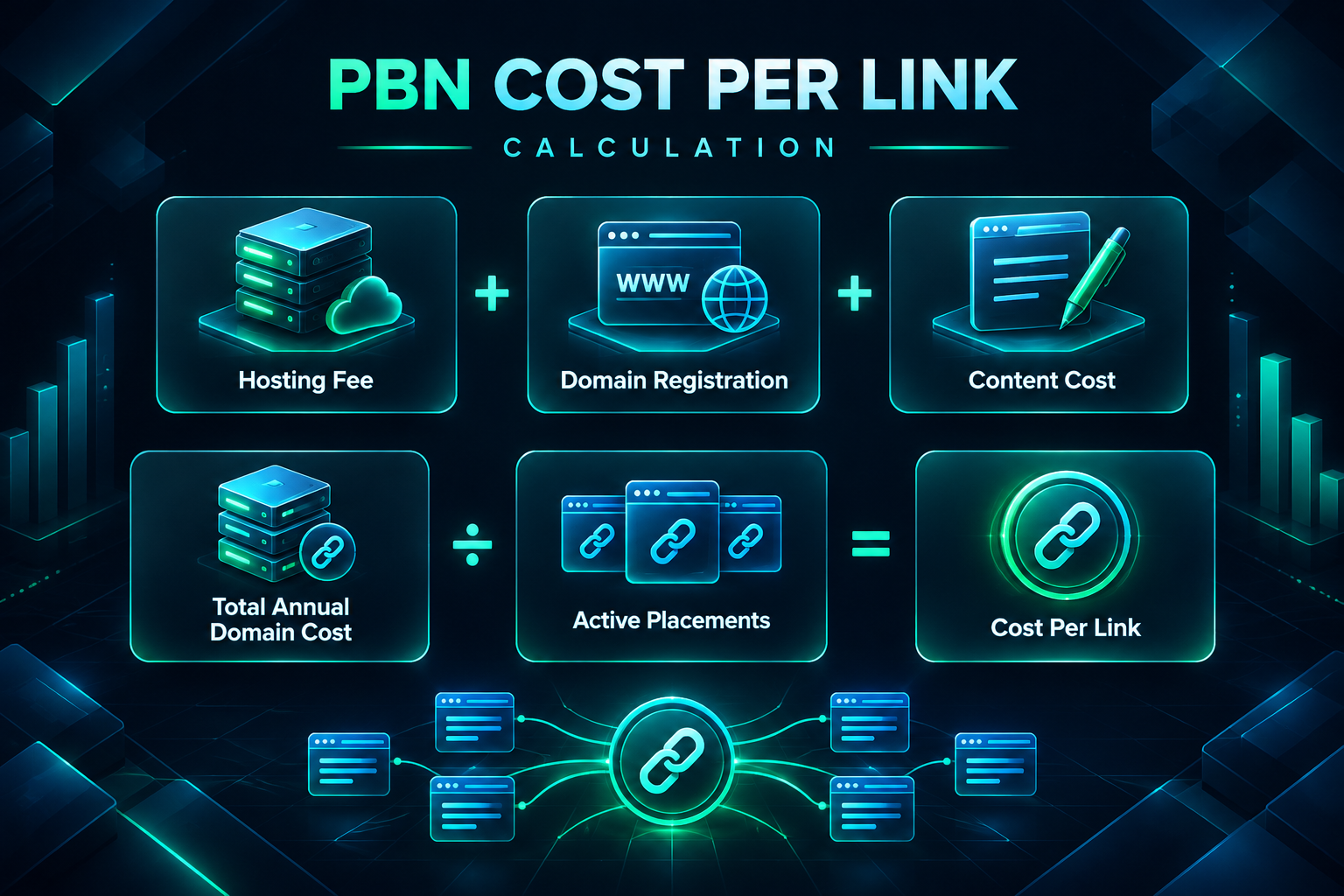
This comparison is not a straightforward argument for one approach over another. Building and maintaining a private blog network involves upfront domain acquisition costs, ongoing content investment, and the administrative overhead described throughout this article. A managed PBN backlink service such as PBN Backlinks Service handles hosting, content, and domain management on the operator’s behalf, which shifts the cost structure from a distributed set of operational expenses to a per-placement or package fee. Understanding your own network’s cost per link makes it easier to evaluate whether supplementing a self-managed network with purchased placements makes financial sense for specific campaigns or target pages.
Expense records also support decisions about network expansion. If the cost per link from existing domains is rising because domain quality has declined or hosting costs have increased, adding higher-quality domains or consolidating onto more cost-efficient hosting plans may improve the network’s overall value. Accurate records make these decisions data-driven rather than intuitive.
Tax Reporting and Record Retention for PBN Hosting Expenses
Hosting fees paid for websites used in a business context are generally deductible operating expenses in most jurisdictions, though the specific treatment depends on local tax law and how the PBN operation is structured. Maintaining organized invoice records simplifies the process of substantiating these deductions if required. An accountant or tax advisor working with a PBN operator needs to see clear documentation of what was paid, to whom, and for what service. A master log combined with filed invoice copies provides that documentation without requiring the operator to reconstruct billing history from memory or scattered email archives.
Record retention periods vary by jurisdiction, but keeping hosting invoices for a minimum of five to seven years is a reasonable baseline for most business contexts. Digital storage makes long-term retention practical, and cloud backups ensure that records survive hardware failures. Naming invoice files consistently, for example using a format that includes the provider name, domain, and billing date, makes retrieval straightforward even years after the original transaction.
For agencies that bill clients for PBN link placements, hosting expense records also support accurate cost allocation and margin analysis. Knowing the precise hosting cost associated with each client’s placements allows the agency to price services accurately and to demonstrate cost transparency if a client requests a breakdown of what they are paying for.
Practical Steps for Getting Your PBN Invoice System in Order
If your current approach to PBN hosting invoices is informal or inconsistent, bringing it into order does not require a large time investment upfront. Starting with a complete audit of active hosting accounts is the logical first step. Log into each provider portal, export or download recent invoices, and record the key billing details for each account in a new master log. This initial audit typically reveals accounts that were forgotten, payment methods that are outdated, and renewal dates that are approaching sooner than expected.
Once the master log is populated, setting up the calendar reminder system and the dedicated billing email address takes a few hours and creates the ongoing infrastructure that keeps the log accurate. From that point, the maintenance requirement is modest: confirming each renewal as it processes, updating the log with new renewal dates, and running a quarterly reconciliation to check active sites against billing records.
Operators who find the administrative side of PBN management burdensome may find value in evaluating whether a managed PBN backlink service can handle some or all of the hosting, content, and domain management responsibilities for specific campaigns. PBN Backlinks Service offers placement-based options that remove the per-domain hosting overhead for operators who want link-building results without the full operational commitment of a self-managed network. Whether that trade-off makes sense depends on campaign goals, budget, and how much of the network’s value comes from proprietary domain assets that the operator controls directly.
Frequently Asked Questions
How often should I reconcile my PBN hosting invoice records?
A quarterly reconciliation is sufficient for most networks. It gives you enough frequency to catch missed renewals, billing anomalies, and inactive domains before they become costly, without requiring weekly administrative attention. Networks with more than one hundred domains may benefit from monthly spot-checks on upcoming renewals.
What information should each row in my PBN invoice log contain?
At minimum, each row should include the domain name, hosting provider, account reference, billing email, payment method, plan type, monthly or annual cost, next renewal date, and the date the last invoice was confirmed paid. Adding a column for the target URL the domain currently supports makes cost-per-link analysis straightforward.
How do I handle hosting invoices when I use different payment methods for different PBN sites?
Record the payment method associated with each hosting account in the master log, using a card nickname or last four digits rather than full card details. When a payment method changes or expires, filter the log by that payment method to identify every account that needs updating before the next renewal cycle.
Can I deduct PBN hosting costs as a business expense?
In many jurisdictions, hosting fees for websites used in a business context are deductible operating expenses. The specific treatment depends on local tax law and how your operation is structured. Consult a qualified tax advisor and retain organized invoice records to substantiate any deductions claimed.
What happens to my PBN links if a hosting invoice is missed and the site goes offline?
A site that is offline cannot deliver link equity to the target page it supports. If the lapse is brief and the site is restored quickly, the impact may be limited. Extended downtime can affect the site’s crawl status and the continuity of the link placement. In severe cases, the hosting provider may suspend or delete the account, requiring the operator to rebuild the site from scratch.
Is it worth using separate email addresses for each PBN hosting account?
Using separate email addresses per account is a common footprint-management practice, but it significantly increases the complexity of invoice tracking. A practical middle ground is using a small number of dedicated billing email addresses, each monitored consistently, rather than one address per domain. The priority is ensuring that renewal notifications are seen and acted on promptly.
Getting Your PBN Hosting Expense Records Working for You
Hosting invoice management is one of the less visible aspects of running a private blog network, but its effect on network reliability and cost control is substantial. A missed renewal can take a link placement offline at a critical point in a campaign. An unaudited billing history can obscure the true cost of the network and make it difficult to justify continued investment or to identify where consolidation would improve efficiency. The systems described in this article, a master invoice log, automated renewal alerts, a dedicated billing inbox, and quarterly reconciliation, are not complex to implement, but they require consistent application to deliver their value.
Operators who invest time in building these administrative habits find that their networks run more predictably and that their cost-per-link figures become a reliable input for campaign planning. Those who prefer to focus on link-building strategy rather than hosting administration may find that working with a managed service like PBN Backlinks Service for some or all of their placement needs reduces the operational overhead while maintaining access to quality link placements. Either way, understanding what your PBN hosting actually costs, and keeping the records to prove it, is a foundational part of running a link-building operation that delivers consistent results over time.