

Planning PBN backlinks for a recently launched website requires a different approach than scaling links for an established domain. A new site has no ranking history, a thin backlink profile, and no demonstrated topical authority, which means the sequencing, pacing, and placement choices you make in the early months can shape how the site develops in search. Getting those decisions right from the start is more productive than correcting a poorly structured link profile later.
Key Takeaways
- New websites benefit most from PBN placements that are paced gradually, topically relevant, and pointed at pages with clear ranking intent rather than spread indiscriminately across the site.
- Anchor text diversity matters more at the start of a backlink profile than at any other stage, because the first links a site receives establish the baseline pattern that future links are measured against.
- Link velocity — the rate at which new backlinks appear — should reflect a plausible growth curve for a site of that age and niche, not an aggressive schedule designed to accelerate results.
- PBN domain quality, topical relevance, and placement context are more important for a new site than raw link volume, because a thin profile with strong placements is easier to build on than a large profile with inconsistent signals.
- Monitoring indexing, crawl behavior, and early ranking movement after each placement batch helps you assess whether the strategy is producing measurable signals before committing to further placements.
Why New Websites Need a Different PBN Strategy
An established website with hundreds of referring domains, years of indexed content, and a recognizable topical footprint can absorb a wider range of link-building activity without the profile looking unusual. A recently launched website has none of that context. Every link it receives in the first weeks and months contributes disproportionately to how its backlink profile is read, because there is very little else to compare it against. This makes the early planning decisions more consequential than they would be for a mature domain.
For a new site, the practical priorities are establishing topical relevance signals, building a natural-looking velocity curve, and directing link equity toward the pages most likely to generate early ranking movement. PBN placements can contribute to all three of those goals when they are selected and sequenced with those priorities in mind. The challenge is that new site owners sometimes approach PBN planning the same way they would for a site that already has traction, ordering a large batch of links quickly and pointing them at the homepage or a single money page. That approach can produce an unusual-looking profile for a domain with no prior link history.
Establishing a Realistic Starting Point
Before ordering any PBN placements, it is worth taking stock of what the site currently has. A newly launched website typically has a small number of links from directory submissions, social profiles, or incidental mentions, or it may have no referring domains at all. Understanding that baseline helps you decide how many placements to introduce in the first phase and at what pace.
The niche and competitive landscape also matter. A local service business competing against other small sites may see ranking movement from a modest number of well-placed PBN links relatively quickly. A new affiliate site entering a competitive national or international niche is competing against domains with thousands of referring domains and years of content, which means PBN placements alone are unlikely to close that gap rapidly. Knowing where the site sits in its competitive context helps set realistic expectations and informs how aggressively to pace the early link-building activity.
Technical readiness is another factor worth confirming before the first placements go live. A new site should have its core pages indexed, its internal linking structure in place, and its target pages clearly defined before external links start pointing at them. PBN backlinks pointing at pages that are not yet indexed or that have thin content may produce weaker signals than placements made once those pages are properly established.
Choosing Which Pages to Target First
One of the most important early decisions is which pages receive the first PBN placements. For a recently launched website, the most productive approach is usually to concentrate initial link equity on a small number of high-priority pages rather than distributing it thinly across the whole site. This allows those pages to accumulate enough authority signal to begin competing for their target terms before the budget is spread too wide.
The pages most worth targeting first are typically those with clear commercial or informational intent that align with the site’s primary revenue or traffic goals. For an affiliate site, that might be a comparison or review page targeting a specific product category. For a service business, it might be the main service page or a location-specific landing page. For a content site, it might be a pillar article targeting a high-volume informational query.
Inner page links are often more strategically useful for a new site than homepage links alone, because they send relevance signals directly to the pages competing for specific terms. Homepage links can help build general domain authority over time, but they do not pass the same targeted relevance signal to a specific ranking page that a contextual inner page placement does. A balanced approach — some placements to the homepage and a larger proportion to priority inner pages — is a reasonable starting structure for most new sites.
Anchor Text Strategy for a New Backlink Profile
Anchor text distribution is one of the most consequential planning decisions for a new website’s backlink profile. Because the site has few or no existing links, the anchors used in the first PBN placements will make up a large proportion of the total anchor profile for some time. A profile that is heavily weighted toward exact-match keyword anchors from the outset can look unusual for a domain with no prior link history, because naturally acquired links tend to include a mix of branded anchors, partial-match phrases, generic terms, and bare URLs alongside any keyword-rich anchors.
A practical anchor text plan for a new site typically prioritizes branded and partial-match anchors in the early placements, with exact-match keyword anchors introduced more gradually as the profile grows. This does not mean avoiding keyword-relevant anchors entirely — contextual relevance in the anchor text is part of what makes a PBN placement useful — but it does mean keeping the proportion of exact-match anchors lower in the early stages than you might use for a site with an established and diverse profile.
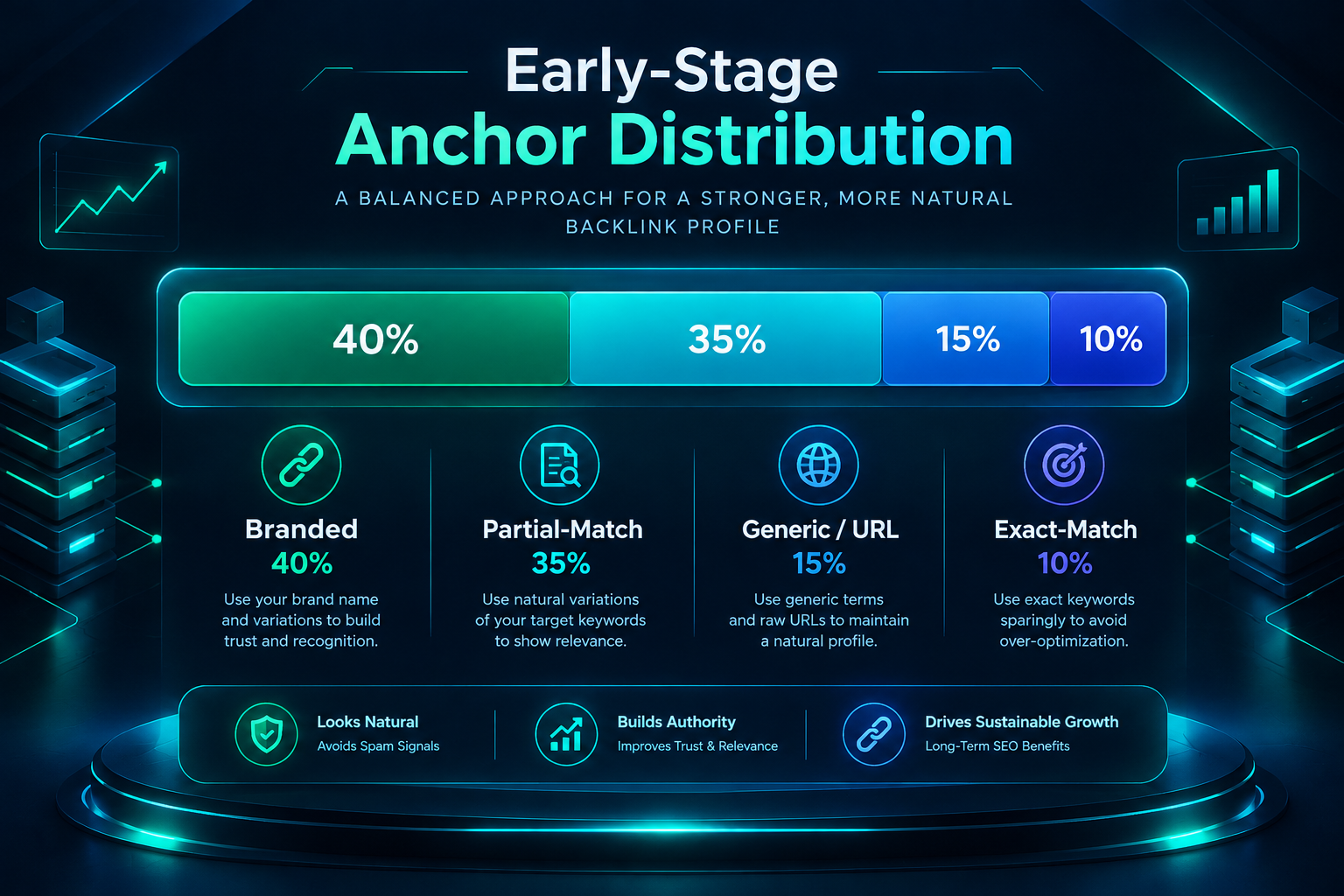
As the backlink profile grows and the site accumulates more referring domains from other sources, the anchor distribution naturally becomes more varied, which creates more room to introduce targeted keyword anchors without the profile looking concentrated. Tracking anchor text distribution using a tool such as Ahrefs or Semrush as placements are added helps you monitor whether the profile is developing in a balanced way.
Link Velocity: Pacing PBN Placements Over Time
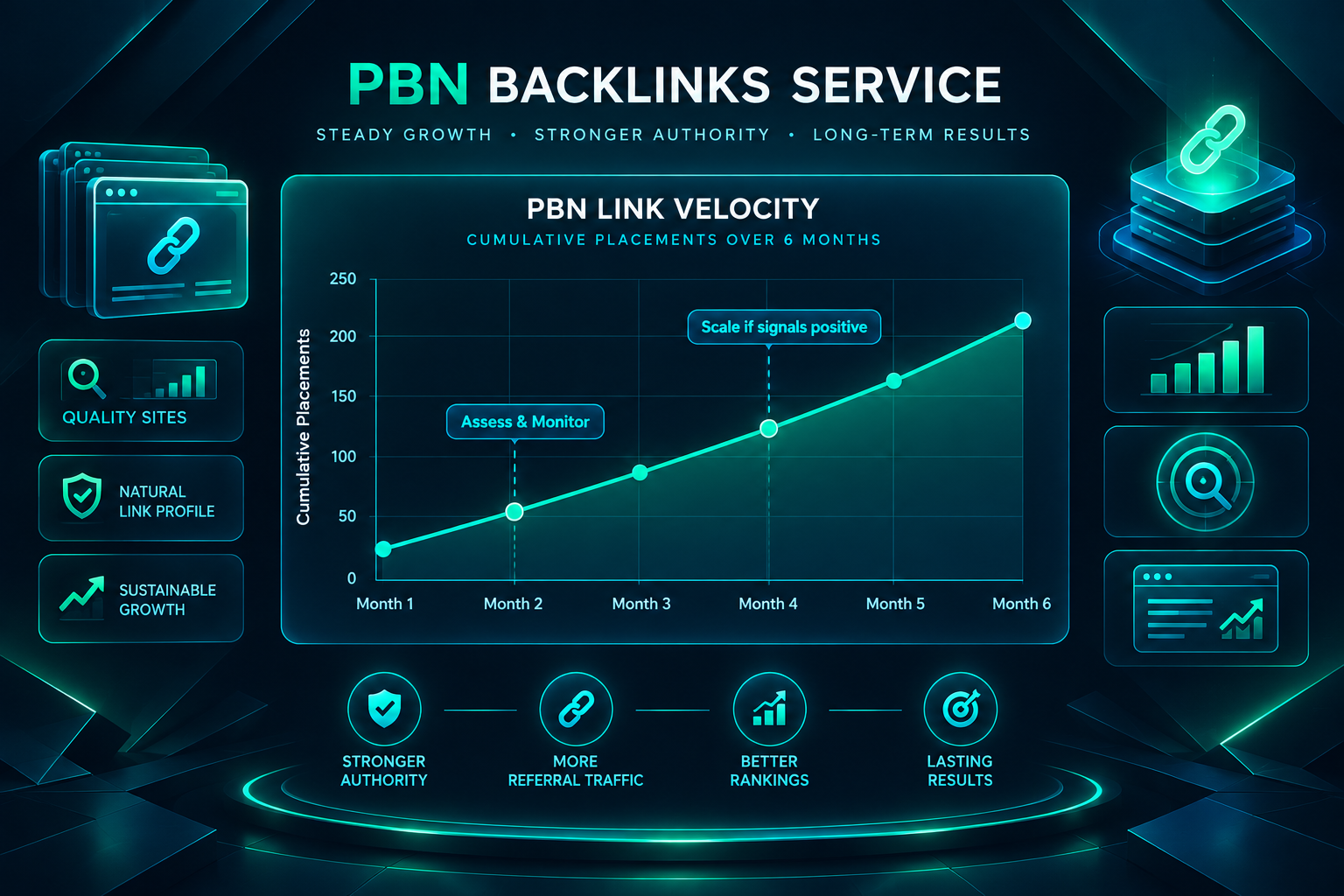
Link velocity refers to the rate at which new backlinks appear in a site’s profile over time. For a recently launched website, a sudden spike in referring domains — particularly from a single link type — can look inconsistent with the site’s age and history. A more gradual introduction of PBN placements, spread across weeks or months rather than delivered all at once, tends to produce a more plausible growth curve.
There is no publicly documented threshold from Google or other search engines that defines what constitutes an unusual velocity for a new site. The appropriate pace depends on the niche, the competitive landscape, and the site’s existing link activity. A useful reference point is to consider what a site in the same niche and at the same stage of development might plausibly accumulate through organic means, and to use that as a rough guide for how quickly to introduce PBN placements.
In practical terms, many SEO practitioners working with new sites start with a small initial batch of PBN placements — often in the range of a few links per month — and then assess the site’s response before scaling. This staged approach allows you to observe whether early placements are being indexed, whether ranking movement is detectable, and whether any unexpected changes in crawl behavior occur before committing to a larger volume. It also makes it easier to attribute ranking changes to specific placements, which is useful for refining the strategy over time.
Selecting PBN Domains for a New Site
The quality of the PBN domains used for placements matters for any site, but it is particularly important for a new website where each placement makes up a larger share of the total backlink profile. A small number of high-quality, topically relevant PBN placements is generally more useful than a larger number of placements from domains with weak histories, inconsistent content, or no clear topical connection to the target site.
When evaluating PBN domains for a new site campaign, the factors most worth examining include the domain’s historical topical relevance, the quality and context of the referring domains in its own backlink profile, the relevance of the content surrounding the placement, and whether the domain has a plausible history as a real website rather than a domain that was clearly repurposed purely for link-building. Proprietary metrics such as Domain Rating from Ahrefs or Trust Flow from Majestic can provide a useful starting point for assessing domain quality, but they are not Google ranking scores and should not be treated as the sole indicator of placement value.
Topical relevance between the PBN domain and the target site is a meaningful quality factor. A placement on a domain with content and a link history related to the target site’s niche is likely to carry more contextual relevance than a placement on a domain with no clear topical connection. For a new site that is still establishing its own topical footprint, this relevance signal can be particularly useful in the early stages of link building.
Combining PBN Placements with On-Site Foundations
PBN backlinks work alongside the on-site signals a new website is building, not independently of them. A recently launched site that has well-structured content, clear internal linking, and properly optimized target pages gives incoming link equity somewhere useful to land. A site with thin content, poor internal linking, or unoptimized pages may not convert the authority signal from PBN placements into ranking movement as effectively, because the on-page signals are not reinforcing the external ones.
Internal linking is worth particular attention for a new site receiving its first PBN placements. If a PBN link points to a pillar page, and that pillar page links internally to related supporting pages, the link equity can flow through the site’s structure rather than being concentrated on a single URL. Building this internal linking architecture before or alongside the first PBN placements helps the site make better use of the authority being introduced.
Content quality on the target pages also affects how useful early PBN placements are. A placement pointing to a well-researched, substantive page that genuinely addresses the search intent for its target keyword is more likely to contribute to ranking movement than a placement pointing to a thin or underdeveloped page. For a new site, investing in the quality of the priority pages before directing PBN links at them is a practical way to improve the return on the link-building investment.
Monitoring and Adjusting the Strategy
Once the first PBN placements are live, monitoring their indexing status and the site’s early ranking behavior provides useful feedback for adjusting the strategy. A placement that is not indexed by the search engine is not passing link equity to the target page, so confirming that PBN pages are being crawled and indexed is a basic quality check that should happen after each placement batch.
Ranking movement for a new site after PBN placements is rarely immediate. New domains typically take longer to see ranking changes from link-building activity than established sites, partly because search engines have less historical data to work with and may take more time to assess the site’s relevance and authority. Expecting measurable ranking movement within days of the first placements is generally unrealistic; a more reasonable expectation is that early signals may become visible over weeks, with more consistent movement developing over months as the profile grows.
Tracking the target pages in Google Search Console — monitoring impressions, average position, and click-through rate — provides a more granular view of early ranking movement than checking keyword positions alone. If a page is gaining impressions for its target terms even before it reaches a prominent position, that is a useful signal that the placements are contributing to relevance recognition. If impressions remain flat after several weeks and multiple placements, it may indicate that the on-page signals, the anchor text choices, or the domain quality of the placements need to be reviewed.
Adjusting the strategy based on observed results is more productive than committing to a fixed plan regardless of what the data shows. If certain placement types or anchor patterns are producing clearer signals, those can be weighted more heavily in subsequent phases. If the velocity appears to be producing an unusual-looking profile, slowing the pace and allowing the profile to stabilize before adding more placements is a reasonable response.
Frequently Asked Questions
How soon after launching a website should I start building PBN links?
There is no fixed waiting period, but most practitioners find it useful to ensure the site’s core pages are indexed, its content is in place, and its internal linking structure is established before introducing PBN placements. Starting with a small initial batch once those foundations are ready, rather than waiting months or ordering links on launch day, is a common approach for new sites.
How many PBN links does a new website need in the first few months?
The appropriate number depends on the niche, the competition, and the site’s existing link activity. There is no universal figure. Many practitioners working with new sites start with a modest number of placements per month and scale based on observed results rather than committing to a large volume upfront. A website and competitor backlink profile review is the most reliable way to estimate a suitable starting volume.
Should I point PBN links at my homepage or inner pages?
Both can be useful, but inner page placements are often more strategically valuable for a new site because they send targeted relevance signals directly to the pages competing for specific terms. A mix of homepage and inner page placements, weighted toward the priority ranking pages, is a reasonable starting structure for most new sites.
What anchor text should I use for a new site’s first PBN placements?
Branded anchors, partial-match phrases, and generic terms are typically more appropriate for the early placements on a new site, with exact-match keyword anchors introduced more gradually as the profile grows. Because the first links a site receives make up a large proportion of its total anchor profile, keeping the distribution varied from the start is a practical way to avoid an unusually concentrated anchor pattern.
How do I know if my PBN placements are working for a new site?
Confirming that the PBN pages are indexed is the first check. After that, monitoring impressions and average position in Google Search Console for the target pages provides the most direct view of early ranking signals. Measurable movement for a new site typically develops over weeks to months rather than days, so consistent monitoring over a longer period is more informative than checking results immediately after placements go live.
Can I use PBN links as the only link-building method for a new site?
PBN placements can form a significant part of a new site’s link-building strategy, but most sites also accumulate some links from other sources over time, such as directory listings, brand mentions, or content-driven links. A profile that consists entirely of one link type may look less varied than a profile that includes multiple referring domain types, though the practical impact of this depends on the niche and the quality of the placements involved.
Building a PBN Link Plan That Fits Your New Site’s Stage
Planning PBN backlinks for a recently launched website is fundamentally about matching the strategy to the site’s current stage rather than applying a one-size-fits-all approach. The decisions that matter most in the early months — which pages to target, what anchors to use, how quickly to introduce placements, and which PBN domains to select — all have a larger proportional effect on a new site than they would on a domain with an established profile. Getting those decisions right from the start creates a more solid foundation for the link-building activity that follows.
The most productive early PBN strategies for new sites tend to share a few common characteristics: they prioritize topical relevance in domain selection, they keep anchor text varied and weighted toward branded and partial-match terms initially, they introduce placements at a pace that reflects the site’s age and niche, and they direct link equity toward the specific pages with the clearest ranking intent. Monitoring the results of each placement phase and adjusting the plan based on what the data shows is more reliable than committing to a fixed schedule regardless of how the site responds.
If you are planning a PBN link-building campaign for a recently launched website and want to assess which placements, domain types, and pacing approach may suit your specific niche and competitive situation, PBN Backlinks Service can help you review your requirements and identify a starting strategy that fits where your site currently stands.