

Replacing PBN backlinks with earned links is a deliberate, multi-stage process that requires auditing your existing link profile, identifying which placements are contributing ranking value, building a pipeline of editorially acquired links, and managing the transition without destabilizing rankings you have already achieved. This guide explains how that process works in practice, what to expect at each stage, and how to make informed decisions about the pace and scope of any shift in your link-building strategy.
Key Takeaways
- Replacing PBN links with earned links is a gradual process, not a single action — abrupt removal of existing placements can cause ranking instability before replacement links are in place.
- A thorough backlink audit is the essential first step: understanding which links are contributing value helps you prioritize what to replace and in what order.
- Earned links — including editorial mentions, digital PR placements, and contextual links acquired through outreach — typically require longer lead times and more resource investment than purchased placements.
- A mixed backlink profile that includes both PBN placements and editorially acquired links is a realistic intermediate state for many websites during a transition period.
- Monitoring rankings, crawl data, and referring domain counts throughout the transition helps you detect and respond to any ranking changes before they become significant problems.
What Does It Mean to Replace PBN Links with Earned Links?
A PBN backlink is a link placed on a website that is part of a private blog network — a collection of domains managed, directly or indirectly, with the purpose of passing link equity to target pages. An earned link, by contrast, is one that a third-party website places because the content, product, or resource being linked to is considered genuinely useful or noteworthy by that site’s editorial team. The distinction matters for this transition because the two link types are acquired through fundamentally different mechanisms, operate on different timelines, and require different ongoing maintenance.
Replacing PBN links with earned links does not necessarily mean removing every PBN placement immediately. For most websites, the practical goal is to reduce dependence on any single link-building method by building a broader, more varied backlink profile over time. The transition may involve gradually acquiring earned placements while allowing some existing PBN links to remain in place until sufficient replacement authority has been established. The pace of that transition depends on the website’s current ranking stability, the competitive landscape of the niche, the volume of PBN links currently in the profile, and the resources available for outreach and content development.
Step 1: Conduct a Full Backlink Audit Before Making Any Changes
Before removing or disavowing any existing links, a complete backlink audit is essential. Tools such as Ahrefs, Semrush, or Majestic can pull a comprehensive list of referring domains and individual backlinks pointing to your site. The audit should identify the volume of links, the referring domains, the anchor text distribution, the topical relevance of linking pages, and any patterns that suggest a concentration of links from a particular network or hosting environment.
During the audit, it is useful to segment links into rough categories: links that appear to be contributing ranking value based on their placement context and referring domain quality, links that appear neutral or low-impact, and links that may be creating footprint concerns due to obvious network patterns, thin content on the linking page, or irrelevant anchor text. This segmentation helps prioritize which placements to replace first and which to leave in place while the earned link pipeline develops.
One important caution: do not assume that every PBN link in your profile is actively harming your rankings. Search engines do not publish the specific thresholds or detection formulas they use to evaluate individual link placements, and the effect of any given link depends on a range of factors including the quality of the linking domain, the relevance of the placement context, and the overall composition of the backlink profile. Removing links without understanding their contribution can reduce ranking signals before replacement links are ready to compensate.
Step 2: Map Your Current Rankings to Specific Backlinks
Once the audit is complete, the next step is to correlate your current keyword rankings with the backlinks supporting those pages. This is not always a precise exercise — ranking is influenced by many factors beyond backlinks — but it helps identify which target pages are most dependent on PBN placements for their current position and which pages already have a more diverse link profile that could sustain a transition more easily.
Pages ranking in competitive positions with a backlink profile that is heavily concentrated in PBN placements represent the highest transition risk. If earned links are removed or devalued before replacement links are in place, those pages may lose ranking ground. Pages with a mix of PBN and editorially acquired links, or pages ranking in less competitive positions, may be more suitable starting points for the transition.
Mapping rankings to backlinks also helps set realistic expectations. If a page is ranking primarily because of a small number of high-quality PBN placements, replacing those placements with earned links of comparable authority will take time — often several months of outreach, content development, and link acquisition before the replacement links are indexed and begin contributing measurable ranking signals.
Step 3: Build an Earned Link Pipeline Before Reducing PBN Placements
The most common mistake in a PBN-to-earned-link transition is reducing existing placements before replacement links are secured. Earned links require a pipeline: a consistent process of identifying link opportunities, creating or identifying linkable assets, conducting outreach, and following up over weeks or months. The lead time from initial outreach to a published, indexed link can range from a few weeks to several months depending on the niche, the target publication, and the quality of the content being promoted.
Linkable assets are the foundation of most earned link strategies. These include original research, detailed guides, tools, data visualizations, or resources that provide enough value to motivate a third-party editor or writer to reference them. Without a compelling reason for another website to link to your content, outreach campaigns tend to produce low response rates and few placements. Investing in content quality before beginning outreach significantly improves the efficiency of the pipeline.
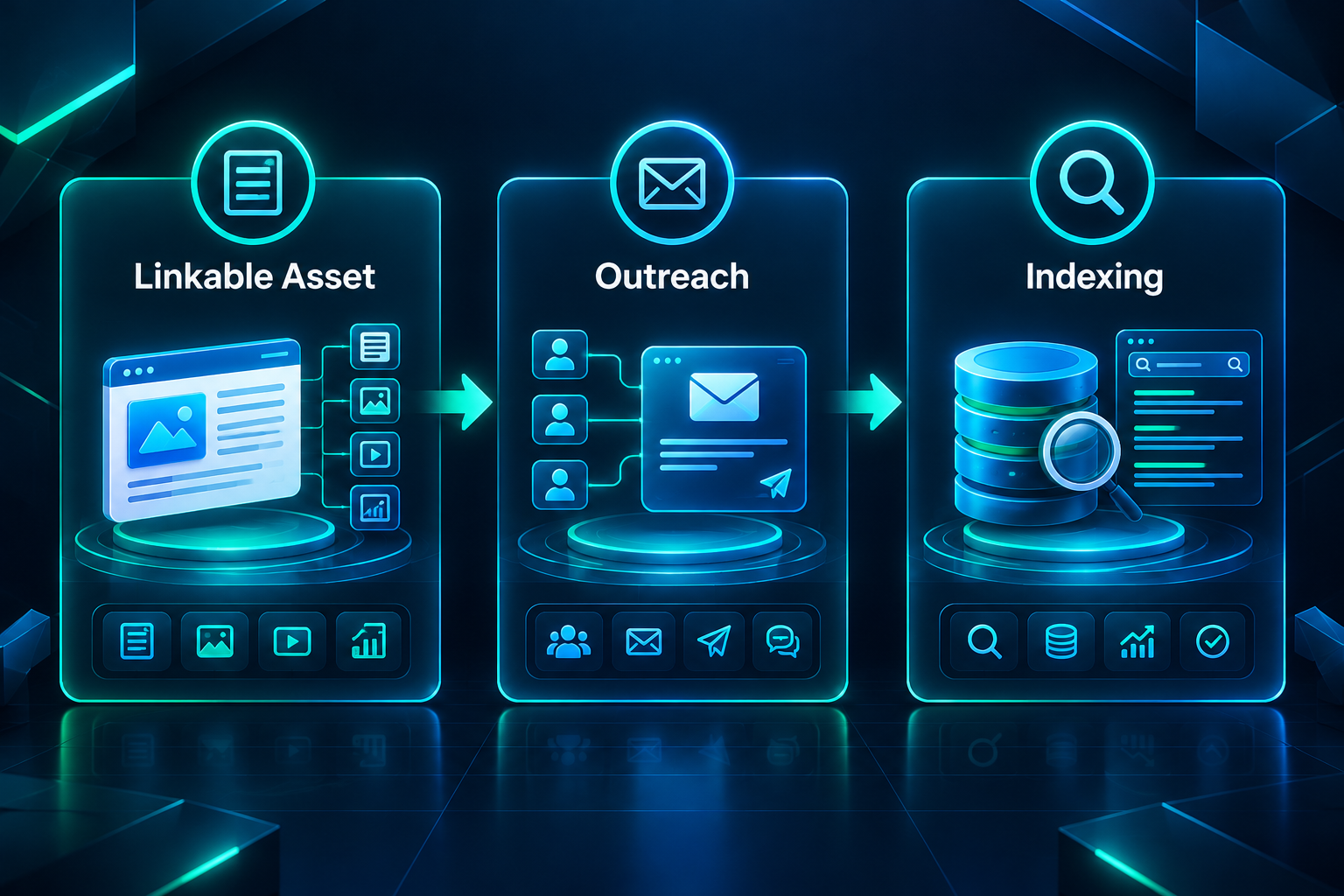
Outreach methods that commonly produce earned placements include journalist and blogger outreach for resource mentions, digital PR campaigns targeting news coverage or data-driven stories, broken link building where you identify dead links on relevant sites and offer your content as a replacement, and relationship-based link development with complementary websites in your niche. Each of these methods requires time and consistent effort, and results are not guaranteed. Response rates, placement rates, and the authority of acquired links vary considerably by niche and by the quality of the outreach itself.
Understanding the Timeline for Earned Link Acquisition
Earned link acquisition operates on a fundamentally different timeline than purchasing PBN placements. A PBN placement can typically be arranged and published within days to a few weeks. An earned link through outreach may take one to three months from initial contact to publication, and the link may take additional weeks to be crawled and indexed by search engines. This timeline difference is one of the most important practical factors in planning a transition.
For a website with a substantial number of PBN placements supporting competitive rankings, a realistic transition timeline might span six to eighteen months or longer, depending on the volume of replacement links needed and the resources dedicated to outreach and content development. Attempting to compress this timeline by removing PBN links before earned links are in place risks ranking instability that may be difficult to recover from quickly.
It is also worth noting that not every earned link will carry the same ranking signal as the PBN placement it is intended to replace. The authority, topical relevance, and placement context of earned links vary considerably. Some earned placements from high-authority, topically relevant publications may contribute more ranking signal than a PBN placement; others may contribute less. Building a volume of earned links across multiple referring domains is generally more effective than seeking a small number of high-profile placements.
Managing Anchor Text During the Transition
Anchor text distribution is an important consideration during any backlink profile transition. PBN campaigns sometimes use a higher proportion of exact-match or partial-match anchor text than a naturally acquired backlink profile would typically contain. As earned links are added to the profile, the anchor text distribution tends to shift toward a more varied mix of branded anchors, generic phrases, and natural contextual references — which is the pattern that characterizes most organically developed backlink profiles.
When planning outreach for earned links, it is generally advisable to allow the linking site’s editorial team to choose the anchor text naturally, or to suggest branded or descriptive anchors rather than exact-match keyword phrases. This approach produces a more varied anchor text distribution over time and avoids concentrating exact-match anchors in a way that may attract algorithmic scrutiny. The specific anchor text strategy that is appropriate for a given website depends on its existing profile, its niche, and its competitive environment — there is no universal formula that applies to every situation.
When and How to Remove or Disavow Existing PBN Links
Removing or disavowing existing PBN links is not always necessary or advisable as part of a transition to earned links. The decision depends on the specific characteristics of the links in question, the website’s current ranking situation, and whether there is evidence that specific placements are creating problems rather than contributing value.
If a website has received a manual action notification in Google Search Console specifically citing unnatural links, addressing those links — through removal requests to the linking site or through the disavow file — may be part of a reconsideration process. However, disavowal is not a routine step that every website transitioning away from PBN links should take. Disavowing links that are contributing ranking value can reduce those signals without any compensating benefit, potentially harming rankings in the short term.
For websites that have not received a manual action and are transitioning proactively, the more measured approach is to allow existing PBN placements to remain while building earned links, and to reassess the profile periodically as the earned link count grows. If specific placements are identified as low-quality, irrelevant, or part of an obvious network footprint that may be creating risk, those can be addressed selectively rather than through a blanket removal of all PBN links.
Monitoring Rankings and Backlink Profile Health During the Transition
Active monitoring is essential throughout a backlink profile transition. Ranking changes during a transition period can have multiple causes — algorithm updates, competitor activity, technical SEO changes, content updates — and attributing a ranking change to a specific link-building action without sufficient data is rarely reliable. Establishing a monitoring baseline before the transition begins makes it easier to detect meaningful changes and distinguish them from normal ranking fluctuation.
Key metrics to track during the transition include keyword rankings for target pages, the total number of referring domains, the rate at which new earned links are being indexed, anchor text distribution changes, and any manual action notifications in Google Search Console. Ahrefs and Semrush both provide referring domain tracking and backlink profile history that can help identify when new links are indexed and when existing links are lost.
If rankings decline significantly during the transition, it is worth pausing new link removals and assessing whether the decline correlates with a specific action — such as the removal of a particular placement — or with an external factor such as an algorithm update. Correlation does not establish causation, but a clear temporal relationship between a link removal and a ranking drop is worth investigating before proceeding with further removals.
Balancing PBN Placements and Earned Links in a Mixed Profile
A mixed backlink profile — one that includes both PBN placements and editorially acquired links — is a realistic and common intermediate state for websites in transition. Many websites that have used PBN links as part of their link-building strategy continue to maintain some of those placements while building earned links over time. The goal of the transition is not necessarily to eliminate every PBN placement but to reduce the profile’s dependence on any single link source and to build a broader base of referring domains.
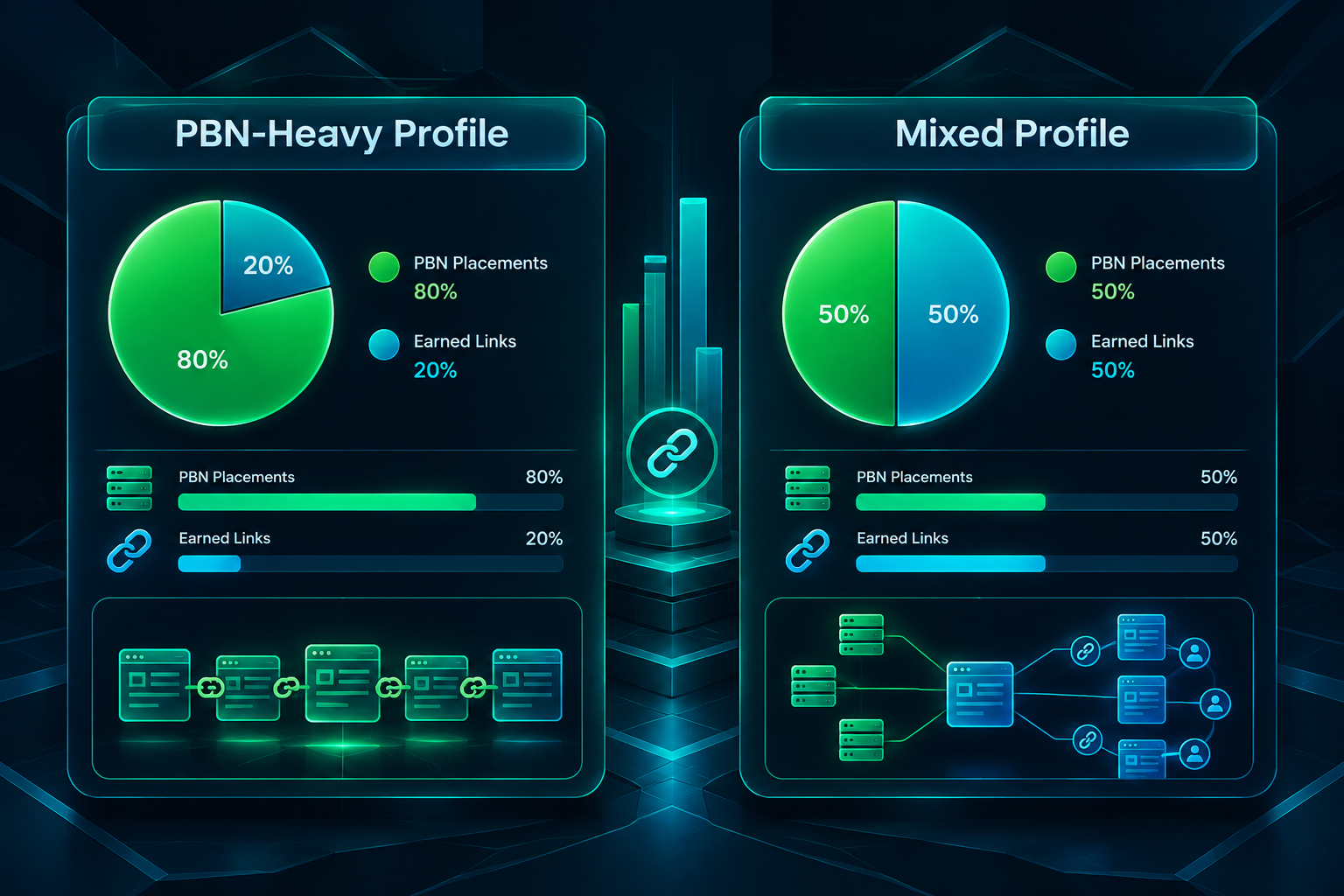
The appropriate balance between PBN placements and earned links depends on the website’s goals, its competitive environment, and the resources available for ongoing link acquisition. In highly competitive niches where earned links are difficult to acquire at scale, PBN placements may continue to play a supporting role even as the earned link count grows. In niches where high-quality editorial placements are more accessible, the transition to a predominantly earned link profile may be achievable within a shorter timeframe.
There is no universally correct ratio of PBN links to earned links that applies to every website. The quality, relevance, and diversity of the links in the profile matter more than the proportion of links from any particular acquisition method. A small number of high-quality, topically relevant PBN placements alongside a growing base of earned links may produce a more stable and effective backlink profile than a large volume of low-quality earned links from irrelevant or low-authority sources.
Content Strategy as the Foundation of Earned Link Acquisition
Earned links are fundamentally a content outcome. Websites that consistently produce original, useful, and well-researched content attract more natural linking opportunities than websites with thin or generic content. Investing in content quality — whether through original research, comprehensive guides, useful tools, or authoritative commentary on industry topics — creates the conditions under which earned links become achievable at scale.
Content that earns links tends to serve a specific audience need that is not already well-served by existing resources. Identifying content gaps in your niche — topics where existing coverage is thin, outdated, or superficial — and producing genuinely better resources on those topics is one of the most reliable ways to generate earned link interest. This approach requires a longer investment horizon than purchasing placements, but it builds a content asset that can continue attracting links over time rather than requiring ongoing placement purchases to maintain ranking signals.
Digital PR is a content-driven approach that can accelerate earned link acquisition by connecting original data, research, or commentary to journalists and editors who cover relevant topics. A well-executed digital PR campaign can produce multiple high-authority placements from a single content asset, making it one of the more efficient earned link methods for websites with the resources to invest in original research or data analysis.
Frequently Asked Questions
How long does it take to replace PBN links with earned links?
The timeline varies considerably depending on the number of PBN placements being replaced, the competitiveness of the niche, and the resources dedicated to outreach and content development. A realistic estimate for a meaningful transition is six to eighteen months, though some websites may take longer if they are operating in highly competitive niches or have a large volume of existing PBN placements supporting competitive rankings.
Should I remove all my PBN links before building earned links?
Removing all PBN links before earned links are in place is generally not advisable. Doing so can reduce ranking signals before replacement links are ready to compensate, potentially causing ranking instability. A more measured approach is to build earned links first and allow existing PBN placements to remain until sufficient replacement authority has been established.
Do I need to disavow PBN links as part of the transition?
Disavowal is not a routine requirement for every website transitioning away from PBN links. It is most relevant when a website has received a manual action specifically citing unnatural links. For proactive transitions without a manual action, selective assessment of individual placements is more appropriate than blanket disavowal of all PBN links.
What types of content attract the most earned links?
Original research, comprehensive data-driven guides, useful tools, and resources that address specific audience needs tend to attract the most earned links. Content that fills a genuine gap in existing coverage — rather than repeating what is already widely available — is more likely to generate editorial interest and linking from relevant third-party websites.
Can a website maintain some PBN placements while building earned links?
Yes. A mixed backlink profile that includes both PBN placements and editorially acquired links is a realistic and common state for websites in transition. The goal of the transition is typically to reduce dependence on any single link source rather than to eliminate every PBN placement immediately. The appropriate balance depends on the website’s goals, niche, and available resources.
How do I know if a PBN link is contributing ranking value?
Directly attributing ranking value to a specific link is difficult because rankings are influenced by many factors simultaneously. Useful indicators include the topical relevance of the linking page, the authority of the referring domain as measured by tools such as Ahrefs or Semrush, the placement context within the content, and whether the link was followed by a measurable ranking improvement for the target page. These are indicators rather than definitive proof of contribution.
Planning Your Backlink Profile Transition Realistically
Transitioning from PBN backlinks to earned links is a strategic process that rewards careful planning, realistic timelines, and consistent execution. The most effective transitions begin with a thorough audit of the existing backlink profile, proceed through a deliberate earned link acquisition phase before any existing placements are reduced, and maintain active monitoring throughout to detect and respond to ranking changes. Attempting to accelerate the transition by removing PBN links before earned links are secured introduces ranking risk that can be difficult to recover from quickly.
For websites evaluating the scope and pace of a transition, the specific characteristics of the existing backlink profile — the quality and relevance of current PBN placements, the anchor text distribution, the competitive environment, and the resources available for outreach — should all inform the strategy. A website with a small number of high-quality PBN placements in a moderately competitive niche faces a different transition challenge than a website with a large volume of lower-quality placements in a highly competitive vertical.
If you are assessing your current backlink profile or evaluating how PBN placements fit within a broader link-building strategy, PBN Backlinks Service can help you review placement quality, domain characteristics, and campaign fit before making changes that could affect your current rankings. Understanding what you have before deciding what to change is the most reliable starting point for any backlink profile transition.