

PBN sites can be monetized, but whether doing so is practical depends heavily on how the network was built, what its primary purpose is, and how monetization affects the site’s ability to pass link equity to target pages. Many network operators run PBN sites purely as link-passing assets, while others explore supplementary income streams. Understanding the trade-offs between these two approaches is essential before adding any revenue layer to a private blog network.
Key Takeaways
- PBN sites can carry display ads, affiliate links, or digital product offers, but monetization choices affect how the site appears to crawlers and human reviewers, which may influence its value as a link asset.
- The primary function of a PBN site is to pass contextual link equity to a target domain; monetization that compromises content quality or topical relevance can reduce that core function.
- Certain monetization models, particularly heavy programmatic advertising or thin affiliate content, may increase the likelihood that a site is identified as a low-quality or manipulative property.
- Selective, relevant monetization on a well-built PBN site is a different proposition from plastering a thin network site with unrelated ad units or affiliate banners.
- Revenue expectations from individual PBN sites are typically modest; treating monetization as a primary income goal rather than a secondary benefit usually leads to compromises that weaken the network’s link-building function.
What Makes a PBN Site Different from a Standard Affiliate or Content Site?
A private blog network site is built or acquired primarily to host contextual backlinks pointing to one or more target domains. The site’s value in that role comes from its domain history, referring domain profile, topical relevance, and the quality of the content surrounding each placed link. These characteristics are what make a PBN placement potentially useful for improving a target page’s authority signals in search engine rankings.
A standard affiliate or content site, by contrast, is built to generate direct revenue through commissions, display advertising, or product sales. Its content strategy, internal linking, and user experience are optimized for conversion and organic traffic rather than for passing link equity to an external domain. The two models are not mutually exclusive, but they pull in different directions. A PBN site optimized for monetization may start to resemble a thin affiliate site, which is precisely the kind of property that search engines have become more effective at identifying and discounting.
Understanding this structural difference is the starting point for any honest assessment of PBN monetization. The question is not simply whether monetization is possible, but whether it can be implemented without degrading the site’s primary function as a link asset.
Monetization Models That PBN Operators Commonly Consider
Several revenue approaches are technically compatible with a PBN site, each with different implications for the network’s link-building effectiveness and its footprint.
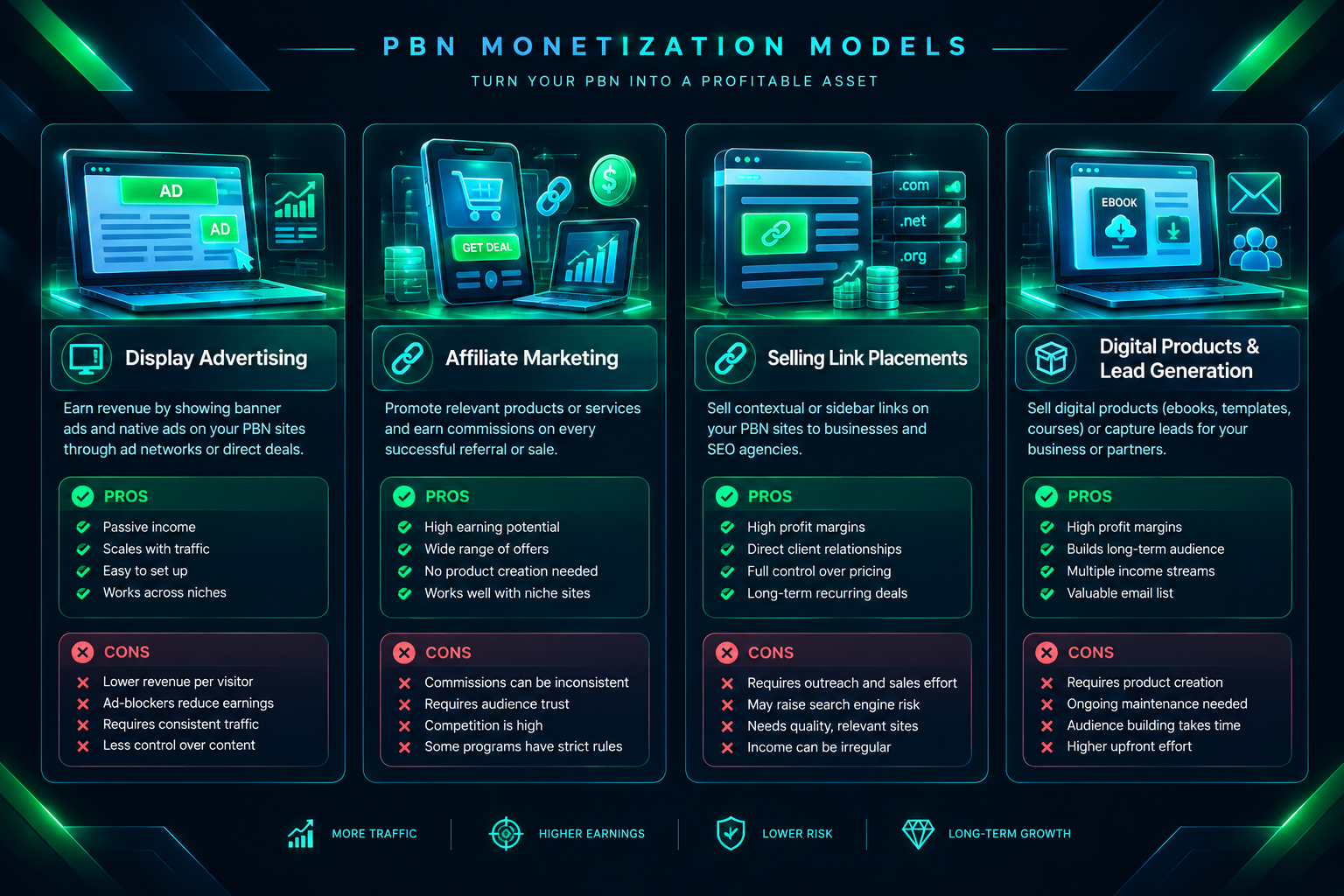
Display Advertising
Display advertising through programmatic networks is one of the most straightforward ways to generate income from a content site. For a PBN site, the practical challenge is that most major ad networks require sites to meet traffic thresholds, content quality standards, and publisher policy requirements before approval. A PBN site with limited organic traffic, which is common for sites whose primary purpose is link passing rather than audience building, may not qualify for premium networks. Lower-tier ad networks that accept almost any site tend to serve lower-quality or intrusive ad formats, which can make the site appear less credible to both users and automated quality assessments.
Light, relevant display advertising on a PBN site with genuine content and some organic traffic is a different situation from saturating a thin site with ad units. The former may have a minimal effect on the site’s link-passing function; the latter is more likely to signal a low-quality property to search engine quality systems.
Affiliate Marketing
Affiliate marketing involves placing tracked links to third-party products or services within the site’s content, earning a commission when a visitor completes a qualifying action. For a PBN site, affiliate content can be topically relevant and genuinely useful if the site’s niche aligns with available affiliate programs. A PBN site in the home improvement niche, for example, could naturally incorporate affiliate links to tools or materials within informational articles.
The risk with affiliate monetization on a PBN site is content dilution. If the site’s articles are written primarily to support affiliate conversions rather than to provide useful context around the placed PBN links, the content quality and topical coherence that make the site a credible link source may suffer. Thin affiliate content is also one of the patterns that search engine spam systems are specifically designed to identify. Affiliate links on PBN sites should be treated as secondary to the site’s link-passing content rather than as the primary editorial driver.
Selling Link Placements Directly
Some PBN operators monetize their sites by selling link placements to multiple clients rather than using the network exclusively for their own target domains. This is a distinct business model from running a private network for a single website or campaign. Selling placements introduces additional considerations: the more clients a site serves, the more outbound links it carries, and the more varied the anchor text and target domains become. A site with a large number of outbound paid links across unrelated niches may develop a footprint that differs from a site used selectively for one campaign.
Operators who sell placements typically manage link velocity, anchor text diversity, and topical relevance across the site’s outbound link profile to maintain the site’s perceived quality. This is a legitimate business approach, and it is the model that many PBN link services operate on, but it requires active management rather than passive income generation.
Digital Products and Lead Generation
Some network operators explore selling digital products such as guides, templates, or courses through PBN sites, or using the sites as lead generation pages for service businesses. These approaches can work when the site has genuine content depth and some organic traffic, but they require substantially more investment in content and user experience than a typical PBN site receives. A site built primarily to host two or three contextual backlinks is unlikely to generate meaningful lead or product revenue without significant additional development.
How Monetization Affects a PBN Site’s Link-Passing Function
The central concern with monetizing PBN sites is whether the chosen revenue model changes the site in ways that reduce its effectiveness as a link asset. Several specific mechanisms are worth understanding.
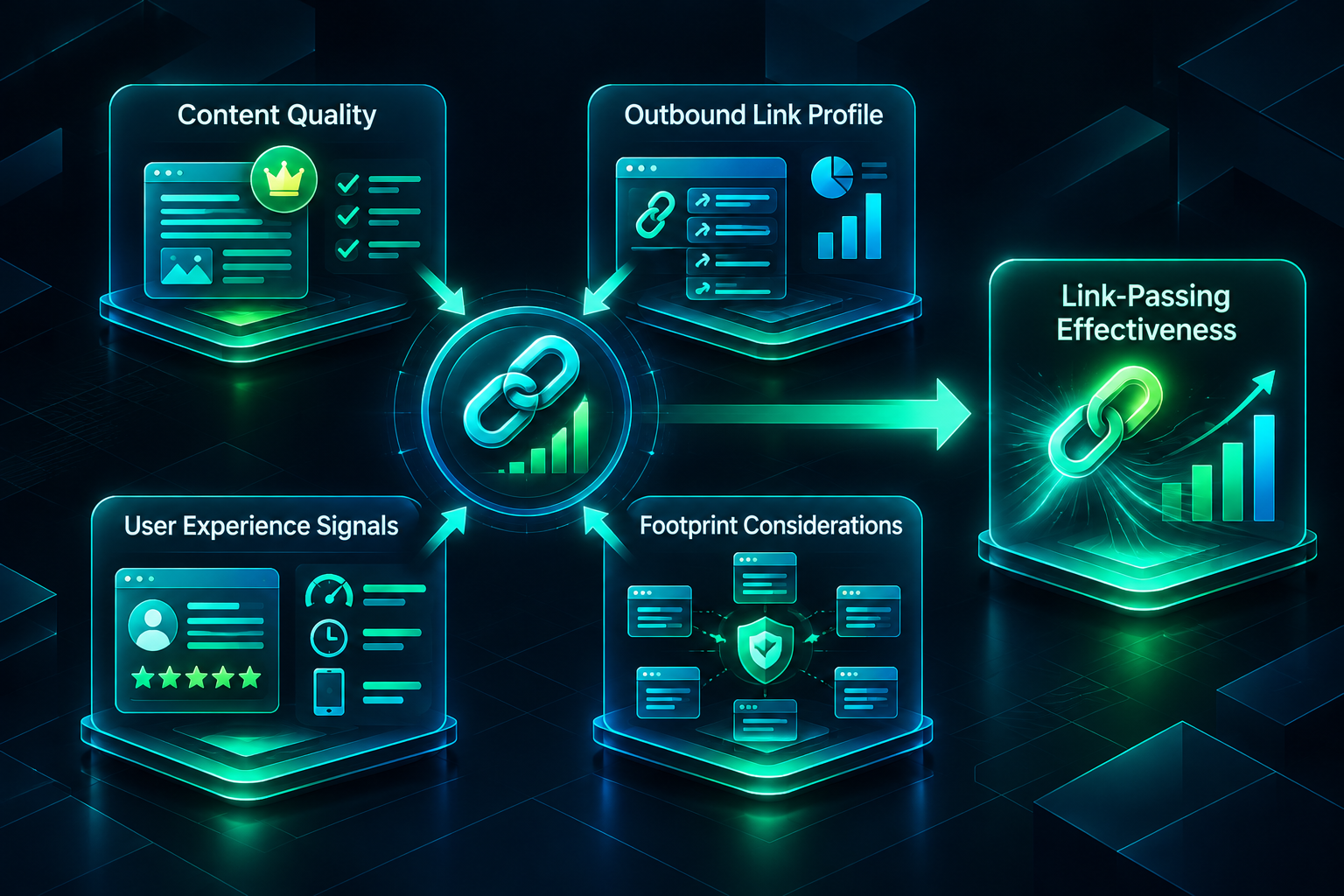
Content Quality and Topical Relevance
Search engines assess the quality and relevance of the page surrounding a link when evaluating that link’s potential contribution to a target page’s authority signals. A PBN site whose content is thin, generic, or clearly written to support affiliate conversions rather than to inform a reader provides a weaker contextual signal than a site with substantive, topically coherent articles. Monetization that drives content decisions toward thin or keyword-stuffed pages weakens the site’s link-passing value regardless of its domain metrics.
Outbound Link Profile
A PBN site’s outbound link profile, meaning the number, variety, and destination of links leaving the site, is one of the factors that can affect how the site is perceived. A site with a small number of contextually relevant outbound links looks different from a site with dozens of affiliate links, ad network scripts, and paid placements pointing to unrelated domains. Managing the outbound link profile is part of maintaining a PBN site’s quality, and monetization that adds many unrelated outbound links can complicate that management.
User Experience Signals
Heavy advertising, intrusive pop-ups, slow page load times caused by ad scripts, and poor mobile experience are all factors that can affect how search engines assess a site’s quality. These signals matter for PBN sites just as they do for any other site. A monetized PBN site that delivers a poor user experience may be assessed differently than a clean, well-maintained content site, even if the underlying domain metrics appear similar.
Footprint Considerations
One of the ongoing management challenges for private blog networks is minimizing identifiable patterns, sometimes called footprints, that could allow search engines to associate multiple sites in the network with each other or with the target domain. Monetization choices can contribute to footprint signals. For example, using the same affiliate program across many network sites, the same ad network publisher ID, or the same payment processor account can create associations between sites that would otherwise appear independent. Operators who monetize PBN sites need to manage these associations carefully.
Realistic Revenue Expectations from PBN Sites
Revenue expectations from individual PBN sites should be calibrated carefully. A typical PBN site is not built to attract large volumes of organic traffic; it is built to host a small number of high-quality contextual links. Without meaningful organic traffic, display advertising and affiliate marketing generate very little income. A site receiving a few hundred organic visits per month might generate a few dollars in display ad revenue and modest affiliate commissions at best, depending on the niche and conversion rates.
Sites that do attract meaningful organic traffic, either because they were built on strong expired domains with existing rankings or because they have received substantial content investment, can generate more meaningful revenue. However, a PBN site with significant organic traffic is also a more valuable link asset, and decisions about monetization should weigh the potential revenue against any risk of reducing the site’s link-passing effectiveness or increasing its footprint.
Operators who approach PBN monetization with realistic expectations, treating it as a way to partially offset network maintenance costs rather than as a primary income source, tend to make more sustainable decisions about which revenue models to implement and how aggressively to pursue them.
PBN Sites Built on Expired Domains: Monetization Considerations
Many PBN sites are built on expired or aged domains that carry historical backlink profiles, topical authority signals, and sometimes existing organic rankings. These domains are selected for their potential to pass link equity to target pages, but they may also have residual organic traffic from their previous incarnation. This traffic creates a more realistic foundation for monetization than a new domain with no history.
When monetizing a PBN site built on an expired domain, the site’s previous niche and content history are relevant. A domain that previously operated as a genuine resource in a specific industry may have topically relevant affiliate programs available, and content that continues in the same niche can maintain the domain’s relevance signals. Pivoting the site to an unrelated niche for monetization purposes, however, can erode the topical authority that made the domain valuable as a link asset in the first place.
Domain history also affects monetization eligibility. Some ad networks and affiliate programs review a site’s history and may decline sites that have been repurposed multiple times or that show signs of previous spam use. Checking a domain’s archived content and backlink history before building a monetization strategy is a practical step that applies to both link-building and revenue planning.
Managing a Monetized PBN Site Over Time
PBN sites require ongoing maintenance regardless of whether they are monetized. Content needs to be updated, hosting and domain renewals need to be managed, and the site’s backlink profile and indexing status should be monitored periodically. Monetization adds additional management tasks: ad network compliance, affiliate program terms, commission tracking, and potentially customer or lead management if the site sells products or services.
Operators who underestimate the ongoing workload of maintaining a monetized PBN site often find that the revenue generated does not justify the additional complexity. A network of ten or twenty sites, each with its own monetization setup, represents a significant ongoing management commitment. Automation can help with some tasks, but content quality, link profile management, and footprint monitoring generally require human judgment.
Monitoring tools such as Ahrefs, Semrush, or Majestic can help track changes in a PBN site’s referring domain profile, organic keyword rankings, and indexing status over time. These tools do not provide direct insight into search engine quality assessments, but they can surface changes in a site’s visibility that may warrant a review of its content, link profile, or monetization setup.
When Monetization May Strengthen Rather Than Weaken a PBN Site
Not all monetization is detrimental to a PBN site’s function. In some cases, thoughtful monetization can actually support the site’s credibility as a genuine content property. A site that generates real revenue, attracts real visitors, and provides genuinely useful content to its audience looks different from a site that exists solely to host a handful of outbound links with no other apparent purpose.
A PBN site with relevant affiliate content, a modest but real audience, and a clean user experience may be assessed more favorably than a bare-bones site with thin content and no apparent reason for existing beyond its outbound links. This does not mean that monetization is necessary for a PBN site to function effectively, but it does suggest that well-implemented monetization on a high-quality network site is not automatically counterproductive.
The key distinction is between monetization that serves the site’s audience and supports its content quality, and monetization that drives the site toward thin, low-value content optimized for clicks rather than usefulness. The former can coexist with effective link passing; the latter tends to undermine it.
Frequently Asked Questions
Does monetizing a PBN site reduce its link value?
It depends on how monetization is implemented. Heavy advertising, thin affiliate content, or a large number of unrelated outbound links can reduce a site’s perceived quality and potentially its link-passing effectiveness. Selective, relevant monetization on a well-maintained site with substantive content is less likely to have a significant negative effect on link value.
Can PBN sites be approved by major ad networks?
Major ad networks typically require sites to meet traffic thresholds and content quality standards. Many PBN sites, particularly those with limited organic traffic and minimal content investment, will not qualify. Sites built on strong expired domains with genuine organic traffic and substantial content may be eligible, but approval is not guaranteed and depends on the specific network’s policies.
Is it safe to use the same affiliate program across multiple PBN sites?
Using the same affiliate publisher account or tracking ID across multiple PBN sites can create an association between those sites that may be visible to search engines or affiliate program reviewers. Operators who monetize multiple network sites through affiliate programs typically use separate accounts or tracking setups for each site to manage this footprint consideration.
How much traffic does a PBN site need to generate meaningful revenue?
Revenue from display advertising typically requires thousands of monthly visitors to generate meaningful income, depending on the niche and ad rates. Affiliate revenue depends on conversion rates and commission levels, but also generally requires consistent traffic. Most PBN sites built primarily for link passing receive limited organic traffic and should not be expected to generate significant revenue from passive monetization models.
Should monetization be a primary goal when building a PBN?
Treating monetization as the primary goal when building a private blog network typically leads to compromises that weaken the network’s link-building function. Content decisions, site structure, and outbound link management are all affected by whether the site is optimized for revenue or for link equity. Most experienced operators treat monetization as a secondary benefit that can offset maintenance costs, not as the network’s core purpose.
Can selling link placements on PBN sites be a viable business model?
Selling contextual link placements on PBN sites is a recognized business model in the link-building industry. It requires active management of outbound link profiles, anchor text diversity, topical relevance, and site quality to maintain the value of placements for clients. Operators who manage these factors carefully can run sustainable placement businesses, though the workload and quality requirements are significant.
Deciding Whether to Monetize Your PBN Sites
The decision to monetize PBN sites is ultimately a question of priorities and trade-offs. If the network’s primary purpose is to support a target domain’s search visibility through contextual link placements, monetization choices should be evaluated against that goal first. Revenue models that require thin content, heavy outbound linking to unrelated domains, or aggressive ad placements are likely to compromise the network’s link-passing function more than they contribute in income.
Selective monetization, particularly on PBN sites built on strong expired domains with genuine organic traffic and substantive content, can be a reasonable way to offset the ongoing costs of network maintenance. Relevant affiliate content, modest display advertising, or selling carefully managed link placements are all approaches that experienced operators use without necessarily degrading their networks’ effectiveness.
What matters most is that monetization decisions are made with a clear understanding of how each revenue model affects content quality, outbound link profiles, user experience, and footprint management. A PBN site that functions well as a link asset and generates modest supplementary income is a more sustainable proposition than one that has been optimized for revenue at the expense of the qualities that make it useful for link building.
If you are evaluating how to structure a PBN campaign, assess domain quality, or plan contextual link placements that align with your target site’s goals, reviewing your requirements with an experienced provider is a practical starting point. PBN Backlinks Service can help you assess placement quality, domain suitability, and campaign fit before you commit to a link-building approach.