

When a page on your website is deleted, any PBN backlinks pointing to that URL stop delivering their intended value — the link equity that was flowing to that page no longer reaches a live, indexable destination. This is a common maintenance issue in PBN-assisted campaigns, and it has a straightforward set of solutions. Understanding what happens to those links, how to audit them, and which recovery options suit your situation will help you preserve as much of the original link value as possible.
Key Takeaways
- PBN backlinks pointing to deleted pages result in a broken link destination, meaning the link equity is not being passed to any live page on your site.
- A 301 redirect from the deleted URL to a relevant live page is the most direct way to recover the link equity from those placements.
- Regular backlink audits using tools such as Ahrefs or Semrush help you identify broken inbound links before they accumulate and affect campaign performance.
- If a redirect is not practical, updating the target URL at the PBN placement level is an alternative that restores the direct link path.
- The appropriate response depends on why the page was deleted, the volume of PBN links affected, and the relevance of available destination pages.
What Happens to PBN Link Equity When a Target Page Is Deleted
A PBN backlink passes link equity from the referring domain to the specific URL it points to. When that destination URL returns a 404 error or is otherwise removed from your site, the link still exists on the PBN page — but the equity has nowhere to go. Search engine crawlers follow the link, encounter a dead end, and do not credit any live page on your site with the authority that placement was intended to deliver. The PBN domain continues to exist and the link anchor remains in place, but the practical effect of the placement is suspended until the destination is resolved.
This situation is distinct from a link being removed from the PBN page itself. The placement is still live; the problem is entirely on the receiving end. That distinction matters because it means the fix is usually within your control and does not require any action from the PBN provider — at least in the most common scenario involving a 301 redirect.
Auditing Your PBN Backlinks for Broken Destinations
Before deciding on a recovery approach, you need a clear picture of which PBN links are affected. A backlink audit using a tool such as Ahrefs, Semrush, or Majestic will show you the full list of referring domains and the specific URLs they link to. Filter for links pointing to pages that return a 4xx status code — primarily 404 (not found) — and you will have a working list of placements that need attention.
Screaming Frog can complement this process by crawling your own site and identifying all internal and inbound link destinations that return errors. If you have a record of your PBN placements — which is good practice regardless — cross-referencing that list against your audit results will confirm which broken destinations are specifically tied to PBN links rather than other referring sources. This separation is useful because PBN placements often represent a deliberate investment, and prioritizing their recovery makes practical sense.
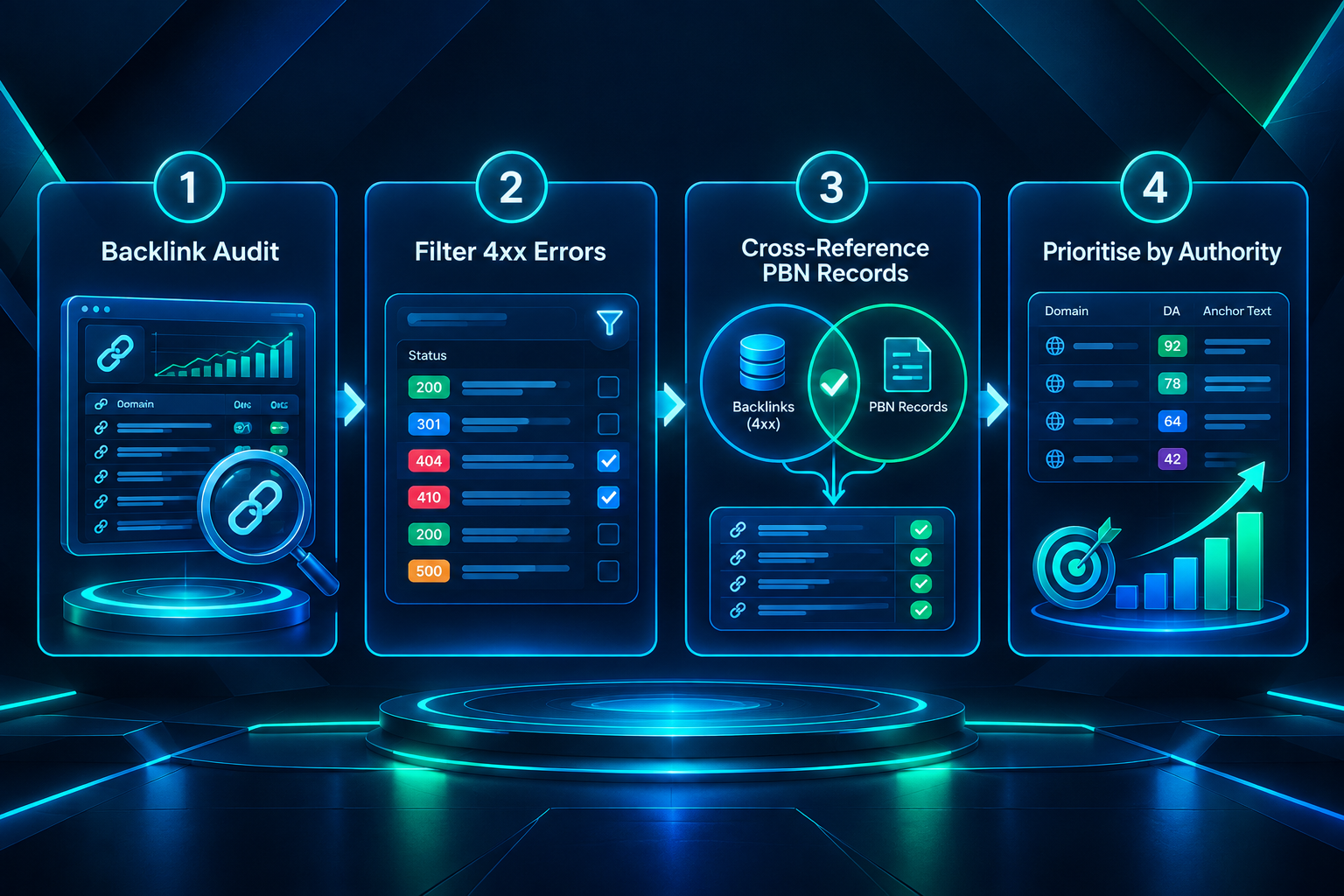
During the audit, note the following for each affected placement:
- The exact URL the PBN link points to
- The anchor text used in the placement
- The referring PBN domain and its approximate authority metrics (DR, TF, or equivalent)
- Whether the deleted page had any other inbound links beyond the PBN placement
- Whether a topically relevant live page exists on your site that could serve as a redirect destination
This information shapes which recovery option is most appropriate for each affected link.
Option 1: Implement a 301 Redirect from the Deleted URL
A 301 permanent redirect tells search engine crawlers that the content previously at the deleted URL has moved to a new location. When a crawler follows a PBN backlink to a URL that returns a 301, it is forwarded to the destination page, and the link equity from the referring domain is passed along to that destination. This is the most widely used method for recovering link value from deleted pages, and it applies equally to PBN backlinks and any other type of inbound link.
The effectiveness of a 301 redirect for preserving link equity is well-established in technical SEO practice. Google has confirmed that 301 redirects pass PageRank, though the precise amount may not be identical to a direct link. For practical purposes, implementing a redirect is substantially better than leaving a 404 in place, where no equity transfer occurs at all.
To implement a 301 redirect on a WordPress site, you can use a plugin such as Redirection or add redirect rules directly to your .htaccess file if the site runs on Apache. For Nginx-based servers, redirect rules are added to the server configuration. The specific implementation path depends on your hosting environment, but the principle is the same: map the deleted URL to a live destination page.
Choosing the right destination page is important. The redirect should point to a page that is topically relevant to the deleted content and to the anchor text used in the PBN placement. Redirecting to your homepage is a common fallback, but a more relevant internal page — a category page, a closely related article, or a service page covering similar subject matter — will generally produce a more coherent result for both crawlers and users who may follow the link directly.
Option 2: Update the Target URL at the PBN Placement Level
If a 301 redirect is not practical — for example, if the deleted page’s URL structure conflicts with your current site architecture, or if you prefer a direct link path rather than a redirect chain — you can request that the target URL be updated within the PBN placement itself. This means the anchor text and surrounding content on the PBN page remain unchanged, but the href attribute of the link is updated to point directly to a live page on your site.
This option requires coordination with your PBN provider. If you manage your own network, you can make the edit directly. If you are using a managed PBN service, contact the provider with the specific placement details — the PBN domain, the page where the link appears, and the new target URL — and request the update. A reputable provider should be able to accommodate this kind of maintenance request.
Updating the link directly avoids the redirect hop and ensures the PBN backlink points to a live page without any intermediate step. The trade-off is that it requires provider involvement and may take longer to implement than a server-side redirect that you control entirely. For campaigns where you have direct access to the PBN pages, this is a clean and efficient solution.
Option 3: Restore the Deleted Page
In some cases, the most appropriate response is to restore the deleted page rather than redirect or update the link. This is particularly relevant when the page was deleted accidentally, when it still has meaningful search demand, or when the anchor text of the PBN placement is closely tied to the specific content that was on that page. Restoring the page preserves the original link context and avoids any equity dilution that might occur through a redirect.
If the page was removed as part of a site restructure and the content is no longer relevant to your current strategy, restoration may not be the right choice. But if the deletion was unintentional or if the page served a clear purpose in your content architecture, bringing it back — even in an updated form — is a legitimate option that keeps the PBN placement fully functional without any additional configuration.
Before restoring a page, check whether the original content is still available in your CMS, in a backup, or via the Wayback Machine. If the content needs to be rewritten or updated, ensure the restored page is substantive and relevant to the topic the PBN link was placed to support.
Choosing the Right Approach for Your Situation
The best response to PBN links pointing to deleted pages depends on several factors specific to your site and campaign. Consider the following when deciding:
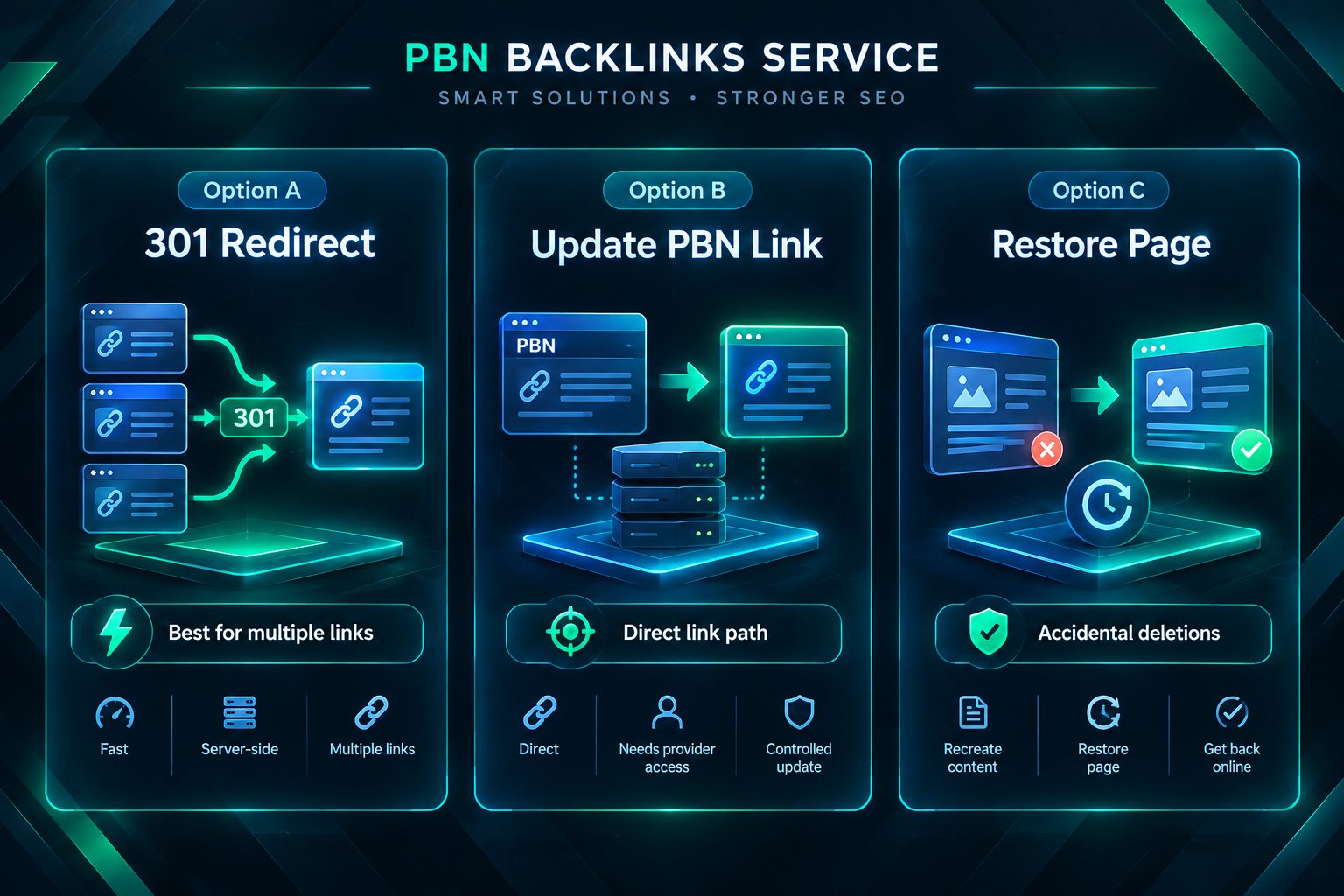
- Volume of affected links: If a single high-authority PBN placement is affected, updating the link directly or implementing a targeted redirect is straightforward. If multiple placements across different PBN domains all point to the same deleted URL, a 301 redirect is the most efficient fix because it resolves all of them simultaneously without requiring individual edits.
- Relevance of available destination pages: A redirect to a closely related live page preserves more of the contextual value of the placement than a redirect to an unrelated page. If no relevant destination exists, restoring the original page or creating a replacement may be worth considering.
- Anchor text alignment: If the PBN placement uses a specific keyword anchor that no longer matches any live page on your site, the redirect destination should be a page that is at least topically adjacent to that anchor. A significant mismatch between anchor text and destination content reduces the coherence of the placement.
- Access to the PBN: If you manage your own network, you have full flexibility to choose between redirecting, updating the link, or restoring the page. If you rely on a managed service, a server-side redirect is usually faster to implement while you arrange a link update with the provider.
- Why the page was deleted: Pages removed due to content quality issues, duplicate content, or a deliberate site restructure may not be worth restoring. Pages deleted accidentally or as part of a migration that went wrong are strong candidates for restoration.
Preventing Broken PBN Link Destinations in Future Campaigns
Handling broken link destinations reactively is manageable, but building a process to catch them early reduces the time that link equity is left unrecovered. A few practical steps can help:
Maintain a placement record. Keep a log of every PBN placement that includes the referring domain, the target URL, the anchor text, and the date the link was placed. When you make changes to your site’s URL structure or delete pages, cross-reference that log to identify any placements that will be affected before the deletion goes live.
Schedule regular backlink audits. Running a backlink audit through Ahrefs or Semrush on a monthly or quarterly basis will surface any broken link destinations that have developed since the last check. Catching a broken destination within weeks rather than months limits the period during which the placement is not delivering value.
Set up 301 redirects before deleting pages. If you know a page is being removed, implement the redirect at the same time as the deletion rather than after. This eliminates the window during which the destination returns a 404 and ensures continuity for any inbound links, including PBN placements.
Use Google Search Console to monitor crawl errors. Google Search Console reports pages on your site that return errors when Googlebot attempts to crawl them. While it does not specifically identify which errors are caused by PBN links versus other sources, it provides an early signal that a URL is returning a 404 and prompts investigation.
Communicate site changes to your PBN provider. If you are using a managed PBN service and you anticipate significant changes to your site’s URL structure — such as a domain migration, a CMS change, or a content audit that will remove multiple pages — inform your provider in advance. This allows them to flag affected placements and coordinate updates before broken destinations accumulate.
How Broken Destinations Affect PBN Campaign Performance
A PBN backlink pointing to a 404 page is not actively harmful to your site in the way that a low-quality link might be — the link still exists on the referring domain, and a broken destination does not generate a negative signal in the same category as a spammy or irrelevant placement. The practical problem is one of lost opportunity: the placement is not delivering the equity it was intended to deliver, and the longer the destination remains broken, the longer that value goes unrealized.
For campaigns where a small number of high-authority PBN placements are doing significant work, a broken destination on one or two of those links can have a measurable effect on the target page’s performance over time. For campaigns with a larger and more distributed link profile, the impact of a single broken destination is proportionally smaller, but it still represents a placement that is not functioning as intended.
It is worth noting that search engines do not publish specific rules about how they treat inbound links to 404 pages over time, or whether a pattern of broken inbound links affects a domain’s overall crawl behavior. What is clear is that a 404 destination means no equity transfer to any live page — and resolving that is straightforwardly beneficial regardless of the link source.
Frequently Asked Questions
Does a PBN link to a deleted page hurt my site?
A PBN backlink pointing to a deleted page that returns a 404 does not actively penalize your site. The main consequence is that the link equity from that placement is not reaching any live page, so the placement is effectively inactive until the destination is resolved. It is a performance issue rather than a penalty trigger.
How long does it take for a 301 redirect to restore link equity?
Once a 301 redirect is in place, search engine crawlers need to recrawl the original URL and follow the redirect to the new destination before the equity transfer is recognized. This can take anywhere from a few days to several weeks depending on how frequently the referring domain and the destination are crawled. High-authority domains tend to be recrawled more frequently, which can speed up the process.
Should I disavow PBN links that point to deleted pages?
Disavowal is not an appropriate response to PBN links pointing to deleted pages. The links themselves are not the problem — the broken destination is. Disavowing those links would remove them from consideration entirely, which is the opposite of what you want if the placements were intentional and the goal is to recover their value. Fix the destination instead.
Can I redirect the deleted URL to my homepage?
Redirecting to the homepage is a common fallback and is better than leaving a 404 in place. However, a redirect to a topically relevant internal page will generally produce a more coherent result because the anchor text and surrounding content of the PBN placement are more likely to align with a specific page than with a homepage covering the full breadth of your site.
What if the PBN provider no longer offers link updates?
If your provider does not offer link updates as part of their service, a server-side 301 redirect from the deleted URL to a relevant live page is your most practical option. This resolves the broken destination without requiring any changes on the PBN side and is entirely within your control.
How often should I audit my PBN backlinks for broken destinations?
A monthly or quarterly audit is a reasonable cadence for most campaigns. If your site undergoes frequent structural changes — such as regular content pruning, category reorganization, or CMS migrations — more frequent checks will help you catch broken destinations before they persist for extended periods.
Managing PBN Link Destinations as an Ongoing Campaign Practice
Handling PBN links pointing to deleted pages is ultimately a maintenance task that sits within the broader discipline of backlink profile management. The resolution options — implementing a 301 redirect, updating the target URL at the placement level, or restoring the deleted page — are all practical and achievable, and the right choice depends on your site’s specific circumstances rather than a universal rule.
What matters most is catching broken destinations promptly and resolving them in a way that preserves the topical coherence of the original placement. A well-maintained PBN campaign includes periodic audits, a clear record of placements and their target URLs, and a process for handling site changes that affect those destinations before they become a persistent issue.
If you are managing a PBN campaign and want to review your current placements, assess which target pages are performing as intended, or discuss how to structure your link destinations for better long-term stability, the team at PBN Backlinks Service can help you evaluate your setup and identify any placements that may need attention.