

An editorial calendar for a private blog network is a structured publishing schedule that coordinates content creation, link placement timing, anchor text variation, and topical relevance across the network’s sites. Without a deliberate plan, PBN content tends to become inconsistent, topically scattered, or clustered in ways that create unnecessary footprint risk. A well-maintained editorial calendar helps each site in the network behave more like an independently operated publication, which supports both the perceived authority of the network and the practical management of link placements over time.
Key Takeaways
- An editorial calendar for a PBN coordinates publishing frequency, content topics, anchor text rotation, and link placement timing across multiple network sites simultaneously.
- Consistent, topically relevant content on each PBN site supports the site’s perceived authority and makes link placements appear more contextually natural.
- Anchor text variation and link velocity planning are two of the most practically important functions an editorial calendar serves for a PBN campaign.
- Each PBN site should have its own content schedule based on its niche, domain history, and the role it plays in the broader link-building campaign.
- Editorial calendars require ongoing maintenance: content gaps, seasonal relevance, and changes to the target site’s SEO priorities should all prompt calendar updates.
Why Editorial Planning Matters for Private Blog Networks
Private blog networks are built around the idea that each site in the network carries genuine topical authority and publishing history. When a PBN site publishes content sporadically, covers unrelated topics, or only ever publishes posts that contain outbound links to the same target domain, the site’s content profile becomes thin and its link placements lose contextual weight. An editorial calendar addresses this by treating each PBN site as a content asset that needs regular, purposeful publishing activity rather than a static link host.
From a practical management perspective, editorial calendars also solve a coordination problem. A PBN with ten or more sites, each targeting different niches and linking to different target pages, requires a systematic approach to avoid duplicating content themes, clustering link placements in the same week, or neglecting sites that have not published recently. A shared calendar view across the network makes these patterns visible before they become problems.
Content quality on PBN sites also affects how search engines crawl and index those sites. A site that publishes useful, topically coherent content on a consistent schedule is more likely to be crawled regularly, which in turn affects how quickly new link placements are discovered. Editorial planning that accounts for crawl frequency and indexing behavior can make a meaningful difference to the practical effectiveness of a PBN campaign.
Mapping Your PBN Sites Before Building the Calendar
Before creating a publishing schedule, it is useful to document the key characteristics of each site in the network. This mapping exercise informs how frequently each site should publish, what topics are appropriate, and how many outbound link placements each site can reasonably carry without appearing link-heavy relative to its content volume.
For each PBN site, record the following information:
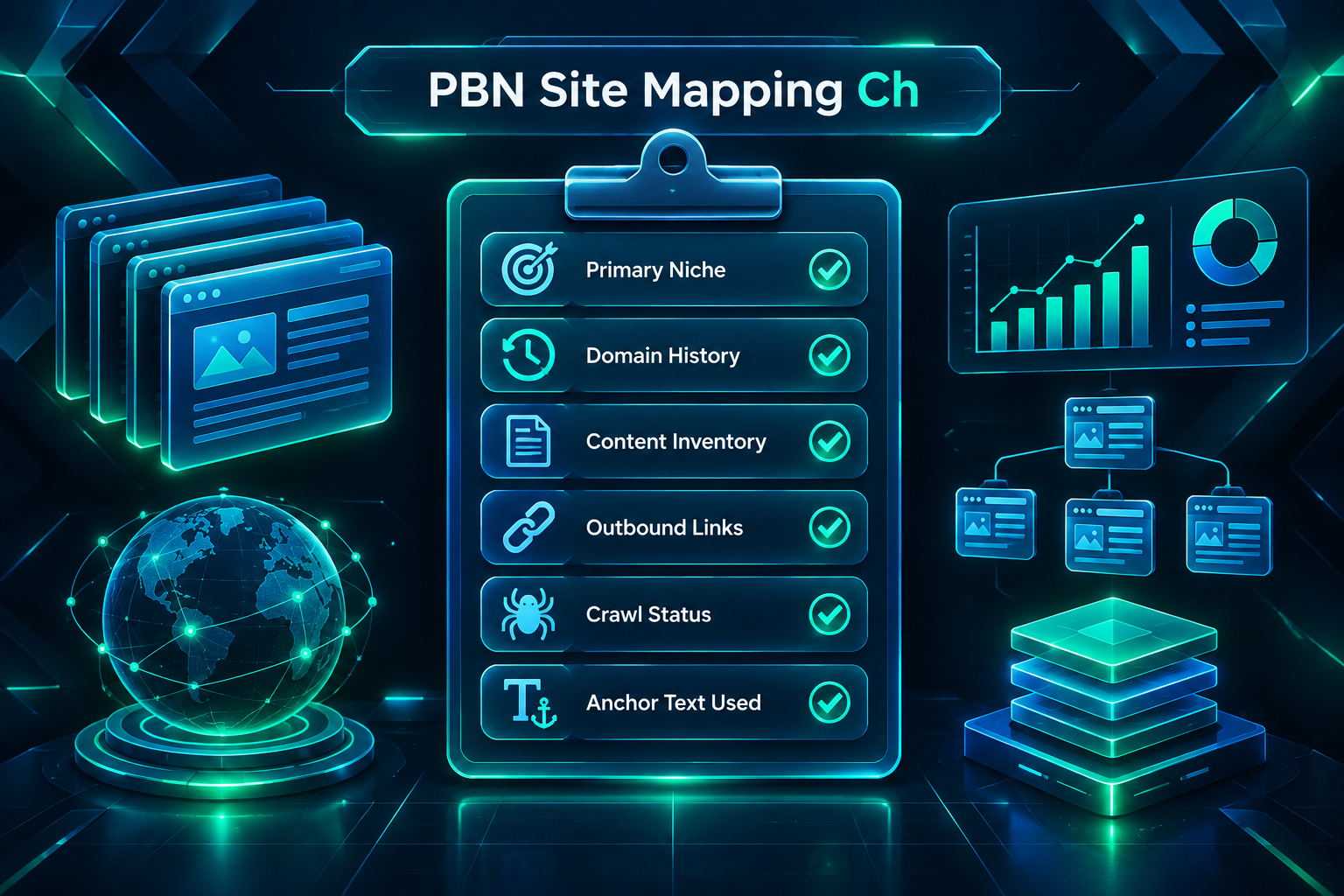
- Primary niche and topical focus: What subject area does the site cover, and how closely does that align with the target pages it will link to?
- Domain history and archived content: What topics did the domain cover before it expired or was acquired? Staying broadly consistent with that history supports topical coherence.
- Current content inventory: How many posts or pages already exist, and what topics do they cover? This prevents duplication and identifies gaps.
- Existing outbound links: How many links to external sites does the site already carry, and what is the ratio of linked posts to non-linked posts?
- Crawl and indexing status: Is the site being crawled regularly? Are new posts being indexed within a reasonable timeframe?
- Target pages and anchor text already used: What placements have already been made, and what anchor text variations have been used? This is essential for planning future anchor text rotation.
This site-level documentation becomes the foundation of the editorial calendar. Sites with a strong content inventory and regular crawl activity can support a more active publishing schedule, while newer or less-indexed sites may benefit from a slower, more deliberate build-up of content before additional link placements are added.
Setting Publishing Frequency for Each Site
Publishing frequency is one of the most consequential decisions in PBN editorial planning. There is no universally correct posting cadence, and the right frequency for a given site depends on its niche, its existing content volume, and the role it plays in the network’s link-building strategy.
A general principle is that publishing frequency should be plausible for the site’s apparent size and topic. A site covering a narrow specialist topic in a low-volume niche does not need to publish daily content to appear credible. Two to four well-written posts per month may be entirely appropriate for such a site, while a broader lifestyle or news-adjacent site might sustain a higher frequency without appearing unusual.
Avoid scheduling link-placement posts as the only publishing activity on a site. Each site should have a mix of content: some posts that contain outbound links to target pages, and some posts that serve purely as topical content without any outbound link placements. A ratio of roughly one linked post for every two to three non-linked posts is a commonly used starting point, though the appropriate ratio will vary depending on the site’s content volume and the number of placements planned.
When building the calendar, stagger publishing dates across the network so that multiple sites are not all publishing link-placement posts in the same narrow window. Clustering placements in time can create a detectable pattern in the target site’s backlink acquisition timeline, which is a footprint concern that editorial planning can directly address.
Planning Topically Relevant Content for Each PBN Site
Topical relevance is a core quality factor for PBN content. A link placement embedded in a post that is genuinely relevant to both the PBN site’s niche and the target page’s topic carries more contextual weight than a placement in a generic or off-topic post. Editorial calendars should be built around content themes that are appropriate for each site’s niche, with link-placement posts planned as natural extensions of those themes rather than standalone articles written purely to host a link.
Content planning for a PBN site should draw on the same keyword and topic research used for any content-driven website. Identify the subtopics, questions, and informational needs within the site’s niche, and build a content map that covers those areas progressively over time. Link-placement posts can then be scheduled at points where the target page’s topic intersects naturally with the site’s content plan.
For example, a PBN site covering personal finance topics might plan a series of posts on budgeting, savings accounts, and investment basics. A link placement pointing to a target page about a specific financial product fits naturally within that content plan when it appears in a post that genuinely addresses the product’s category. The same placement in an unrelated post about travel or cooking would be contextually weak regardless of the site’s overall authority metrics.
Content themes should also account for seasonal relevance where appropriate. A PBN site in the retail or travel niche, for instance, might plan content around seasonal buying periods, holidays, or annual events. Aligning link placements with seasonally relevant content can improve the contextual fit of the placement and the timeliness of the anchor text used.
Anchor Text Rotation and the Editorial Calendar
Anchor text planning is one of the most technically important functions of a PBN editorial calendar. The distribution of anchor text across a target site’s backlink profile is a factor that SEO practitioners monitor closely, and an unbalanced anchor text profile — particularly one dominated by exact-match keyword anchors — can attract scrutiny regardless of the link source.
An editorial calendar should track the anchor text used in every link placement across the network, organized by target page. For each target page, maintain a running record of the anchor text variations already used, and plan future placements to maintain a varied distribution. Common anchor text categories include:
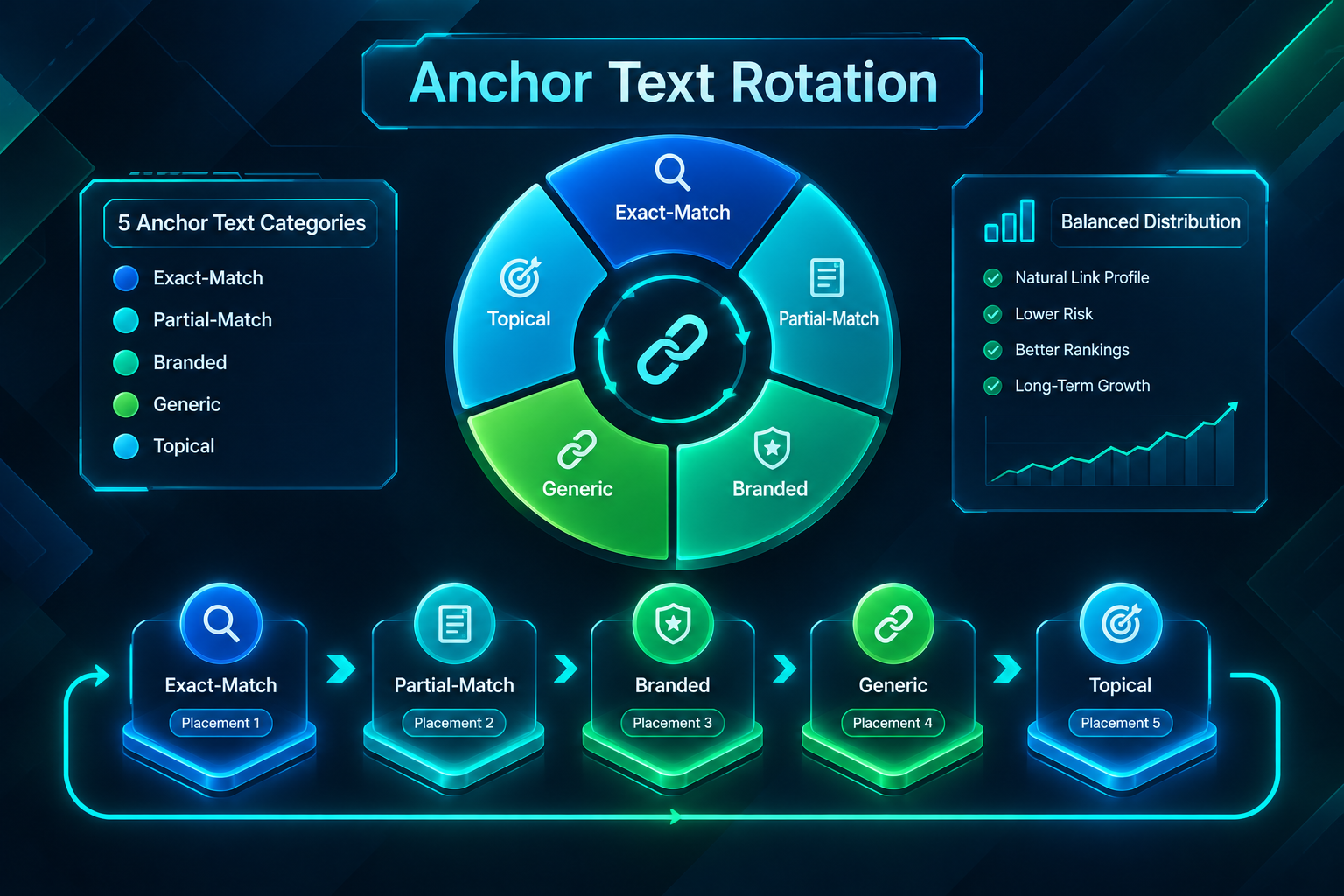
- Exact-match anchors: The precise target keyword phrase. These carry strong topical signal but should not dominate the anchor profile.
- Partial-match anchors: Variations that include the target keyword alongside other words. These are generally easier to use naturally in editorial content.
- Branded anchors: The target site’s brand name or domain. These appear natural in most editorial contexts and help balance the anchor profile.
- Generic anchors: Phrases such as “read more”, “this article”, or “visit here”. These add variety but carry limited topical signal on their own.
- Topical but non-keyword anchors: Descriptive phrases related to the topic without matching the exact target keyword. These are often the most versatile option for contextual placements.
The editorial calendar should assign a planned anchor text category or specific phrase to each scheduled link-placement post before the content is written. This prevents writers from defaulting to the same anchor text repeatedly and ensures that the overall anchor distribution across the network develops in a controlled, varied way over time. No publicly documented threshold from Google specifies what anchor text percentage triggers a review or action, so the goal is natural-looking variation rather than adherence to a fixed formula.
Coordinating PBN Link Placements with the Target Site’s SEO Campaign
A PBN editorial calendar does not exist in isolation. It should be coordinated with the broader SEO campaign for the target site, including the target site’s own content publishing schedule, any other link-building activity underway, and the specific ranking goals for individual pages.
When a target site is launching a new page or attempting to improve rankings for a specific keyword, the PBN editorial calendar can be adjusted to schedule relevant link placements in the weeks surrounding that activity. This coordination requires communication between whoever manages the PBN and whoever manages the target site’s SEO, which is a practical reason to maintain the editorial calendar as a shared, accessible document rather than an informal mental plan.
Link velocity — the rate at which new backlinks appear pointing to a target page — is a factor that editorial planning can help manage. A sudden spike in new backlinks from multiple PBN sites pointing to the same page in a short period can create an unusual acquisition pattern in the target site’s backlink profile. Spreading placements across a longer timeframe, as planned in the editorial calendar, produces a more gradual and consistent link acquisition pattern.
It is also worth tracking which target pages have received recent placements and which have not. Pages that have not received new links for an extended period may benefit from a fresh placement, while pages that have recently received several placements may not need additional links in the near term. The editorial calendar provides the visibility needed to make these decisions systematically rather than reactively.
Managing Content Production Across the Network
Content production is the operational backbone of a PBN editorial calendar. Each scheduled post needs to be written, reviewed, and published on time, which requires either in-house writing capacity or a reliable content production workflow. The editorial calendar should include not just publication dates but also content briefing dates, writing deadlines, and review stages so that the production process stays on schedule.
Content briefs for PBN posts should specify the topic, the target word count, the intended audience for the site, the tone and style appropriate for the niche, and — for link-placement posts — the target URL and planned anchor text. Providing writers with clear briefs reduces the likelihood of off-topic content, inappropriate anchor text choices, or posts that are too thin to support a credible placement.
Word count is a practical consideration. Link-placement posts that are very short — under 300 words, for example — may not provide enough surrounding content to make the placement appear contextually meaningful. A post of 500 to 800 words is a commonly used range for PBN content, though longer posts are appropriate when the topic genuinely warrants more depth. The editorial calendar can specify target word counts for each post type to keep content production consistent.
For networks with many sites, content production can become a significant ongoing workload. Some operators batch-produce content for multiple sites in advance and schedule posts to publish automatically, which can help maintain consistency even when production capacity is limited. The editorial calendar should reflect the realistic production capacity available, rather than an aspirational schedule that cannot be maintained in practice.
Monitoring, Updating, and Maintaining the Calendar
An editorial calendar for a PBN is not a one-time document. It requires regular review and updating to remain useful as the network evolves, the target site’s SEO priorities change, and new information about content performance or indexing behavior becomes available.
A monthly review of the calendar is a reasonable minimum for most networks. During this review, check the following:
- Indexing status of recent posts: Are new posts on each PBN site being indexed within a reasonable timeframe? If a site’s content is not being indexed reliably, the link placements on that site may not be contributing to the target site’s backlink profile as intended.
- Anchor text distribution: Has the anchor text used across recent placements remained varied, or has a particular anchor type become overrepresented?
- Content gaps: Are there PBN sites that have not published recently? Sites that go dormant for extended periods may lose crawl frequency, which affects the indexing of future posts.
- Target page performance: Have the target pages that received recent placements shown any measurable change in rankings or organic visibility? This information can inform decisions about whether additional placements are warranted or whether other SEO factors may need attention.
- Changes to the target site’s priorities: Has the target site launched new pages, changed its keyword focus, or identified new ranking opportunities that the PBN campaign should support?
When a PBN site’s content or link profile raises concerns — for example, if a site’s domain metrics have declined significantly or if the site has been deindexed — the editorial calendar should be updated to pause or redirect placements from that site while the issue is investigated. Maintaining an accurate record of each site’s current status is part of responsible network management.
Tools and Formats for PBN Editorial Calendars
The format of an editorial calendar matters less than its consistency and completeness. Common options include spreadsheet tools such as Google Sheets or Microsoft Excel, project management platforms such as Trello, Asana, or Notion, and dedicated content calendar tools. For most PBN operators, a well-structured spreadsheet is sufficient and has the advantage of being easy to share, filter, and update without requiring additional software subscriptions.
A functional PBN editorial calendar spreadsheet typically includes separate tabs or views for the network-level schedule and for each individual site. The network-level view shows all planned publications across all sites in a single timeline, making it easy to spot clustering or gaps. The site-level view shows the full content plan for a single site, including topic, post type, target URL, anchor text, planned publication date, and current status.
Color coding by post type — for example, distinguishing link-placement posts from non-linked content posts — makes the calendar easier to scan at a glance. Status indicators such as “briefed”, “in writing”, “in review”, “scheduled”, and “published” help track where each piece of content is in the production workflow.
Whatever format is chosen, the calendar should be treated as a living document that is updated whenever a post is published, a placement is made, or a site’s status changes. An outdated calendar is less useful than no calendar at all, because it can create a false impression of network activity that does not reflect reality.
Frequently Asked Questions
How far in advance should a PBN editorial calendar be planned?
Planning one to three months ahead is a practical range for most PBN operators. A longer planning horizon allows for better coordination with the target site’s SEO campaign and gives content production enough lead time to maintain quality. However, calendars planned too far in advance may need significant revision if the target site’s priorities change or if new ranking opportunities emerge.
How many posts per month should each PBN site publish?
There is no fixed answer. The appropriate publishing frequency depends on the site’s niche, its existing content volume, and the number of link placements planned. A realistic and niche-appropriate cadence — even if that means only two or three posts per month — is generally more useful than an artificially high frequency that produces thin or off-topic content.
Should every post on a PBN site contain a link to the target site?
No. Publishing a mix of linked and non-linked posts is a standard practice in PBN management. Non-linked posts contribute to the site’s topical depth and content volume, which supports the credibility of the site as a whole. A site that only ever publishes posts containing outbound links to the same target domain has a content profile that is easy to identify as link-focused.
How should anchor text be tracked across a PBN with many sites?
A dedicated anchor text log — either as a tab in the editorial calendar spreadsheet or as a separate document — is the most practical approach. The log should record every placement made across the network, organized by target page, with the anchor text used, the PBN site it appeared on, and the publication date. This record makes it straightforward to assess the current anchor distribution and plan future placements accordingly.
What should happen to the editorial calendar if a PBN site gets deindexed?
Placements from a deindexed site should be paused in the calendar while the cause is investigated. The site’s content and technical setup should be reviewed before any new placements are scheduled from it. The editorial calendar should reflect the site’s current status accurately so that the network’s active placement capacity is not overstated.
Can the same content topic be used across multiple PBN sites?
Duplicate or near-duplicate content across multiple PBN sites is a footprint concern and a content quality issue. Each site should have its own original content that is appropriate for its specific niche and audience. If two sites in the network cover related topics, their content plans should be differentiated by angle, depth, or subtopic rather than covering the same ground with similar wording.
Building an Editorial Calendar That Serves Your PBN Campaign
A well-constructed editorial calendar is one of the most practical tools available for managing a private blog network over time. It brings structure to content production, keeps anchor text variation on track, coordinates link placement timing with the target site’s SEO goals, and provides a clear record of network activity that makes ongoing management significantly easier.
The most effective PBN editorial calendars are built around the specific characteristics of each site in the network — its niche, its domain history, its content inventory, and its role in the broader campaign — rather than applied as a generic template across all sites. They are updated regularly, reviewed monthly, and adjusted whenever the target site’s priorities or the network’s operational status changes.
If you are planning a PBN campaign or reviewing the structure of an existing network, PBN Backlinks Service can help you assess placement quality, domain suitability, and campaign coordination. Discussing your specific link-building requirements with an experienced provider is a practical starting point for building a network management approach that is appropriate for your target sites and SEO goals.