

Recording PBN placement agreements is a practical administrative task that many SEO buyers and agencies overlook until a dispute arises or a campaign audit becomes necessary. A clear, consistent documentation process helps you track what was ordered, what was delivered, where each link lives, and what terms govern the placement — information that becomes essential when managing multiple campaigns, verifying deliverables, or reviewing a backlink profile months after the initial order.
Key Takeaways
- A PBN placement agreement should capture the target URL, anchor text, placement page URL, domain metrics at the time of order, and any agreed terms around link permanence or replacement.
- Centralizing placement records in a shared spreadsheet or project management tool makes campaign audits, link verification, and provider communication significantly more efficient.
- Documenting the agreed anchor text and placement context at the time of order protects you if a link is later modified, removed, or replaced with a different anchor.
- Timestamped records of delivery confirmations, indexing checks, and metric snapshots give you a reliable baseline for monitoring link health over time.
- Good documentation supports anchor text strategy planning across multiple campaigns and helps avoid over-concentration of exact-match anchors across a backlink profile.
Why Documentation Matters for PBN Placements
PBN link placements differ from other link-building methods in one important practical respect: the placement exists on a domain controlled by a third-party provider, which means you have limited direct visibility into what happens to that page or domain over time. Without a written record of what was agreed and what was delivered, you have no reliable reference point if a link disappears, if the anchor text changes, or if the placement page is restructured. Documentation is not a legal formality — it is a working tool that makes campaign management more accurate and less dependent on memory or email threads.
For agencies managing placements across multiple clients, the need for structured records is even more pronounced. A single campaign might involve dozens of placements across different providers, niches, and target pages. Without a consistent recording format, verifying delivery, reconciling invoices, and reporting to clients becomes time-consuming and error-prone. A well-maintained placement log also makes it easier to plan future link-building activity, because you can see at a glance what anchor text has already been used, which target pages have received links, and which domains in your backlink profile are contributing placements.
What a PBN Placement Agreement Should Include
The term “agreement” does not necessarily mean a formal signed contract, though some providers do offer written terms. In most PBN link-building contexts, the agreement is the combination of your order details, the provider’s delivery confirmation, and any written communication that defines the scope of the placement. Recording all of these elements in one place is what transforms a loose email exchange into a usable placement record.
At minimum, each placement record should capture the following details:
- Target URL: The specific page on your website that the PBN link points to. This should be the exact URL, not just the domain, because different pages may receive different placements as part of an anchor text strategy.
- Anchor text: The exact anchor text agreed with the provider, including whether it is an exact-match, partial-match, branded, or naked URL anchor. This is one of the most important fields because anchor text distribution across a backlink profile is a meaningful SEO variable.
- Placement page URL: The URL of the page on the PBN domain where the link appears. This allows you to verify the link directly and monitor it over time.
- PBN domain: The root domain of the site hosting the placement. Some providers do not disclose individual domain names, in which case you should record whatever identifier the provider uses and note that the domain is undisclosed.
- Domain metrics at time of order: A snapshot of the domain’s third-party authority metrics — such as Domain Rating from Ahrefs, Domain Authority from Moz, or Trust Flow from Majestic — recorded at the time of the order. These proprietary metrics are not Google ranking scores, but they provide a useful baseline for comparing what was promised against what was delivered and for monitoring metric changes over time.
- Order date and delivery date: When the order was placed and when the provider confirmed delivery. This helps you track indexing timelines and correlate any ranking changes with specific placements.
- Agreed link permanence terms: Whether the provider guarantees the link for a fixed period, offers replacements if a link is removed, or makes no permanence commitment. This is one of the most commercially significant terms in any PBN placement arrangement.
- Niche or topical relevance: A brief note on the topic of the placement page and how it relates to your target page. Topical relevance between the linking page and the target page is a quality factor worth tracking, particularly when reviewing a backlink profile for coherence.
- Provider name and contact: The name of the provider or service used, along with the relevant contact or order reference. This is essential for follow-up if a link needs to be verified or replaced.
- Payment reference: An invoice number or payment confirmation that ties the placement record to a financial transaction. This matters for agency billing and for reconciling costs against deliverables.
Choosing a Format for Your Placement Records
The right format depends on the volume of placements you manage and how many people need access to the records. For individual website owners managing a small number of placements, a simple spreadsheet with one row per placement and columns for each of the fields listed above is usually sufficient. Google Sheets works well for this because it is accessible from any device, supports shared access, and allows you to add filter views for sorting by provider, target URL, or delivery date.
For agencies or SEO teams managing placements across multiple clients, a more structured approach is worth the setup time. Project management tools such as Notion, Airtable, or ClickUp allow you to create relational databases where placements can be linked to client records, campaigns, and invoices. Airtable in particular is well-suited to this use case because it supports custom fields, attachment uploads for delivery screenshots, and filtered views by client or campaign. The specific tool matters less than the consistency of the fields you record and the discipline of updating records promptly after each delivery.
Regardless of format, a few structural choices make placement records significantly more useful:
- Use a consistent naming convention for providers so that records can be filtered and grouped reliably.
- Include a status field — for example, Ordered, Delivered, Verified, Indexed, Removed — so you can see the current state of each placement at a glance.
- Add a notes field for anything that does not fit the standard columns, such as a provider’s explanation for a delayed delivery or a note that a placement page was restructured.
- Store delivery screenshots or confirmation emails as attachments or linked files rather than relying on email search to locate them later.
Recording Delivery and Verification
Delivery confirmation from a provider is the starting point for verification, not the end of it. Once a provider confirms that a placement is live, the next step is to visit the placement page URL directly and confirm that the link exists, that it points to the correct target URL, and that the anchor text matches what was agreed. This manual check takes a few minutes per placement and is worth doing promptly, because discrepancies are easier to resolve when the order is recent.
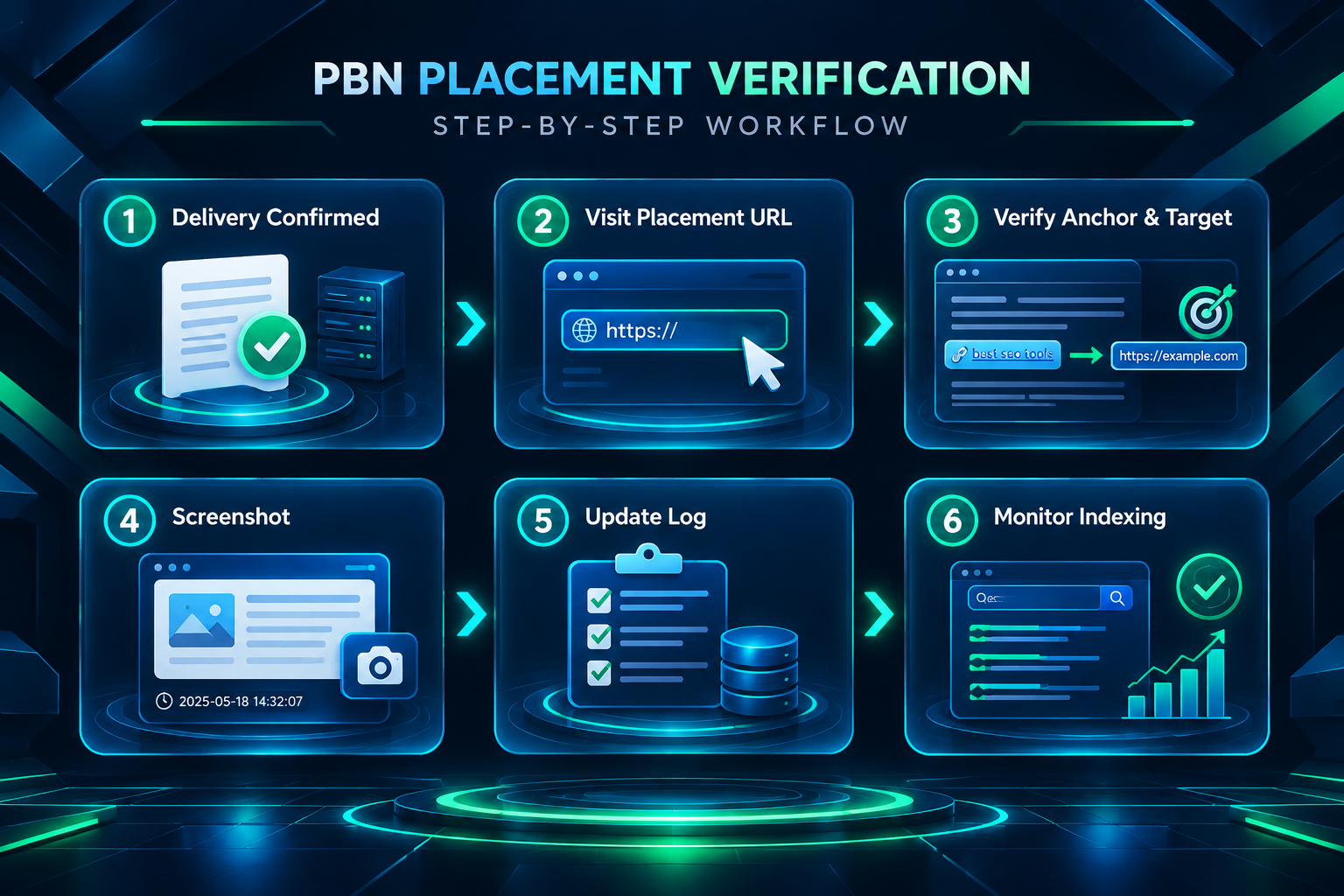
After confirming the link is live, record the verification date in your placement log and take a screenshot of the placement page showing the link in context. This screenshot serves as timestamped evidence of the placement at delivery, which is useful if the link is later modified or removed. Store the screenshot in a consistent location — a shared drive folder organized by provider or campaign works well — and add the file path or link to the placement record.
Indexing is a separate step from delivery. A link that is live on a placement page may not yet be crawled and indexed by search engines, which means it may not yet contribute to your backlink profile as measured by tools such as Ahrefs, Semrush, or Majestic. Record the date when the link first appears in your preferred backlink analysis tool, because this gives you a more accurate picture of when the link became active in your profile. Indexing timelines vary depending on the crawl frequency of the placement domain and the overall authority of the site, so it is not unusual for a link to take several weeks to appear in third-party tools after delivery.
Tracking Anchor Text Across Your Backlink Profile
One of the most practical uses of a well-maintained placement log is anchor text planning. Anchor text distribution — the mix of exact-match, partial-match, branded, generic, and naked URL anchors across a backlink profile — is a meaningful variable in link-building strategy. Over-concentration of exact-match anchors pointing to a single target page can create a pattern that warrants attention during a backlink profile review, while a more varied anchor distribution tends to look more natural across a profile.
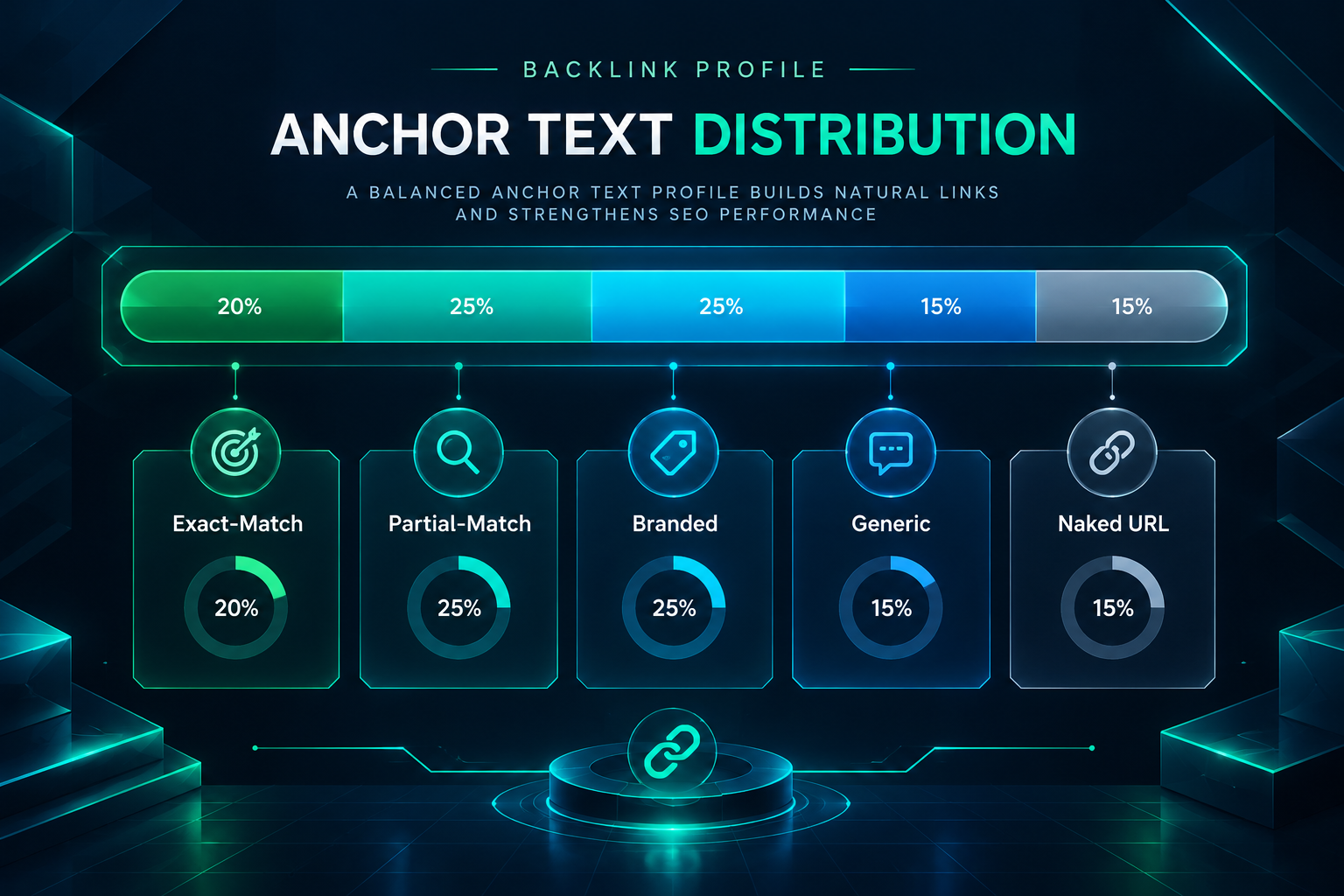
When you record the agreed anchor text for every placement in a central log, you can query that log at any time to see the current anchor distribution for a given target page or domain. This makes it straightforward to brief a provider on which anchor type to use for the next placement without having to reconstruct the history from memory or email. It also helps you identify if a particular anchor has been used more frequently than intended, so you can adjust future orders accordingly.
Some providers will ask you to specify the anchor text at the time of order; others will suggest an anchor based on the target page and niche. Either way, the agreed anchor should be recorded before the order is placed, not after delivery, so that you have a clear reference point for verifying that the delivered placement matches what was requested.
Managing Link Permanence and Replacement Terms
Link permanence is one of the most commercially significant variables in a PBN placement arrangement, and it is one of the areas where clear documentation has the most practical value. Providers vary considerably in how they handle link longevity: some offer a fixed guarantee period, some offer replacements if a link is removed within a defined window, and some make no permanence commitment at all. Whatever the provider’s terms, those terms should be recorded in the placement log at the time of order.
When a link is removed — whether because the placement page was restructured, the domain expired, or the provider made a change to the network — having a written record of the agreed terms makes it straightforward to request a replacement or raise a dispute. Without that record, you are relying on the provider’s recollection of what was agreed, which may not align with yours. A simple note in the placement log — for example, “Provider offers 12-month replacement guarantee per order confirmation dated [date]” — is sufficient to establish the agreed terms.
Monitoring link health on an ongoing basis is the other side of this. Backlink analysis tools such as Ahrefs and Semrush track lost links and can alert you when a previously active link disappears from their index. Setting up alerts for your target URLs means you will be notified promptly if a placement is removed, giving you time to contact the provider within any applicable guarantee window. Record the date of removal and the provider’s response in the placement log so you have a complete history of each placement’s lifecycle.
Documenting Placements When Using Multiple Providers
Many SEO campaigns involve placements from more than one provider, particularly when targeting a range of niches, domain metrics, or geographic markets. Managing placements across multiple providers without a unified record system creates a fragmented picture of your backlink profile that is difficult to audit and even harder to explain to a client or stakeholder.
A unified placement log that includes a provider field for every record allows you to filter and group placements by source, which is useful for several practical purposes. You can assess which providers consistently deliver placements that index promptly and retain their links over time, and which providers have a higher rate of link loss or metric discrepancy. You can also identify if a disproportionate share of your backlink profile is coming from a single provider, which may be worth diversifying for campaign resilience.
When briefing multiple providers on the same campaign, the placement log also helps you avoid duplicating anchor text or target URLs across providers in a way that creates an unintended pattern. Briefing each provider with a summary of existing anchor text for the relevant target page — drawn directly from your placement log — ensures that each new placement complements rather than duplicates the existing profile.
Placement Records and Backlink Profile Audits
A backlink profile audit — whether conducted internally or by a third party — is significantly more efficient when you have a complete placement log to cross-reference against the data returned by tools such as Ahrefs, Semrush, or Majestic. The audit process typically involves comparing the links visible in the tool against the links you know were ordered, identifying any discrepancies, and assessing the overall quality and coherence of the profile.
Without a placement log, an audit relies entirely on what the backlink tool can discover, which may not include every active placement — particularly if some placement pages have not yet been crawled or if the tool’s index has a lag. With a placement log, you can identify links that were delivered but have not yet appeared in the tool, links that appeared in the tool but were not part of your ordered placements, and links that were ordered but appear to have been removed.
The placement log also provides context that a backlink tool cannot supply on its own: the agreed anchor text, the topical relevance of the placement page, the domain metrics at the time of order, and the provider’s permanence terms. This context is valuable when assessing whether a specific placement is contributing to the profile in the way that was intended, and when deciding whether to renew, replace, or discontinue a particular provider relationship.
Frequently Asked Questions
Do I need a formal signed contract for a PBN placement?
A formal signed contract is not standard practice in most PBN link-building arrangements, but a written record of the agreed terms — captured from the order confirmation, provider communication, or service description — serves the same practical purpose. The key is to record the agreed anchor text, target URL, placement page, domain metrics, and permanence terms at the time of order rather than relying on memory or informal email threads.
What should I do if a provider does not disclose the placement domain?
Some providers operate networks where individual domain names are not disclosed to buyers. In this case, record the placement page URL if it is provided, the provider’s order reference, the agreed anchor text and target URL, and any metrics the provider has shared about the placement domain. If the provider supplies a delivery report with a screenshot, store that as part of the placement record. The absence of a domain name limits your ability to monitor the link directly, so it is worth clarifying with the provider what monitoring or replacement support they offer.
How often should I verify that PBN placements are still live?
A quarterly check is a reasonable baseline for most campaigns, though the appropriate frequency depends on the volume of placements and the provider’s track record. Backlink monitoring tools such as Ahrefs and Semrush can automate much of this by alerting you to lost links, which reduces the need for manual checks. When a link loss alert is triggered, update the placement log with the removal date and follow up with the provider if the placement is within a guarantee window.
Should I record placements that were not ordered through a paid service?
Yes. If you manage your own PBN or have arranged placements through informal agreements, those placements should be recorded in the same format as paid placements. The placement log is a record of your backlink profile’s intentional structure, regardless of how each link was obtained. Consistent records across all placement types make profile audits and anchor text planning more accurate.
How do I handle placements where the anchor text was changed after delivery?
Record the original agreed anchor text and the delivered anchor text as separate fields in the placement log, along with the date the discrepancy was identified and any communication with the provider about it. If the provider agrees to correct the anchor, record the correction date once verified. This history is useful if the same discrepancy recurs with the same provider, and it gives you a clear record for any dispute resolution.
Can placement records help with anchor text strategy planning?
Yes, and this is one of the most practical benefits of maintaining a detailed placement log. When you can query your records by target URL and see the full anchor text history for that page, you can brief providers on exactly which anchor type is needed for the next placement without reconstructing the history from backlink tool data. This makes anchor text distribution planning more deliberate and reduces the risk of unintentional over-concentration of a particular anchor type.
Building a Placement Documentation System That Works Long-Term
The most effective placement documentation systems are simple enough to maintain consistently and detailed enough to be genuinely useful during an audit or provider dispute. Starting with a well-structured spreadsheet and adding fields as your campaigns grow is a practical approach — it is easier to add columns to an existing log than to reconstruct missing data from email archives months after the fact. If you are managing placements for multiple clients or across a large number of providers, investing time in a relational database tool such as Airtable or Notion will pay dividends in audit efficiency and reporting clarity.
The discipline of recording placement details at the time of order — rather than after delivery — is the single most important habit to establish. Agreed anchor text, target URLs, and provider terms are most accurately captured before the placement is live, when the brief is fresh and the provider’s commitments are clearly stated. Delivery verification, indexing dates, and metric snapshots can be added as the placement progresses through its lifecycle, building a complete record that reflects both what was agreed and what was actually delivered.
If you are planning a PBN link-building campaign and want to discuss placement quality, anchor text strategy, or how to structure your documentation process alongside your backlink requirements, PBN Backlinks Service can help you assess the right approach for your website and goals.